Scott Staples noticed the flowers. On a video call with Mphasis chief executive Nitin Rakesh, he found himself admiring something that software companies rarely put in their product demonstrations: a real office, with a real bouquet on the desk. Rakesh told him he brought in fresh flowers every Monday. Staples liked the glimpse of personality. He later wrote about it on LinkedIn, urging people to let their actual surroundings back into the picture.
It is a pleasing detail for the chief executive of First Advantage, a business concerned with establishing whether people are who they appear to be. Here was a small argument for an unfiltered room. Elsewhere in his working life, Staples was describing customers who had interviewed one person, processed paperwork for another, and wondered who would actually arrive for work. The background of a video call had become an unusually literal business concern.
That combination runs through his career: technology on a large scale, and the stubborn importance of the person on the other end. Before he ran background screening, he helped start Mindtree. Before that, he studied English. His working life has crossed consulting, software services, private equity ownership and public markets. The question of how to earn confidence has followed him across the changes.
The first customer had to believe
Staples earned his bachelor’s degree in English at the University of Delaware, followed by an MBA at Fairleigh Dickinson University in Madison, New Jersey. His early career included Prudential, Gemini Consulting and Cambridge Technology Partners. At Cambridge, he worked with major corporate accounts on technology and business initiatives. Those jobs preceded the much less settled proposition of putting a new company into the world.
In 1999, he became one of Mindtree’s ten co-founders. The founding group brought together people from established technology businesses, including Wipro, Lucent and Cambridge Technology Partners. Staples, Anjan Lahiri and Kamran Ozair worked from a small office in New Jersey. A new services firm can possess considerable expertise while having very little evidence that it deserves a customer’s money. Someone still has to agree to be first.
Staples won Mindtree’s first customer, Lucent. The account rested on an existing relationship and the team’s ability to explain an architectural problem that mattered to the buyer. That is a less theatrical founding story than the midnight revelation beloved of business mythology. It is also quite recognizable to anyone who has tried to sell complicated work: understand the problem well enough that the customer feels understood.
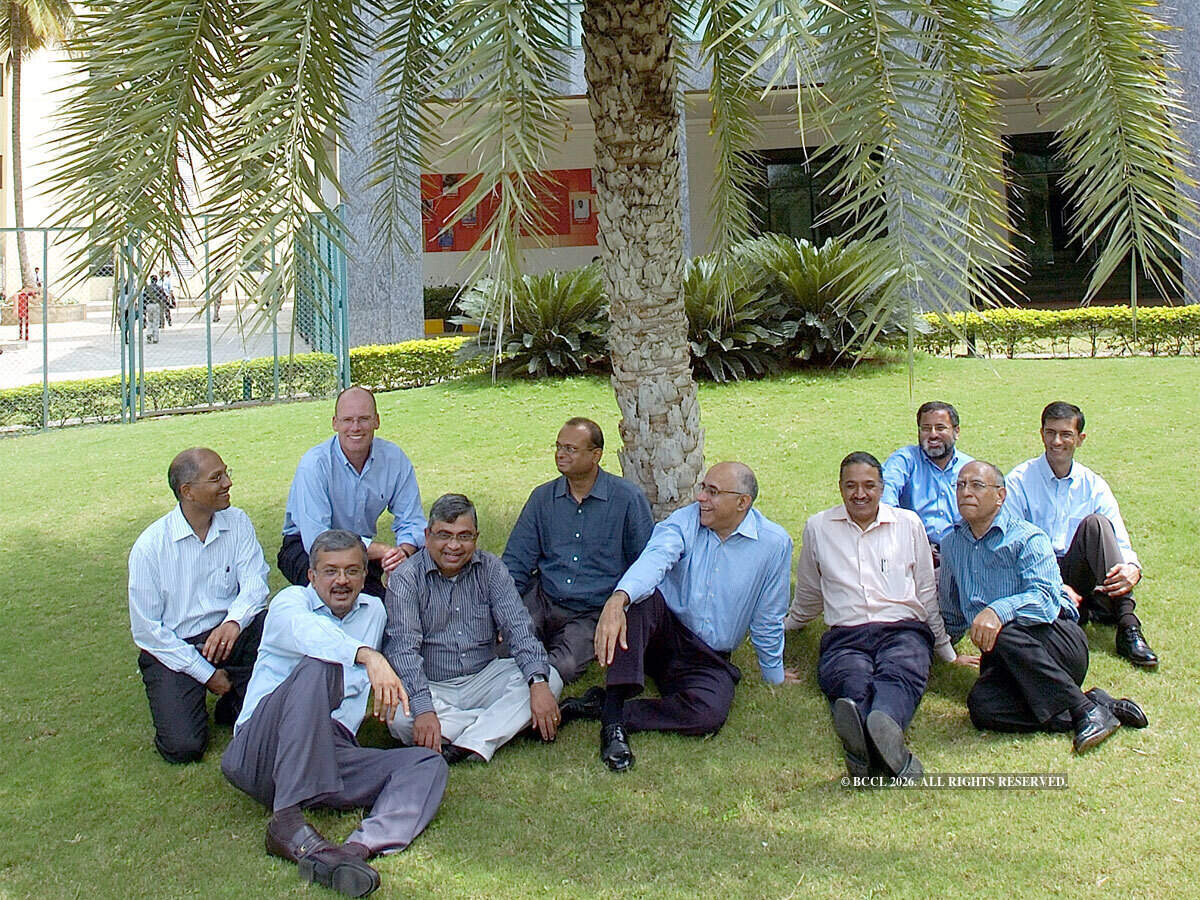
Mindtree went public in 2007. By the time First Advantage announced Staples’s appointment a decade later, it described a company that had grown from its founding to roughly $800 million in revenue and 16,000 employees worldwide. He had served as president of the Americas and led its global business groups. Those figures belong to that period, before the subsequent changes in Mindtree’s ownership and corporate structure.
The geographic spread mattered as well. In November 2012, Staples and fellow founder Krishnakumar Natarajan attended the opening of Mindtree’s Gainesville operation in Florida. Forty-seven employees had been hired and $1.6 million invested in the location. Staples pointed to the university and local and state support in explaining the choice. A global services company still needed a place, some people and reasons for them to stay.
He was already suspicious of the slogan
By 2016, Staples had heard enough enthusiasm about agile development to question what the enthusiasm was accomplishing. Companies could hold daily stand-ups, run short development cycles and announce progress upstairs without changing the structures that made work slow. He argued that adopting a fashionable vocabulary was a poor substitute for changing how an organization actually behaved.
“Agile is not magic.”
Scott Staples, 2016
His prescription involved executive participation, collaboration and an organization willing to change. He treated the effort as something measured in years. The emphasis is revealing: a founder associated with technology growth was talking about the difficulty of getting people to work differently. A meeting can be renamed before lunch. Changing who can make a decision generally takes longer.
He made a related point about digital transformation that same year. Attractive customer experiences depended on the less visible systems underneath them. Marketing could dream up personalization; the back end had to support it. For Staples, the interesting work included the connections between old systems and new ambitions. The polished screen was only the part the customer got to admire.
A different sort of reference check
First Advantage announced him as its next chief executive in March 2017, with an April 3 start. He succeeded Mark Parise at a company then owned by Symphony Technology Group. Romesh Wadhwani, STG’s chairman and chief executive, emphasized Staples’s client focus, international experience and entrepreneurial approach. The assignment moved him from selling technology services into a business whose output affected a particularly consequential transaction: getting a job.
A background check sits in an awkward interval. An employer wants reassurance. A candidate wants to begin. Delays are felt personally, even when the systems producing them are distant. Staples’s experience with corporate technology gave him a relevant problem to work on: how to organize a complicated service so that the person waiting for it does not experience the complexity as an obstacle.
In 2021, First Advantage joined Nasdaq, and Staples rang the opening bell to celebrate its IPO. Public markets added their own recurring examination of performance. The work he had discussed in the language of clients and technology now also had to withstand the questions of investors. The company’s progress would come with a calendar, a webcast and an audience equipped with spreadsheets.
His public writing remained interested in how employment was changing. He published LinkedIn articles about the gig economy, artificial intelligence in HR technology and working for a private equity firm. Those subjects connect the phases of his career. They concern the way capital, software and changing work arrangements land inside an ordinary business relationship.
The deal ends. The joining begins.
On October 31, 2024, First Advantage completed its acquisition of Sterling Check in a transaction valued at $2.2 billion, including assumed debt. Staples continued as chief executive of the combined business. The deal brought together two screening companies and created more room to invest in automation and digital identification. It also handed him an organizational challenge of the kind he had been describing since his Mindtree days.
Customers, technology systems and colleagues all had to find their places in the enlarged company. Calling that process integration is convenient, though the word conceals a great many decisions. In May 2025, Staples was recognized as a Dealmaker of the Year at the Atlanta Smart Business Dealmakers event for his leadership of the Sterling acquisition. His response credited people from both organizations.
He and chief people and culture officer Beth Price also discussed rebuilding the company’s values after the acquisition. Price described focus groups, surveys, leadership interviews and feedback from teams. The resulting five values included authenticity, curiosity, integrity, teamwork and a focus on customers. Staples’s contribution emphasized listening and the daily conduct of the business. He put the continuing nature of that job plainly: “Culture is never finished.”
In a February 2026 article introducing First Advantage’s refreshed identity, he connected the combined company’s visual changes to investments in technology, automation and service. A new logo is the easy part to see. The harder test is whether two organizations can deliver a coherent experience together. His earlier impatience with slogans gives that test a useful personal history.
Who, exactly, is coming to work?
By the first-quarter 2026 earnings discussion, Staples was describing identity fraud as a recurring subject in customer conversations. The examples included manipulated documents and deepfake video interviews. Customers were asking whether the candidate they interviewed was the person completing the onboarding paperwork and the person arriving on day one. The familiar reference check now shared space with a more immediate question about identity itself.
- 01The interviewWho is on the call?
- 02The onboardingWho submits the documents?
- 03The first dayWho arrives for work?
He described digital identity as increasingly bundled with other screening services. This puts his current work close to an old concern: the connections between separate systems. An interview, a document check and a starting date can each look satisfactory in isolation. The employer needs confidence that they belong to the same person. The handoffs become part of the product.
First Advantage reported second-quarter 2026 revenue of $448.8 million, up 14.9 percent from a year earlier. That is a company result, produced by many people, rather than a personal score. For Staples, it supplies a current marker in a career that has moved from winning an initial account to running a business examined every quarter. The scale has changed considerably. The obligation to earn the next customer’s confidence remains.
Another team, closer to home
In September 2025, Major League Table Tennis announced that an ownership group led by Staples had taken over the Atlanta Blazers. It placed him in another enterprise with a team, an audience and something to build. The league’s commissioner, Flint Lane, spoke about Atlanta’s growth potential. Staples emphasized its identity as a sports city and its connection to First Advantage’s home.
His stated ambition was to build a team the community could support. There is a welcome concreteness to that idea. A sports crowd is unlikely to be won over by a diagram of operational synergies. It wants players worth watching and a reason to come back. For a founder and executive so often occupied with systems, the Blazers offer a public project rooted in one city.
Return, finally, to the bouquet. Staples liked that another executive had allowed a small, particular detail into a business conversation. It made the encounter easier to begin. Across his career, confidence has required relationships, functioning systems and people willing to take responsibility for the result. The flowers were a modest reminder that being recognizable still counts for something, even when the software is doing its best to help.