Running the Insurance Software Arms Race
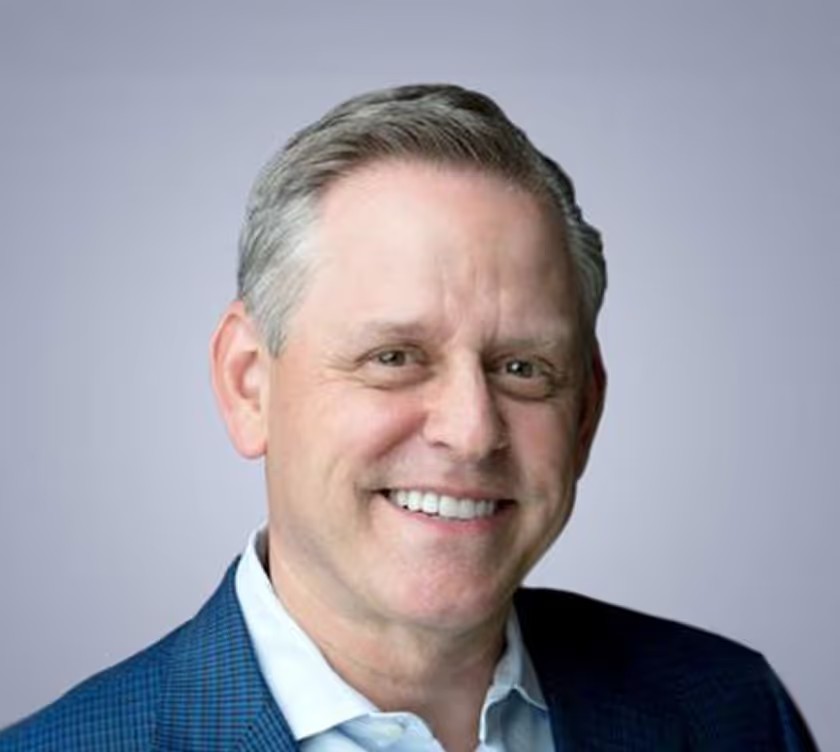
Jeff Clarke arrived at Insurity in January 2025 as its new chief executive, joining a company that already held an enviable position - 22 of the top 25 U.S. property and casualty carriers, seven of the top ten MGAs, and more than 400 cloud-based deployments running in production. Most executives would call that a platform worth protecting. Clarke called it a starting line.
Within twelve months, the company had added more than 30 new customer logos. More telling was the direction he pointed the investment: $50 million committed to AI and research and development for 2026, every dollar aimed at remaking how insurers handle policy administration, underwriting, rating, regulatory compliance, and claims. Not as a bolt-on, but woven directly into the platform.
"We are relentlessly focused on becoming the first-choice software provider for P&C insurers. To help accelerate our efforts, we are investing more than $50 million in AI and R&D to accelerate product innovation in 2026 - every dollar of that will be invested in ensuring that insurers can grow fast and increase their profitability."- Jeff Clarke, Excellence in Insurance Conference, October 2025
The architecture of that investment reflects how Clarke thinks. He hired Jatin Atre as president in January 2026, formalizing ownership of product, engineering, customer success, and marketing under one roof. He committed to adding more than 100 AI and machine learning specialists. He expanded customer support capacity by roughly 80,000 hours. The levers being pulled are operational, not rhetorical.
Insurity's Andromeda release - a multi-product launch - arrived under Atre's product leadership. New AI capabilities are rolling out across geospatial analytics, loss control, premium audit, and claims workflow. The company's self-service capabilities expanded across core platforms. Clarke's read on the moment is straightforward: the insurance industry is reaching an inflection point where AI-native software will separate the platforms that matter from the ones that don't.
"The insurance industry is more important than ever as companies embrace AI and analytics to provide more impactful and affordable coverage and service for the industry's customers."- Jeff Clarke, Insurity Leadership
A Resume Built on Hard Pivots
Clarke's career reads less like a ladder and more like a map of corporate emergencies - each stop a company at a hinge point, each role a bet that the organization could be rebuilt faster than it could fall apart. He has been CFO, COO, and CEO multiple times across industries that share almost nothing except the need for someone willing to commit to the long game.
He started at Digital Equipment Corporation in 1985 after completing his MBA at Northeastern University. When Compaq acquired DEC in 1998, Clarke came with the deal. By March 2001, Compaq had appointed him chief financial officer - a position he held as the company itself was being absorbed into Hewlett-Packard in one of the largest technology mergers in history. Clarke then ran HP's global operations as executive vice president, overseeing the integration of the two companies at scale.
In 2004, Computer Associates - rebranding through a governance crisis as CA Technologies - named him chief operating officer. Two years later came the move that would define his middle act.
Travelport: The $4.3 Billion Bet
When Cendant Corporation decided to spin off its travel distribution business in 2006, Clarke stepped in to lead it. He orchestrated the $4.3 billion sale to the Blackstone Group, then stayed on to run the resulting company - Travelport - as CEO through 2011. The transformation included reorganizing the business around three distinct brands, acquiring Worldspan, and leading Orbitz Worldwide through its initial public offering on the New York Stock Exchange in July 2007. It was the kind of strategic sequence - carve-out, acquisition, IPO - that most executives do once in a career. Clarke ran all three in five years.
When Hollywood Called Back
Clarke became CEO of Eastman Kodak in March 2014, arriving after the company's emergence from bankruptcy. The assignment others might have politely declined. Kodak had been synonymous with disruption's victims - the company that invented the digital camera, then watched digital kill its core business.
Clarke had a different read. He believed there was a real market for celluloid film if the right people understood what was at stake. So he flew to Los Angeles and started having lunches. One of them was with Christopher Nolan. Within 48 hours of that conversation, five of the six major studios had called, along with a dozen major filmmakers. Quentin Tarantino, Martin Scorsese, J.J. Abrams, and Judd Apatow joined the coalition. The studios agreed contractually to purchase specific quantities of Kodak film stock. By 2016, the film division was profitable - after years of losing $100 million annually.
Clarke's summary of the outcome was characteristically direct: "Hollywood doesn't have to worry about film going away anymore."
Clarke departed Kodak in February 2019 and moved next to FTD, the online floral delivery company, where he served as Executive Chairman and interim CEO. He later led Doxim before joining Insurity in January 2025.
Career Milestones
What He Actually Did
- Led the $4.3 billion carve-out and sale of Cendant's travel division to Blackstone Group, creating Travelport
- Orchestrated the Orbitz Worldwide IPO on NYSE in July 2007 and the acquisition of Worldspan
- Built a Hollywood coalition (Nolan, Tarantino, Scorsese, Abrams) that saved Kodak's celluloid film business and drove it back to profitability
- Returned Kodak film division to profitability in 2016 after years of $100M+ annual losses
- Served on boards of Autodesk, Red Hat, Compuware, Orbitz Worldwide, UTStarcom, Generate Life Sciences, and Docker
- Grew Insurity to serve 22 of top 25 U.S. P&C carriers within his tenure
- Landed 30+ new customer logos in first year as Insurity CEO
- Committed $50M+ to AI and R&D investment at Insurity for 2026
- Oversaw 400+ cloud-based production deployments at Insurity
- Received honorary degree from SUNY Geneseo, his undergraduate alma mater
The Insurance AI Thesis
Clarke came to Insurity with a specific conviction: the P&C insurance industry is at the same kind of inflection point that enterprise software has crossed in other verticals, and the window for becoming the dominant platform is now. The companies that embed AI natively - into underwriting, policy lifecycle, claims, and billing - will operate at a different efficiency curve than those that treat it as a feature layer.
His investments reflect that view directly. Rather than building AI as a separate capability, Insurity is threading it through the core platforms. Geospatial analytics in risk assessment. Automated premium audit. AI-assisted claims workflow. Predictive underwriting models. The Andromeda product release delivered updates across multiple product lines simultaneously - a signal about product velocity and engineering coordination.
The AI-First Playbook at Insurity
$50M+ in AI and R&D. 100+ ML specialists hired. 80,000 additional hours of customer support capacity. Andromeda multi-product release. Geospatial analytics, loss control, premium audit, and claims AI - all rolling out across the platform. Clarke's approach: AI isn't a product, it's an infrastructure decision.
Clarke also made an organizational bet by elevating Jatin Atre to president and consolidating product, engineering, marketing, and customer success under his leadership. Unified product ownership across a software company of Insurity's scale is a decision that trades short-term flexibility for faster execution - a tradeoff Clarke has made before. At Travelport, centralizing decisions was what made three simultaneous strategic moves possible.
The marine cargo conference in March 2026 offered another angle on his strategy: Insurity isn't just a carrier platform. Clarke addressed marine and cargo insurers directly, presenting the company as a viable solution for specialty lines - a market with different technical requirements and a different buyer profile than standard P&C. The breadth is intentional.
There's a specific kind of executive who, when facing a problem, calls the most relevant person in the room - not the most senior. Clarke called Christopher Nolan about Kodak film. Nolan answered. That's not networking. That's knowing what matters and going directly to it.
Things Worth Knowing
- Born in Ithaca, New York - home to Cornell University and, as it turns out, at least one executive who would later save celluloid cinema.
- He has held formal C-suite roles - CFO, COO, CEO - at seven major companies across travel, enterprise software, floral delivery, film manufacturing, printing services, and insurance technology.
- Quentin Tarantino and Christopher Nolan helped save a company Clarke was running. It was a film manufacturer, not a film studio.
- SUNY Geneseo later gave Clarke an honorary degree - recognition from the school he attended before heading to Northeastern for his MBA.
- Clarke's personal interests are described simply as travel, reading, sports, and time with family. For a man who spent decades managing billion-dollar corporate crises, the list reads as a considered choice about what to protect.
Academic Foundation
Northeastern University
MBA in Business Administration • Completed 1985
SUNY Geneseo
Bachelor of Science • Honorary Degree Recipient
The Pattern
The through-line across Clarke's career is not industry expertise - he has worked in computing, travel, film, flowers, and insurance software. The pattern is something more specific: he takes organizations that have leverage they haven't fully used, identifies the one or two structural moves that would change the trajectory, and executes them with enough speed that the window doesn't close.
At Travelport, the leverage was the Blackstone deal and the subsequent acquisition-plus-IPO sequence. At Kodak, the leverage was Hollywood relationships and contractual film commitments. At Insurity, the leverage is an existing platform serving 22 of the top 25 carriers - a distribution position that most software companies spend years trying to build - combined with a moment when AI is genuinely changing what insurance software can do.
Clarke's approach to building that coalition at Kodak - fly to LA, have the right lunch, move within 48 hours - is the same approach he applies to strategic execution more broadly. He's not a theorist. He's the person who makes the call, sits across the table, and gets the commitment.
At 64, running his eighth significant executive role, Clarke shows no signs of doing this as a victory lap. The investment commitments at Insurity are multi-year bets, not maintenance plays. The customer additions are accelerating. The product surface is expanding into specialty lines. The signal is forward motion.
Cross-Industry Operator
Has successfully led companies in computing, travel, film manufacturing, floral delivery, and insurance software. The industry is secondary to the transformation thesis.
Coalition Builder
The Kodak film story shows Clarke's method: identify the believers, bring them together, get the commitments on paper fast. Works in Hollywood. Works in Hartford.
Structural Thinker
From Travelport's carve-out to Insurity's AI-first pivot, Clarke identifies the one or two structural moves that change trajectory - and executes them at speed.
Platform Investor
$50M in AI and R&D at Insurity. 100+ ML hires. These are not line items. They are architectural commitments to a specific view of where the market is going.