The last thing an AI system produces may be the first thing a customer notices. A piece of code works, or it fails. A report answers the question, or it sends everyone into another meeting. Julio Ardiles has settled on a requirement for that moment: a person must be prepared to approve the work. At Strata Analytics Group, the business he co-founded and now leads as CEO, his account of AI-assisted delivery ends with a senior engineer reviewing the result and accepting responsibility for it.
A signature is an agreeably ordinary object to place at the end of an extraordinary technical process. It belongs to the world of deliveries, contracts, and people who can be called back. Ardiles’s interest in that final act makes sense across a career spent moving between technology and the businesses expected to pay for it. Long before he was describing AI agents, he was working with telecommunications accounts, regional markets, and business development.
Based in Fort Lauderdale, Florida, he operates in a professional world that extends across the Americas. His current concerns include the language an AI system understands, the preparation of the person directing it, and the customer who eventually receives its output. These are questions with addresses attached. They become more interesting when the discussion leaves the demonstration and reaches somebody’s actual desk.
Before the agents, the accounts
Ardiles’s career began in 1993 as an account executive at Alcatel Business Systems. He went on to sales and business-development responsibilities at Nortel, followed by major-account work at Ericsson. By 2014, he was vice president of business development and mergers and acquisitions at Cable & Wireless Communications. The responsibilities changed, but the setting remained recognizably commercial: organizations buying technology, negotiating relationships, and deciding what a new capability was worth.
He also represented Cable & Wireless on the non-executive board of Telecommunications Services of Trinidad & Tobago. That adds a governance role to the account-management and deal-making work. There is a useful distinction between understanding a product well enough to discuss it and being responsible for the decisions around it. His earlier roles put both activities into the career before Strata entered the picture.
Strata Analytics Group followed in 2016. Today Ardiles is its founding partner and CEO; Juan Lipera is the founding partner and chief operating officer. The company works in data, analytics, cloud services, and AI. Ardiles also co-founded Strata Labs. His path into the present AI discussion therefore runs through established telecommunications businesses and the construction of his own companies, giving the story a longer runway than the arrival of conversational software.
It would be tempting to make that sequence look inevitable. Careers generally become tidier when someone else draws the line through them. What the sequence does establish is experience with the practical side of technology adoption: accounts, partnerships, and the organization receiving the service. Those remain visible subjects in Ardiles’s later writing, even as the technical vocabulary changes.
The customer with a complaint
In March 2021, Ardiles considered a small complication in personalized marketing. A company has products to promote and data that might help it choose the right offer. Some customers, however, are waiting for a response to a complaint. An attractive recommendation can arrive at precisely the wrong time. The example is almost painfully familiar. The company has remembered what you might buy while forgetting what you already asked.
His point was that personalization requires a view of the customer’s circumstances, including what the business has done badly. Knowing more does not automatically produce a better decision. A company also has to decide which information matters and whether using it makes economic sense. That is a restrained ambition for a data business: sometimes the useful advice is to stop collecting possibilities and settle on a coherent purpose.
By July 2023, the setting had become more aquatic. To explain data lakes, Ardiles invited readers to imagine a transparent canoe, with the contents of the water visible beneath it. The image is an unusual item in a chief executive’s professional writing. It also shows an effort to make a technical discussion approachable before asking a business audience to act on it.
The canoe sits comfortably beside the unresolved complaint. Both bring a technical subject back to something a reader can picture. Ardiles’s explanations ask a business audience to follow the reasoning. The working assumption seems clear: people are more likely to make a useful choice when they understand what they are choosing. A diagram may help. So may remembering the last sales message that arrived at an unfortunate moment.
A model needs to know where it is
Ardiles brought a similar concern with context to his August 2025 argument for specialized AI in emerging markets. He focused on the distance between a broadly trained system and the particular setting in which someone expects it to work. Regional language, sector-specific terminology, and local rules all belong inside that setting. A technically fluent answer can still misunderstand the business that asked for it.
His proposed direction is to adapt models around the communities and sectors they serve, with academic collaboration and feedback from use as part of the process. The ambition extends beyond Latin America to other emerging economies. This is an argument he advances about how AI should be developed, with relevance to the people using it as a central measure of success.
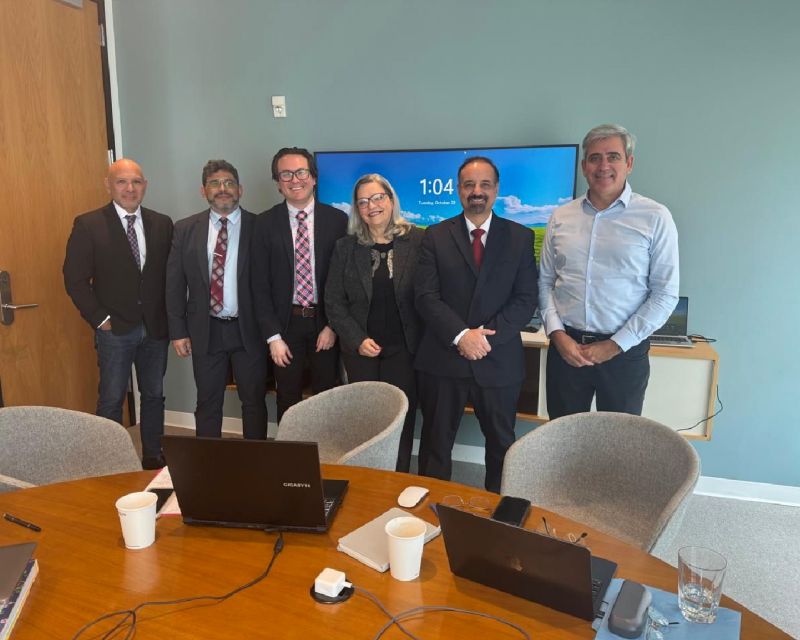
That concern gives his interest in education a practical setting. A company expanding into a market needs people who can understand its clients there. A university preparing students for technical careers needs encounters with actual work. The two requirements can meet, provided the partnership has something more substantial to do than produce a photograph and a polite announcement.
The classroom and the company
Ardiles has set out three priorities for collaboration between universities and the private sector: practical student training, joint research, and opportunities to apply learning to real cases. It is a specific agenda. Students encounter the demands of working organizations; researchers can address problems outside the syllabus; businesses have a role in developing the people they will later hope to hire.
He has also connected Strata’s growth in Mexico with local talent development and work with Hybridge Education. The aspiration is expansion with a contribution to professional preparation in the country. His language about growing alongside Mexico gives the commercial plan a human subject: the future colleagues who would help make that growth possible.
At STEMIA2025, organized by Broward International University in Miami, he participated in a panel called “The Human in the Loop.” The discussion placed critical thinking and creativity alongside familiarity with AI tools. For an employer, this is a demanding combination. A candidate needs to use the software and retain enough independence of judgment to question what it produces.
- Student trainingPut practical experience alongside academic study.
- Joint researchBring business problems into applied investigation.
- Real casesGive students work grounded in actual situations.
His own professional learning has continued across several years. A Wharton business analytics credential in 2018 was followed by SAS certifications in 2019 and 2020, and a Braze practitioner certification in 2024. The subjects range from analytics to customer engagement. The dates matter because they show study continuing during the years of running a company, rather than ending at the point of becoming its founder.
There are commitments outside the business, too. His professional profile lists youth counseling at St. Katharine Drexel Parish beginning in 2015, a vice-presidential role at Ignis Mundi US beginning in June 2024, and guest speaking for Back on Track Network, which supports people facing career challenges. They add a quieter set of organizations to a career otherwise populated by technology companies.
The work still needs an owner
In June 2026, Ardiles described Strata’s Agentic Scrum Framework, known as FAST, and the changing assignment of its professionals. Engineers direct AI agents, supply business context, and assess the resulting work. His description puts expert review inside the delivery process. The division of labor depends on people who understand enough about the task to know when an apparently finished result still needs attention.
“Anyone can write a prompt; auditing requires professional expertise.”
Julio Ardiles, June 2026
The line has the briskness of something said after a demonstration has gone on long enough. It also brings his earlier interests together: customer circumstances, relevant information, professional preparation, and responsibility. A faster production process gives the reviewer more to examine. The standard Ardiles describes asks a senior engineer to stand behind what eventually reaches the client.
The next chapter of his career is tied to that requirement. Strata is pursuing AI-assisted work while Ardiles argues for people capable of directing and approving it. The final signature may be a modest flourish beside the machinery that precedes it. For the customer opening the report, running the code, or acting on the recommendation, it is a useful indication that somebody has read the thing.