Ask Shani Bhavsar for his favorite place in Ohio and the answer comes with an engine. In 2021, he described heading out of Columbus on Route 33, his girlfriend Margi on the back of his Harley, on a crisp autumn day. A founder can spend a considerable amount of time explaining where he is going. Here was an answer about the pleasure of getting there.
Bhavsar is the co-founder of Dash Technologies Inc., where he serves as both CEO and CTO. The pairing puts business decisions and technical decisions under the same name. His working life has included software development, student mentoring and another venture, ElevateMe, concerned with helping people prepare for careers. Across those activities runs a recurring interest: how people acquire the ability to do something useful.
A brother’s invitation, an adopted home
His hometown is Visnagar, India. Columbus became the place where his adult working life took root. He has described his brother persuading him of the city’s possibilities, then recruiting him to form Dash after a corporate job. The story starts with a family connection and a specific place, rather than an abstract search for the ideal startup ecosystem.
Dash identifies Amit Bhavsar as co-founder and president. Shani carries the chief executive and technology titles. Those details give the business an intelligible human beginning: brothers building together, with different responsibilities. The company dates its origins to 2010. That date belongs to the business; the more revealing part of Shani’s account is the invitation that drew him into it.
He has since described himself as an adopted Buckeye. Ohio offered work, relationships and room to build. The motorcycle anecdote supplies something a headquarters address cannot: an image of someone enjoying the place he has chosen. Affection for a state is easier to understand when it includes a road you would happily take on a day off.
The programmer who kept asking questions
Before considering the executive, it helps to consider the developer. Bhavsar’s professional biography describes a background in computer science and engineering, including work as a lead software developer. His experience spans smaller startups and large enterprises. That range matters because the person requesting software and the person building it often arrive with different ideas of what the job involves.
His early published writing offers a glimpse of his interests. In May 2017, he posted articles about programmers’ use of Google and the way recruiters count years of experience. These are questions close to the working life of a developer: how to find an answer, and how someone else decides whether you are qualified to give one.
He also lists a period of STEM mentoring through SUNY Empire State College, from August 2013 to January 2014. Robotics and Python programming were among the activities. It is a modest, specific entry in a career record. Teaching a programming concept requires enough understanding to make it clear to somebody encountering it for the first time. A title is of limited assistance when the next question is “why?”
Bhavsar’s 2013-2014 STEM mentoring predates the executive profile. The interest in helping people learn appears again in ElevateMe.
Two titles, plenty of translation
Holding the CEO and CTO roles gives Bhavsar responsibility on both sides of a software business. A customer’s ambition must become a deliverable piece of work. Technical decisions must make sense commercially. His own description of Dash has emphasized project-based development, bringing programming skills to applications, websites and existing products.
There is a great deal of translation hidden in that description. A business problem has to become something a team can build, test and deliver. Bhavsar’s executive biography includes leading projects, managing complex programs and maintaining client relationships. Those activities place him near the point where a technical explanation must become a decision someone can act on.
A visit to Arrowhead Transit in Minnesota gives that work a more ordinary setting. Dash documented Bhavsar and software delivery lead Sharat Hegde meeting the transit team. Its later company newsletter described an enterprise software project for the organization. The visit puts faces around the relationship: a technology team and a transport operator spending time together, with the software somewhere behind the conversation.
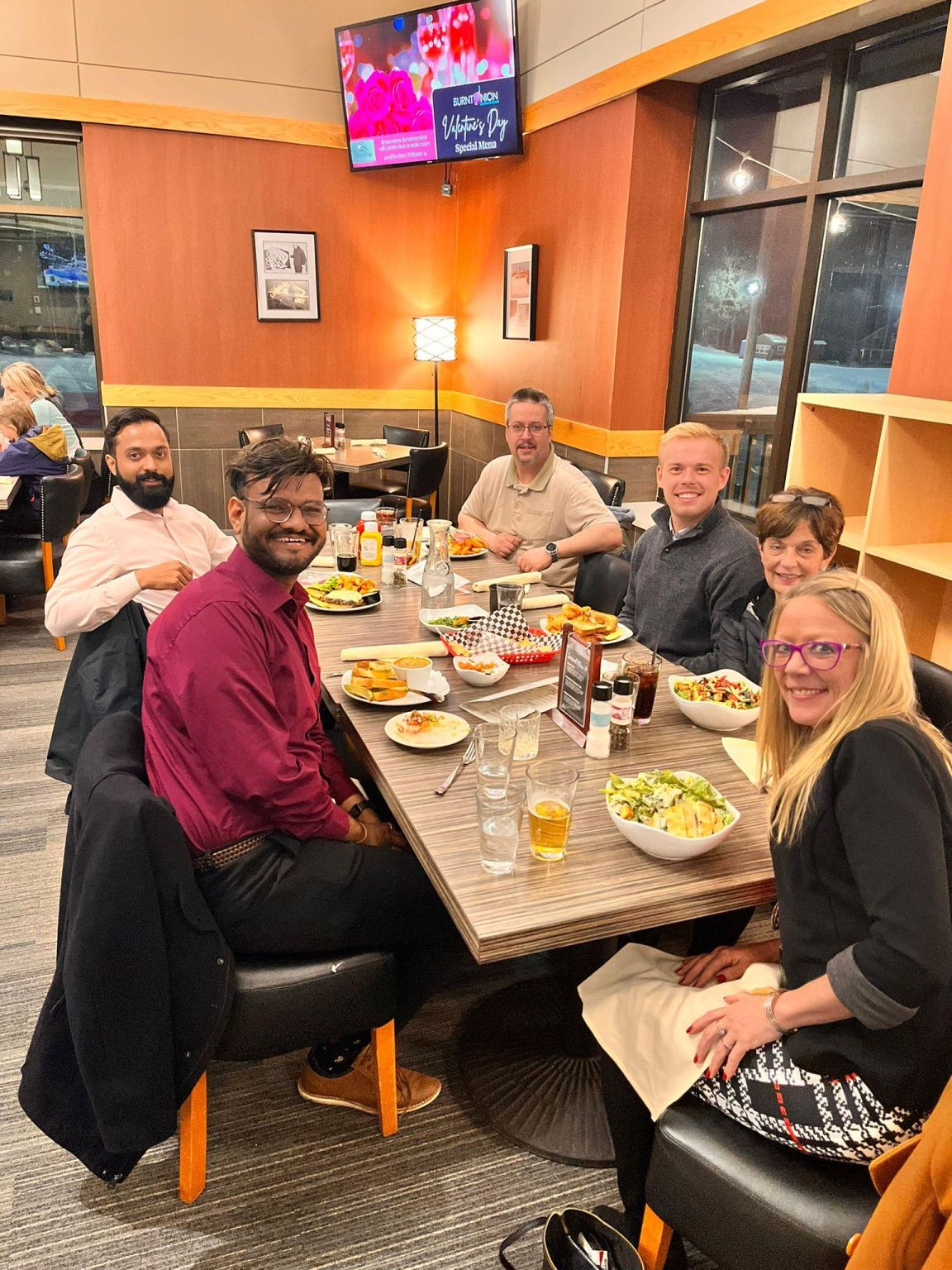
Dash’s record also includes five consecutive Inc. 5000 appearances, from 2020 through 2024. Inc. identifies Bhavsar as its leader. The recognition belongs to the company and its work across those years. Beside the executive titles, it adds a documented business record to a career otherwise best understood through the projects and relationships he describes.
Five consecutive appearances. Published list positions, 2020-2024.
Room to get something wrong
One of Bhavsar’s more revealing leadership remarks appears in a public discussion about team mistakes. He says errors should be acknowledged and fixed quickly. He also says he tries to celebrate mistakes and avoid holding them against leaders or individual contributors. His concern is that employees concentrating on protecting themselves will limit a company’s ability to grow.
“The quicker we acknowledge and fix our mistakes, the more resilient we become.”
Shani Bhavsar
That is a statement of the culture he wants to create, rather than a claim that every working day already lives up to it. The distinction gives the comment its interest. He describes trying hard. Anyone can announce that learning matters. The management problem begins when learning arrives attached to a mistake, a delay or a conversation nobody particularly wants to have.
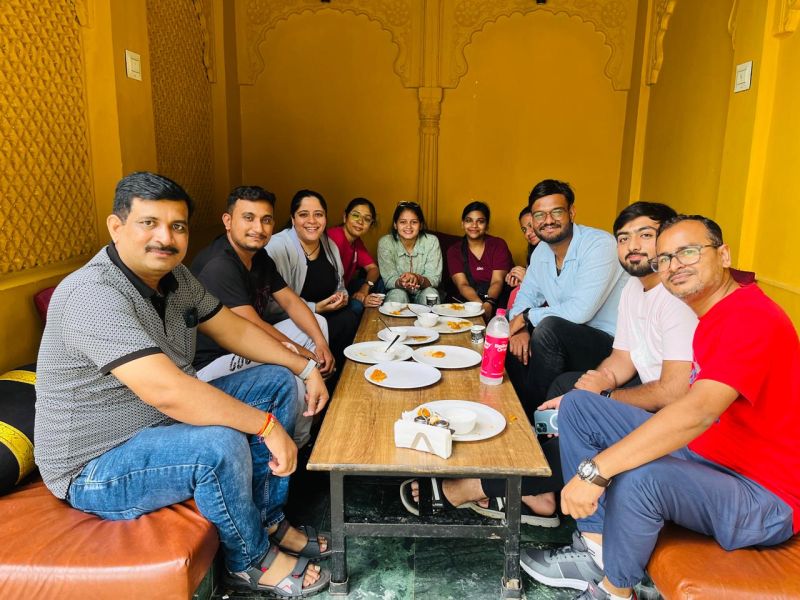
There is another glimpse of the team in Udaipur. In July 2024, Dash shared an outing that Bhavsar joined, describing sightseeing, time together and dance parties. The photographs have the familiar informality of colleagues away from their desks. A company may need delivery plans and reporting lines. It also has to decide who is sitting at the other end of the lunch table.
The first job is its own engineering problem
His interest in emerging talent has a business expression in ElevateMe, which identifies him as founder and CEO. The venture’s launch announcement in 2024 described an initial eight-month preparation program for international students pursuing their first US technology job. Its proposed ingredients included a capstone project, technical mentoring, a GitHub portfolio and individual career coaching.
The launch was scheduled for July 1, 2024, with applications closing the previous month. That announcement placed a timetable around an ambition that could otherwise remain rather vague: helping a student move toward employment. The practical components matter because each asks a participant to produce or practice something, rather than simply collect another description of a skill.
Those details put preparation into visible forms: work that can be shown, decisions that can be explained, an interview that can be practiced. In a video shared by ElevateMe, Bhavsar speaks about having been an international student himself and about the difficulty of finding guidance. His involvement gives this part of his career a personal connection beyond the founder title.
Another short video offers a distinctly low-tech suggestion. Students sending out applications from their rooms should try reaching local recruiters and hiring managers for coffee meetings. It is practical advice about making contact. After all the attention given to the application, he is asking the applicant to become a person somebody can have a conversation with.
Curiosity, with an operating budget
Bhavsar’s current comments about AI are concerned with what happens when organizations actually use it. In February 2026, he emphasized deployment, security, compliance and return on investment. Manufacturing and logistics were among the fields he discussed. The executive and the technologist meet in that list of concerns: the technology must work, and the business must be able to live with it.
His use of the tools is personal as well. In March 2026, he described relying on ChatGPT every day for brainstorming and technical and business problem-solving. The examples range from troubleshooting systems to working through decisions. This is a view of AI from inside a working day, where an idea may be interesting at nine in the morning and need a practical answer before lunch.
“ChatGPT has become an indispensable tool I rely on daily.”
Shani Bhavsar, March 2026
By May, his argument for Ohio had become an argument about relationships between institutions. He pointed to industry, universities and startups becoming more aligned, and to the possibility of building durable companies. That is a business case with a longer horizon than the next announcement. It also fits the founder who has already made his own life there.
The interests remain varied: code, companies, careers, the people doing the work. Bhavsar’s story has room for a classroom exercise in Python and a conversation with a transit operator, for executive responsibilities and an afternoon beyond the office. The Harley belongs in the picture, too. Sometimes the road out of town is a particularly good reason to call a place home.