Customer praise is a lovely thing to receive and a surprisingly awkward thing to operate. It arrives as a compliment in an inbox, a generous review, a willing reference or a Net Promoter Score. Then the machinery of a company takes over. Who owns the signal? Where is it stored? Can sales find it? Does product hear it? Did it help keep a customer, close a deal or change a roadmap? Bo Bandy has built a career in that untidy middle, where affection must acquire a workflow and marketing has to show its arithmetic.
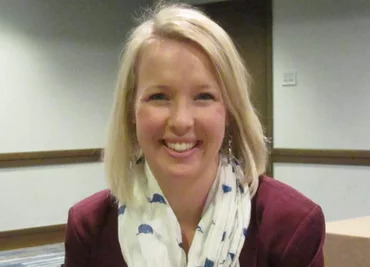
Today Bandy is chief marketing officer at Alchemer, the Colorado feedback-management company. Her remit is broad but plainspoken: growth, awareness and revenue, delivered through data-focused demand generation, nurture and retention. The title gives her a view across the funnel. The interesting part is how familiar the underlying problem remains. In every era of her career, useful customer knowledge has existed somewhere. The work is getting it to travel.
Before the category had a tidy name
Bandy graduated from Colorado State University in 2004 with a degree in technical journalism and public relations. It is a fitting combination for an executive whose career would become an exercise in translation: listen accurately, find the signal, explain why it matters. As a student, she led the campus chapter of the Public Relations Student Society of America. By 2010, she was marketing and public relations director at ReadyTalk, a Denver web-conferencing provider, and had joined the board of the university’s Alumni Association.
ReadyTalk became her laboratory. Long before “customer intelligence” appeared on every software menu, the company was formalizing onboarding, referral and reference programs. Bandy’s roles expanded across brand communications, content, social media and customer engagement, eventually reaching director of marketing. The program had a playful exterior - customers could participate in challenges and advocacy activities - but Bandy’s questions were rigorously unplayful.
“We just have to make sure we continue to ask.”Bo Bandy, discussing customer advocacy in 2016
The asking mattered because B2B customers do not automatically become advocates. Someone has to invite them into a useful relationship. The organizing mattered because a willing customer hidden in somebody’s spreadsheet is not much help to a product manager on a deadline. ReadyTalk’s advocate hub put those relationships under one roof and made participation easier to see.
One result was wonderfully concrete. Before the hub, a product owner who wanted a customer interview might wait hours or days while colleagues searched for the right person. With the organized community, Bandy said, a relevant interview could be sourced in half an hour to an hour. Those conversations sometimes changed or redirected the product roadmap. Here was customer advocacy functioning less like applause and more like infrastructure.
Counting the thing after the thing
Advocacy programs are excellent factories for impressive-looking integers: members enrolled, challenges completed, references supplied, case studies published. Bandy was wary of stopping there. At ReadyTalk, her team followed referrals into marketing-qualified leads and closed deals. They examined reference-influenced revenue. They wanted to compare the churn and spending of advocates with those of non-advocates. Participation was a beginning, not a verdict.
In a 2016 interview, she argued that the raw number of case studies means little when those cases do not convert into something useful. It is the sort of sentence capable of making a content marketer clutch the furniture. It was not an argument against stories. It was an argument for finishing the measurement.
Finishing was technically difficult. ReadyTalk tracked the top of its funnel in Marketo and the middle and bottom in Salesforce. Without a data warehouse, the facts lived apart. The modern marketing stack was already behaving like a large family at a wedding: nominally together, seated at different tables, communicating through intermediaries. Bandy’s proposed remedies were integrations, outside expertise or a custom application. The need was clear even when the plumbing was not.
There was also an eccentric proof of loyalty. ReadyTalk kept a group inside its advocate community for people who were no longer customers. Some had changed jobs or seen their companies acquired. They had not chosen to leave and still wanted a relationship. A prospect asking to speak with a former customer could meet someone from that group. Most companies treat churn as a locked door. ReadyTalk discovered a few people still standing cheerfully on the porch.
New industries, same instrument panel
Bandy’s career moved through a wide mix of markets: telecommunications, video games, aviation and advertising technology among them. Before Marketron, her record included ReadyTalk, Gogo Business Aviation and Namco Networks America. The products changed from conferencing to connected aircraft to games. The common demands of marketing did not: make the proposition intelligible, build the team, generate demand and find evidence that the work moved a business.
She joined Marketron in 2019, as local broadcasters faced a difficult migration. Traditional radio advertising remained important while digital spend was accelerating. Marketron sold the tools intended to help broadcasters participate in that growth. Bandy rose from vice president of growth marketing to senior vice president of marketing and general manager of digital.
Her promotion in 2022 followed a visible run of building. Marketron credited her with developing its marketing team and helping launch Marketron NXT and Marketron REV. NXT brought traditional and digital advertising management into a single cloud platform for radio organizations. By 2023, Bandy was talking with broadcasters about how to win digital dollars without pretending their industry was standing still. Evolution, in that setting, was not a conference theme. It was the operating condition.
The move to Alchemer in 2024 looks almost inevitable in retrospect. A marketer who had spent years turning the customer voice into a working business asset joined a company that sells the means to collect, connect and interpret feedback. Yet the role also changed the scale of the question. Bandy was no longer only building advocacy inside a single software company or marketing tools to a single industry. She was helping position an entire platform around the business value of listening.
The CFO is also part of the audience
Bandy’s current public work at Alchemer often pairs customer experience with financial fluency. In conversations with CFO Jove Oakley, she has explored the route from experience initiatives to retention, customer lifetime value, average revenue per user and cost. The premise is refreshingly free of departmental romance: finance and marketing want growth, but they may describe it with different nouns.
This makes the marketer a translator again. A program can improve an NPS result, but the argument cannot expire at the score. Which customers moved? Did they stay longer? What happened to lifetime value? What milestones will reveal progress before the long-term result arrives? The goal is not to coat customer experience in financial jargon. It is to show a credible chain from work to outcome.
The durable metric is rarely the first number on the screen. It is the next number - the one that tells another department what changed.
Her 2026 sessions apply the same habit to newer material. In a webinar on review ROI, Bandy argued that online reviews are underused marketing inputs. They influence decisions, certainly, but they can also supply campaign language, content ideas, social proof, sales material and competitive intelligence. In another session, she and Alchemer’s product leadership examined AI as a way to connect and understand feedback at scale. The vocabulary is new; the instinct is seasoned. Do not admire the signal. Put it to work.
There is room for levity in this instrumented world. An early profile noted that Bandy loves cooking, prefers books printed on paper and wants to drive a Formula 1 car. The racing ambition has survived in profiles because it has the compact charm of a good detail. It also suits someone whose work prizes dashboards, feedback and velocity, although the printed books suggest she knows not every useful experience should be optimized into glass.
At the opening of a 2026 product-roadmap webinar, a small technical snag delayed proceedings. Bandy joked that it would not be a webinar without one and admitted she had been moving carefully for fear of pressing a button that might eject everyone. The moment was ordinary, which is why it was good. Marketing technology has changed beyond recognition since her ReadyTalk days. Live software can still turn an executive into a cautious amateur for thirty seconds.
The craft of closing the loop
Bandy’s story is not a grand theory of marketing. It is more useful than that. Ask customers to participate. Keep the relationship personal. Build a place where their contribution can be found. Connect the systems that record what happened. Follow the referral past the click, the reference past the call and the score past the dashboard. Invite product, sales and finance into the result.
This is patient work disguised by energetic nouns. Growth. Advocacy. Intelligence. AI. Each depends on less glamorous verbs: tag, integrate, compare, follow up, report. Bandy’s career has expanded from communications to customer advocacy, from growth marketing to digital business leadership, and from there to the C-suite. At every stage, the scope widened because the customer signal reached another part of the organization.
A compliment can brighten a morning. A review can improve a page. A reference can unlock a sale. A pattern of feedback can change a product. The difference between them is not the customer’s enthusiasm; it is the system built around it. Bo Bandy has spent her career assembling that system, one useful question after another.
Keep exploring