A museum with six entrances poses an awkward problem for anyone trying to tell a story. Where does the story begin? At Los Angeles’s Nature Lab, the visitor can arrive from several directions. The designer has to make the room understandable without requiring everyone to follow the same route. A handsome opening panel will only get you so far.
That problem is a useful way into BLOSS, the design studio led by Allison Bloss Normandin. Its portfolio stretches from exhibition graphics to donor publications and transit communications. Across those different surfaces, a question keeps resurfacing: what does a person need to understand before they will care enough to continue?
BLOSS works on the meeting point between an organization and its public. Sometimes the public is a museum visitor. Sometimes it is a potential donor, a parent choosing a school or a consultant trying to produce something recognizably Metro. Those people need different things. Giving them the same attractive treatment would miss the point.
Six ways in. One understandable place.
Nature Lab explores wildlife in the city, making everyday animals worth another look. BLOSS’s project account describes graphics designed for different levels of interest, with playful interpretations of animal stories. The museum’s own description makes the invitation wonderfully concrete: visitors can inspect live habitats, look closer at insects and learn how their observations can help researchers. The neighborhood becomes something to investigate.
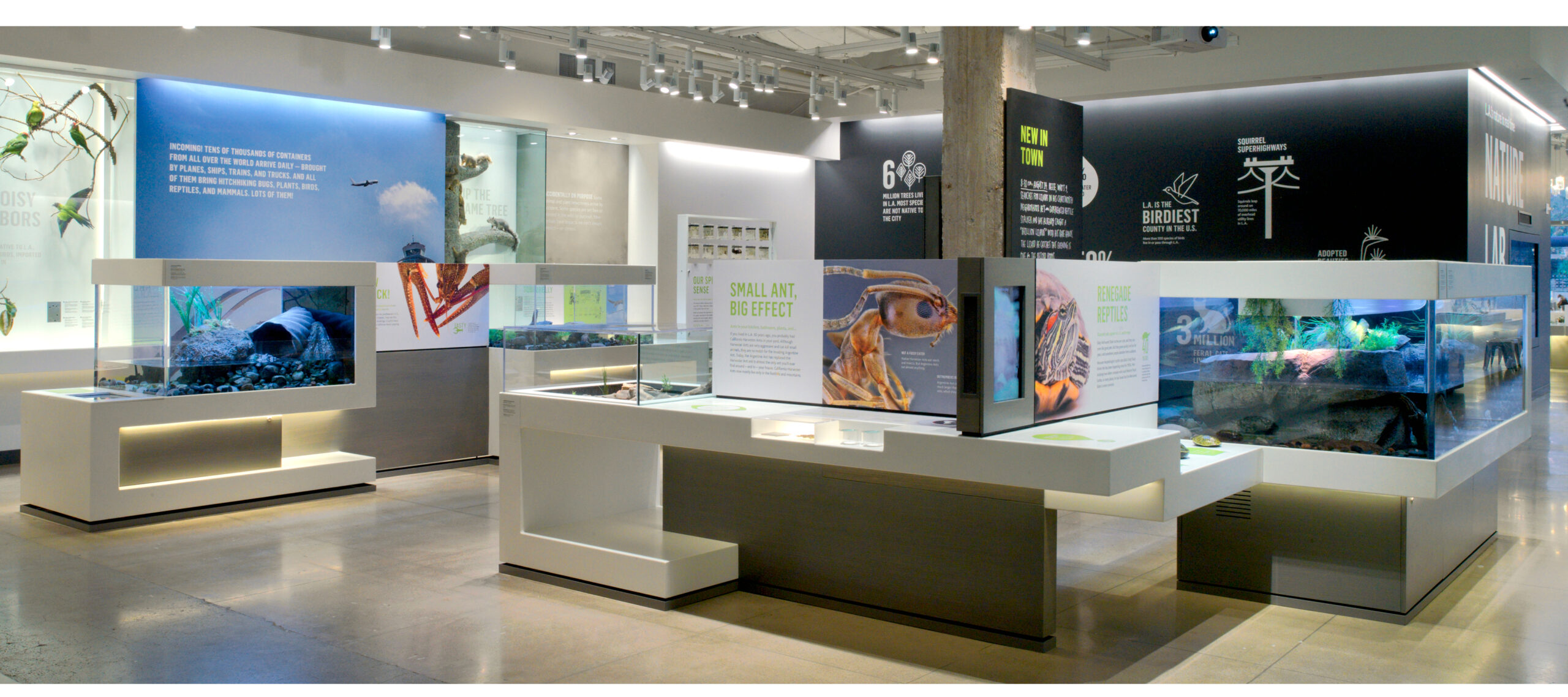
The credits matter here. Nature Lab was a team project: Gallagher & Associates handled exhibit design, and KBDA handled graphic design. Allison Bloss is credited with creative direction and design on the graphics team. BLOSS explicitly includes it as work performed on behalf of KBDA. Wendy MacNaughton and Brian Rea contributed illustrations. This is a record of the principal’s experience, with the collaborators attached.
SEGD’s award account explains the response to those entrances: consistent layers of navigation and storytelling. The exhibition received a 2014 Merit Award. Its listed $4.8 million budget belongs to the complete exhibition, including far more than graphics; it is not a BLOSS fee.
The practical lesson I take from the room is that an audience’s freedom is a design constraint. If people may begin anywhere, each part must offer enough orientation to stand on its own. That is an exacting requirement for a gallery. It is also a useful test for a long website.
The bus poster and the people behind it
With LA Metro, the studio has worked on both public-facing communication and the instructions behind it. For the NextGen Bus Study, BLOSS collaborated with Metro Design Studio on a graphic system intended to draw interest and support for a review of the bus network. Applications included community-meeting posters, website animations and graphics on buses.
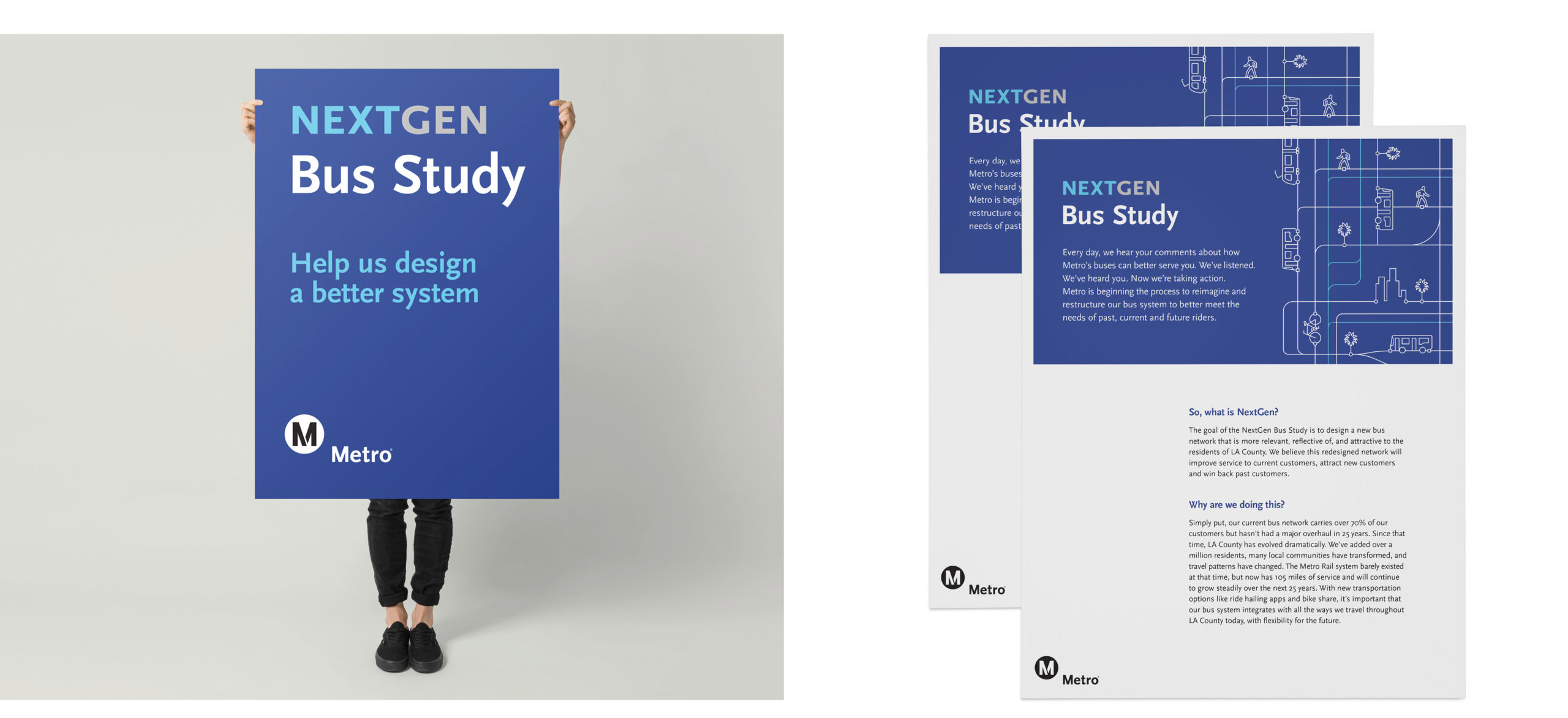
The assignment joins two kinds of attention: the quick glance and the longer read. A poster has to announce why something deserves notice. The accompanying material has to carry the explanation. In the pictured work, the bold blue field and line drawings connect those formats while the amount of information changes.
A separate Metro assignment went inside the organization. A growing network of employees and consultants needed a brand-guidelines website. BLOSS interviewed people in different departments, using those conversations to inform the site’s content, design and functionality. Its account describes a balance between rules and examples, with continued work to expand the site.
The live Making Metro site shows the breadth of that job. Alongside logos, color and typography sit writing guidance, photography, infographics and production checklists. A brand has to survive dozens of ordinary decisions after the original designer has left the room. Here, the deliverable helps other people make those decisions. For a communications manager, that is a very practical thing to buy.
A future you can turn the pages of
The Hammer Museum campaign book, another portfolio project credited to KBDA, takes a different route into understanding. It was a limited-edition publication made to solicit support for the museum’s ambitions. Its sequence starts with what the institution already offers: a mix of imagery and vital statistics. Then it moves to renderings and messages about what community support could make possible.
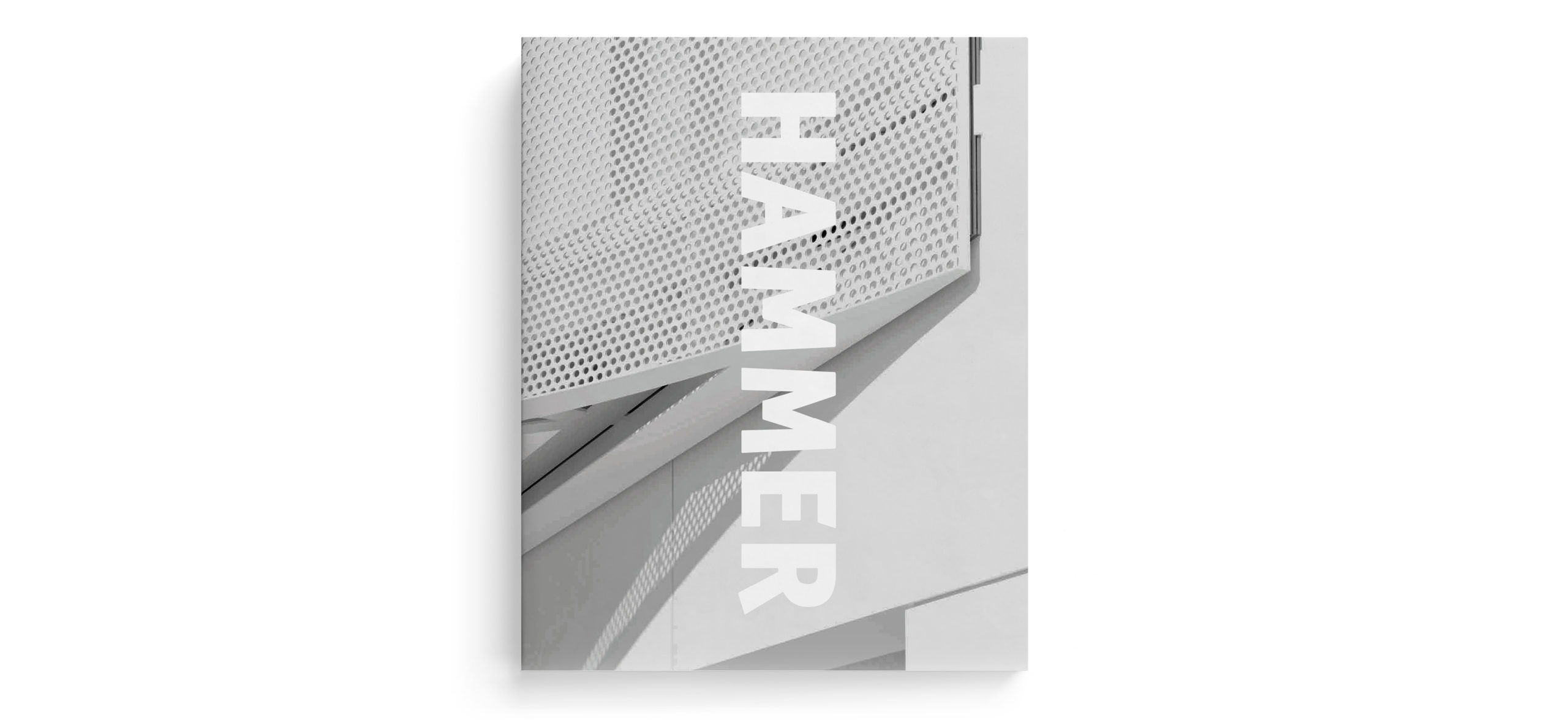
That order is the interesting part. Before asking a reader to imagine a future building, the book establishes a reason to care about the institution occupying it. BLOSS lists a first prize in the American Alliance of Museums’ publications competition for fundraising and membership material. The editorial mechanism is simple enough to borrow: establish the value, then make the proposed change visible.
Here is what
already matters.
Here is what
could happen next.
It is worth resisting the temptation to turn that sequence into a universal fundraising formula. It depends on an institution having accomplishments to show and a future it can explain. Design can organize that case; the organization still has to supply the substance.
A little yellow goes a long way
BLOSS’s more recent public account of its CAP UCLA collaboration concerns a quieter problem: how to signal a new season while remaining recognizable. The studio describes three seasons of work, introducing a new graphic element each time. For 2025-26, it added vivid yellow to a black-and-white palette.
This is a revealing choice. Seasonal communications need change, but audiences also need continuity. My reading of the approach is that it gives each season a visible difference without discarding the framework that connects them. A useful briefing question follows: what should a returning audience recognize immediately, and what should tell them something new is happening?
A related economy appears in the Wildwood School identity in the portfolio, credited to KBDA. The leaf represents growth; its veins form a labyrinth associated with self-discovery. The school’s viewbook joins approachable photography with messaging that questions conventional ways of assessing schools. The small symbol and the longer explanation have complementary jobs.
Someone still has to call the printer
The studio describes its approach with a short, serviceable phrase: “We dig deep to organize complex information.” Its offerings cover identity, editorial, content, environmental graphics and digital communications. This is a commissioned services business, serving organizations with a message to develop and deliver. The portfolio suggests both individual projects and continuing relationships.
“We dig deep to organize complex information.”
BLOSS · Studio description
A 2025 designer recruitment notice supplies a less polished, more useful view of the work. It offered $65,000–$75,000 with benefits and a flexible hybrid arrangement. The candidate needed typography and grid skills, listening ability and experience handling shifting deadlines. Duties included preparing files for printers, tracking schedules and contacting vendors for estimates.
That combination explains the studio’s place in the market better than a list of software. An institution can hire a freelancer, rely on its internal team or commission a specialist practice. BLOSS presents experience connecting content and graphics across physical and digital formats. Its Metro collaboration also shows how an outside studio can work alongside an existing design department.
Start with the person arriving halfway through
The repeatable idea is to bring the explanation into the design brief early. Ask who will encounter the work, what they already know and what they need next. For a brand guide, talk to the people applying the rules. For a donor book, put evidence before aspiration. For seasonal work, decide what should stay recognizable.
Those are editorial deductions from the projects, not promises of a measured business result. They require access to the people and information behind the assignment. A studio brought in only to decorate a finished message has less room to make those decisions. Back at Nature Lab, the visitor still gets to choose an entrance. The interesting design work begins by accepting that.
Take a closer look
Explore BLOSS’s project portfolio, visit Making Metro, or plan a visit to Nature Lab.