The first thing to understand about Blackview is that normal phone design rules have been politely escorted from the building. Thinness is not sacred. A tasteful camera bump is not the point. The company makes phones and tablets for people whose day might involve rain, concrete dust, work gloves, a dead outlet and something suspiciously warm behind a wall. That changes the brief.
Founded in 2013 by David Xu, also known as Xu Ming, the Shenzhen-rooted brand began with rugged Android phones and built outward. Blackview now sells mainstream phones, tablets, laptops, mini PCs, watches, earbuds, smart locks and smart glasses. Yet its clearest identity remains the armored device: thick rubberized corners, sealed ports, large batteries and the occasional feature that sounds borrowed from a hardware-store aisle.
Its customers are similarly concrete. Hikers want power far from an outlet. Plumbers and inspectors can use thermal imaging to spot heat patterns. Construction crews need screens that survive dust and drops. Night workers value infrared vision and bright rear lamps. Budget-minded buyers simply like getting a lot of hardware for the money. Blackview says its products reach more than 100 countries and regions through more than 100 authorized agents, regional stores and marketplaces including Amazon, eBay, AliExpress, Ozon and Cdiscount.
The phone that ate the toolbox
The differentiation is not merely toughness. Samsung sells rugged enterprise devices. Sonim makes durable handsets. Ulefone, Doogee, Oukitel, AGM, FOSSiBOT and 8849 chase the same outdoor and industrial buyer. Blackview's sharper move is to stack several narrow utilities inside one chassis, then sell the bundle at consumer-electronics prices.
Consider the BL9000 Pro. Launched with Teledyne FLIR in 2024, it combined a FLIR Lepton 3.5 thermal sensor, 5G, Android 14 and MyFLIR Pro software. The point was not prettier vacation photos. Thermal overlays, temperature alerts and isotherms can help a technician inspect equipment or a tradesperson trace a problem. FLIR also said the handset could work with approved third-party enterprise apps through its mobile SDK. Here the partnership is meaningful: Blackview supplies the rugged phone; FLIR supplies a recognized sensing platform and decades of thermal expertise.
Then came the projector phase. In August 2025, Blackview introduced the Active 12 Pro, a 5G rugged tablet with a 30,000mAh battery, a 200-lumen 1080p autofocus projector, a 400-lumen camping light and a 108-megapixel main camera. The announced starting price was $529. A month later, it previewed the XPLORE 2 Projector phone with a 100-lumen projector, a physical focus knob and a 20,000mAh battery.
This sounds excessive until the setting changes. In a tent or dark room, a built-in projector can turn a wall into a shared map, training screen or movie. On a remote site, a giant battery reduces the need for another power bank. A rear work light replaces a torch. None is necessarily best in class, but the integrated package means fewer things to charge, pack, lose or break.
Blackview's real product is not armor. It is one less separate tool in the bag.
The bargain, written in small type
Independent reviewers tend to find the hardware proposition legible. TechRadar called the sub-$200 BL7000 impressive as a pure rugged phone and found its Android 15 interface responsive. Its BV7300 review praised useful cameras and battery life while pointing out compromises in display resolution, chipset efficiency and streaming quality. An earlier BV7100 review found performance and battery life better than the low price suggested, while criticizing preloaded software.
The first thing to fail in the broader Blackview story is often not a gasket. It is confidence in software longevity. A 9to5Google review of the foldable Hero 10 treated a promised three years of updates cautiously. Neowin's BL8000 review noted an old security patch and grouped Blackview with peers that struggle on updates and support. Owner forums contain recurring complaints about infrequent upgrades, bugs and difficult service, alongside owners pleased with durable hardware or replacement parts. Anecdotes are not a failure rate, but the pattern tells buyers what to verify.
The pre-purchase test
Ask for the exact security-update cadence and end date in writing. Then confirm carrier bands, activation, warranty coverage and local repair options for the exact model number. Ruggedness does not solve fleet management.
This matters because Blackview sells two different promises. The physical promise is easy to photograph: IP ratings, reinforced frames, port covers and heroic drop-test imagery. The platform promise is quieter: security patches, modem compatibility, bug fixes and app support over years. A field device used for work may need the second promise more than the first, particularly inside a managed corporate or government fleet.
Price changes the calculation. A tradesperson who wants an inexpensive thermal-capable phone may accept a shorter lifecycle, especially if the alternative is a premium handset plus a separate sensor. A security-sensitive organization should not. The cheap device stops being cheap when IT cannot enroll it, a carrier will not certify it, a cracked unit must travel internationally for service, or an old Android build blocks required software.
A niche wide enough to export
Blackview makes money the old-fashioned hardware way: design and manufacture devices, then sell them through direct storefronts, distributors and giant marketplaces. The supplied business record estimates annual revenue at $160 million and team size near 97, but neither figure is publicly audited. It also lists one $450,000 venture round in 2018, with no named investors. This does not resemble the capital story of a Silicon Valley phone startup. The more interesting asset is distribution.
Global e-commerce allows Blackview to aggregate small, scattered audiences. There may not be enough thermal-phone buyers in one American city to justify a carrier-store display. There can be enough plumbers, campers, warehouse operators and gadget enthusiasts worldwide to support a product line sold online. The company compounds that reach with regional sites and agents, while its 30,000-square-meter factory claim suggests control over meaningful manufacturing capacity.
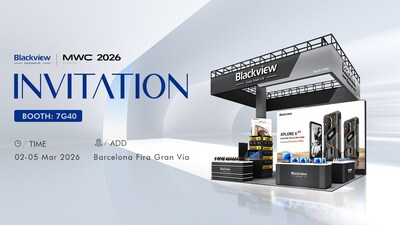
What changed Blackview's mind from rugged-phone specialist to broad smart-device brand is not documented as one dramatic pivot. Its product trail suggests a more ordinary answer: adjacency. Once the company had manufacturing, Android expertise and export channels, tablets were close. Laptops and mini PCs used the same retail pipes. Watches, earbuds and smart locks expanded the basket. In 2026 it brought AI smart glasses to Mobile World Congress and invited distributors to discuss the wider portfolio.
The risk is dilution. A company known for one sharp promise can become a shelf of unrelated electronics. Blackview is most convincing when the adjacency preserves its original logic: devices for awkward environments and overlooked jobs. A projector tablet belongs because it consolidates field gear. Generic earbuds need a different reason to exist.
There is also a useful restraint hidden inside the spectacle. Blackview does not need to beat the latest iPhone at portrait photography or persuade everyone to carry a half-kilogram phone. It needs to make a particular buyer say, “that replaces two things I already carry.” A niche company loses when it seeks universal approval. It wins when the right minority recognizes its own Tuesday morning in the specification sheet.
What builders can steal
The copyable idea is not to bolt a camping light onto every SaaS product. It is to design for a place instead of a vague persona. Start with the environment: rain, gloves, darkness, no outlet, no projector, limited bag space. Those constraints produce a specific product without a brainstorming retreat about “delighting adventurers.” Blackview's best features are answers to nouns.
Enter through one neglected job, stack complementary utilities, and use online distribution to gather a niche spread across many countries.
Hardware breadth magnifies support debt. Publish update windows, stock parts and make warranty service as tangible as the drop test.
The playbook works when buyers have a recurring physical problem, mainstream brands ignore it, component costs allow an attractive bundle, and digital channels can reach the scattered demand. It does not work when certification is the product, long software support is mandatory, low weight matters more than endurance, or a modular tool is safer to replace than an all-in-one device. An integrated thermal camera is convenient; a separate professional sensor can move to the buyer's next phone.
Blackview fits between consumer gadget brands and traditional industrial equipment. It is cheaper and more experimental than many enterprise vendors, more purpose-built than a mainstream phone in a thick case, and more globally available than its niche might suggest. That middle is valuable, but unforgiving. Buyers will tolerate weight for battery life and eccentricity for utility. They should not have to guess how long the operating system will be cared for.
Thirteen years after its founding, Blackview has proved that an unfashionable shape can hold a real business. The next achievement is less photogenic: making support durable enough to match the chassis.