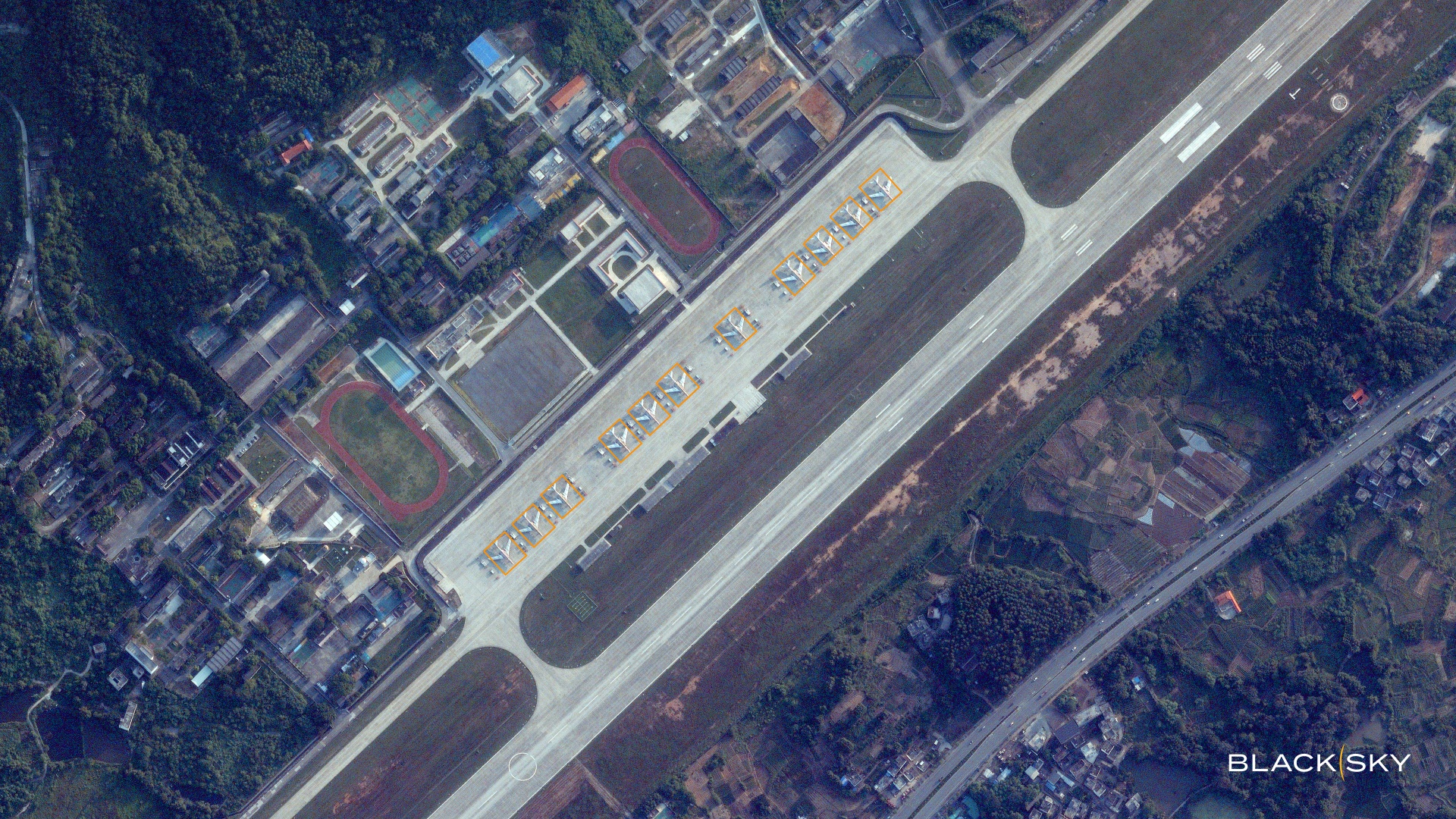
At 7:25 on a September morning in 2026, an airfield near Nanning, China, appeared in the first images from BlackSky’s fifth Gen-3 satellite. The spacecraft had been launched less than twenty hours earlier. Through morning haze, aircraft were visible below. For a satellite company, that is a technical milestone. For an intelligence customer, the interesting question comes next: when can we look again?
BlackSky has built its business around that second look. A photograph establishes what was there. A sequence reveals what is changing. At a port, an airport or a military installation, the difference can determine whether an analyst notices an unusual arrival while there is still time to act.
- BlackSky combines its own satellites with Spectra, its tasking and analysis software.
- Customers buy flexible collections, reserved regional capacity or complete sovereign systems.
- The pitch depends on three things working together: detail, repeated visits and fast delivery.
A camera with a calendar
The company’s SEC disclosures date its legacy business to 2014. In 2016, BlackSky acquired OpenWhere, the geospatial software company founded by Brian O’Toole, who later became CEO. The same year, its Pathfinder-1 satellite reached orbit. The pairing helps explain the business that followed: build the means to collect observations and the means to make them useful.
Much of the appeal of satellite imagery comes from perspective: the impossible view, suddenly available. BlackSky adds a time dimension. Its constellation uses mid-inclination orbits to revisit strategic locations at different times of day. Spectra lets customers request collections, examine archived images and use automated detections of aircraft, vessels and vehicles.
That changes the analyst’s job. Instead of inspecting every fresh frame from scratch, a user can investigate changes in counts or positions. An aircraft moving is an observation; deciding whether that movement matters still requires context. Automation helps narrow the pile of things worth examining.
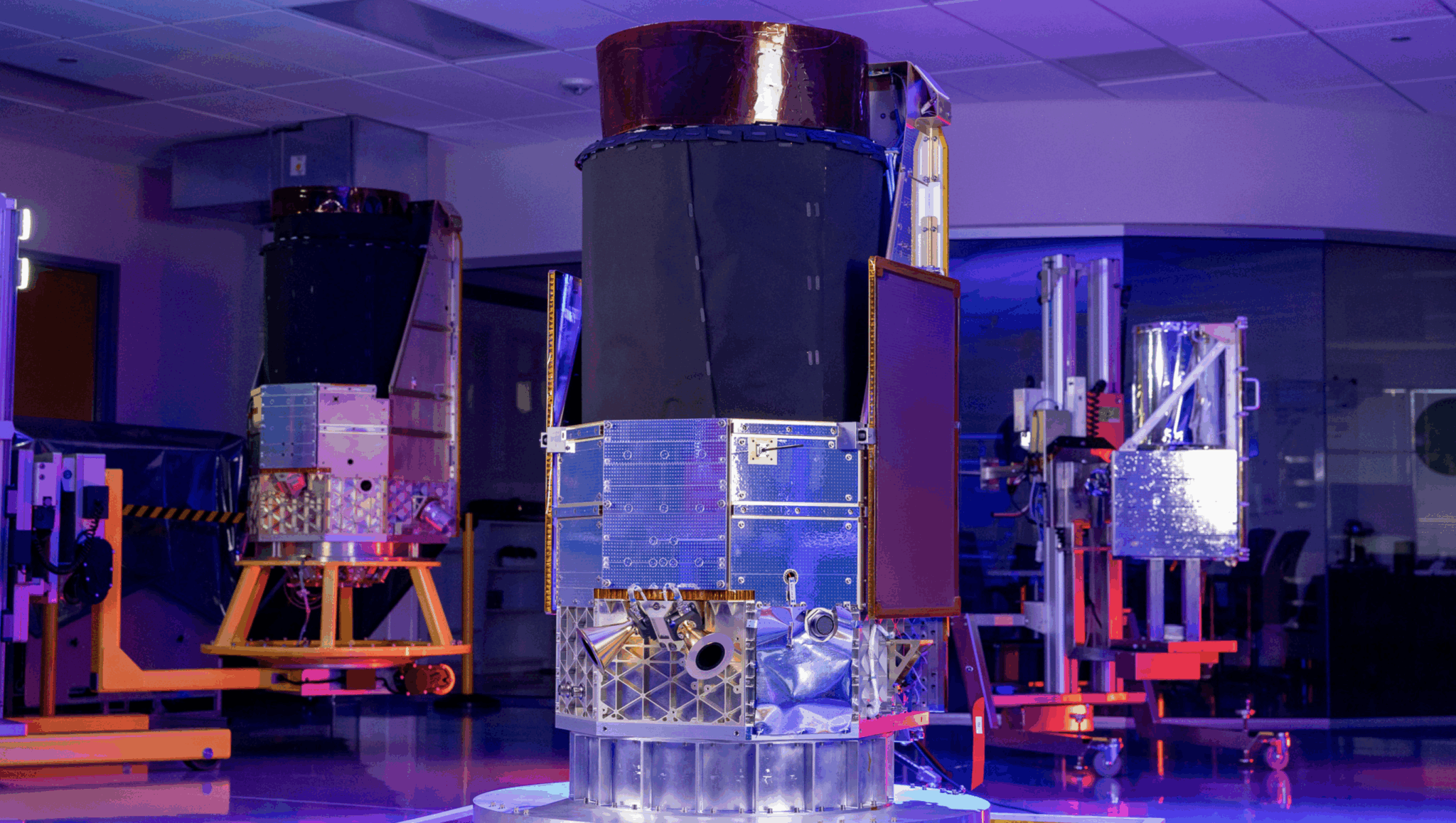
The original hardware proposition was unusually tangible. In 2016, BlackSky described Pathfinder as a 50-kilogram spacecraft that could fit in an airliner’s middle seat, costing less than $7.5 million on orbit. Those were demonstration-era figures, rather than a current Gen-3 price list. They show the early ambition: make repeated observation affordable by shrinking the machinery that supplies it.
The underlying system joins work that can otherwise be fragmented: scheduling a satellite, downloading its data, processing imagery and delivering analysis. BlackSky’s expertise spans spacecraft, ground systems, computer vision and software integration. Owning that chain gives it more control over how quickly an observation becomes something a customer can use.
The fine print is part of the product
Gen-3’s published specifications put visible imagery at a best ground sample distance of 35 centimeters. That describes the ground represented by a pixel, rather than a guarantee that every object that size can be identified. Short-wave infrared is listed at 1.2 meters. The two measurements describe different capabilities.
The same datasheet advertises 60-minute revisits and delivery in as little as 60 minutes, with a consequential footnote: those timings assume a full operating constellation of sixteen satellites. September’s announcement concerned the fifth Gen-3 spacecraft. Buyers should distinguish that future configuration from the collection opportunities available for a particular location today.
35 cm best visible ground sample distance
Hourly Gen-3 revisit specification assumes 16 satellites at full operating capacity.Current service descriptions offer delivery in under ninety minutes for On-Demand and hourly revisits over some areas. Geography, weather and tasking priority matter. Optical imagery cannot promise a clear view through opaque cloud, and repeated still images do not amount to continuous video. The useful purchasing question is specific: can this service answer my question, here, in time?
Buy a picture. Reserve a place in line.
BlackSky’s two subscription offerings turn access into a choice. On-Demand supports flexible tasking across changing areas of interest. Assured reserves collection capacity over defined areas, with contract-backed commitments. Both provide Spectra access. The distinction matters when several customers want the same satellite’s attention.
Its customers include U.S. intelligence and defense agencies, international governments and commercial organizations. The National Reconnaissance Office buys imagery; the National Geospatial-Intelligence Agency’s Luno program buys analytical services. Commercial applications include monitoring infrastructure and economic activity. This is a business built around consequential decisions, often purchased through negotiated contracts.
An October 22 announcement supplied a concrete example. An unnamed international defense partner doubled its subscription in less than six months. The relationship had started with a small Gen-2 pilot and grown into an annual Gen-3 Assured subscription. The announcement documents expansion, rather than a private account of what persuaded the buyer.
“More of a software data analytics company that happens to own some satellites.”
Brian O’Toole, describing BlackSky in 2021
Space still sends the bill
The economics have a stubborn physical component. In May 2021, a Rocket Lab launch failure destroyed two BlackSky satellites. BlackSky recorded an $18.4 million impairment including satellite procurement, launch and associated costs. Before software could analyze a single new scene, the delivery vehicle had failed.
The company kept building. In November 2024, it acquired the remaining half of manufacturer LeoStella, bringing satellite production fully under its control. Its Tukwila operation now supports the Gen-3 rollout. Vertical integration offers control over production and design; it also brings the obligations of running a factory.
Second-quarter 2026 revenue reached $33.3 million, compared with $22.2 million a year earlier. The company still posted a $20.8 million GAAP net loss. It also raised $150 million through share sales during the quarter. Growing subscriptions sit alongside continuing demands for capital.
Borrowing carries its own price. In July 2025, BlackSky priced an initial $160 million convertible-note offering at 8.25% annual interest, with maturity in 2033. Much of the planned proceeds would repay existing borrowing. The transaction addressed existing obligations as well as future spending: gross money raised should never be mistaken for money freely available to build satellites.
The customers looking sideways
BlackSky competes with Vantor, formerly Maxar Intelligence, and Planet’s high-resolution tasking services. Those companies also combine imagery with software. BlackSky’s position rests on the combination of time-diverse monitoring, low latency and reserved access, rather than resolution alone.
Its next opportunities stretch beyond selling observations of Earth. Mission Solutions offers governments a progression from subscriptions to their own satellites, ground systems and operational control. Meanwhile, HEO uses BlackSky spacecraft to photograph other objects in orbit. An October 2026 extension brought Gen-3 into that seven-figure annual partnership.
There is a useful lesson here for businesses without a launch budget: start with a narrow, paid pilot that answers a recurring question, then make expansion easy. BlackSky’s contracts show customers taking that route. The idea travels wherever fresh information repeatedly changes a decision. It becomes harder to justify when yesterday’s answer is good enough.