At Marine Corps Air Station Cherry Point, the interesting technology story was a 911 system. In March 2017, Hexagon announced that its computer-aided dispatch software had reached initial operational capability in the Marine Corps’ Consolidated Emergency Response System. The revealing detail was the burden of proof: more than 1,500 requirements, cybersecurity obligations, engineering tests and live operation. An emergency call looks simple from the outside. Inside an installation, making the right information reach the right people is an engineering problem with very little tolerance for improvisation.
- Turns mapping, sensors and operational data into systems federal agencies can use.
- Combines software and equipment with integration, engineering and support.
- Now operates as Octave Federal following the May 2026 rebrand.
The 911 test
Hexagon US Federal occupies the space between buying technology and getting it accepted into service. Its customers include defense, intelligence and civilian agencies, alongside industry partners. The portfolio stretches from geospatial analysis to public safety, positioning and custom hardware. That breadth makes more sense when you start with the customer’s job: understanding a situation well enough to do something about it.
The dispatch program offers a concrete example. Its five-year contract, awarded in 2014, carried a $35 million ceiling. That figure describes an ordering limit, not a receipt for money spent. Operational acceptance opened the way for a rollout across 12 Marine Corps bases worldwide. The commercial product was only part of the purchase; the work included fitting it to a demanding operational setting.
One foundation, two screens
Consider another customer. In April 2021, General Atomics Aeronautical Systems selected Hexagon US Federal’s Luciad capabilities for two intelligence, surveillance and reconnaissance projects. Metis handled autonomous tasking, collection management and intelligence sharing. The Multi-Mission Controller supported operator control of multiple platforms. Related work, different interfaces.
The choices were specific: LuciadRIA for the browser-based Metis system, LuciadLightspeed for the desktop controller, and LuciadFusion as the shared geospatial server. The arrangement illustrates the company’s role rather neatly. Different users can need different tools while depending on a common geographic foundation. Under today’s Octave branding, the Luciad portfolio is called Alto.
That places the company among several overlapping markets. Esri offers a broad GIS platform for defense and intelligence. Leidos supplies geospatial intelligence and mission services. These are alternatives for particular requirements, rather than exact substitutes for everything Hexagon US Federal sells. Its proposition combines access to a technology portfolio with people who can adapt and integrate it for federal use.
An editorial map of the portfolio, not a claim that every product uses one architecture.
When the signal gets unreliable
A position on a screen carries an assumption: the underlying signal deserves to be trusted. The company’s assured positioning, navigation and timing work addresses environments where interference or adversarial activity can undermine that assumption. The current offering lists NovAtel and Septentrio receivers, inertial sensors, anti-jam antennas and custom M-Code receiver products.
For a buyer, this is a systems question. Which receiver, antenna and other inputs fit the platform and its operating conditions? The catalog supplies building blocks. Engineering determines how they work together. A product list alone cannot establish performance against every possible threat; a useful procurement has to connect a defined environment with measurable acceptance criteria.
An unglamorous box with an ambitious job
Then there is ELSA, the Exploration Lidar Sensor Assembly. The official product photograph shows a metal enclosure that would struggle to win a beauty contest. Its job is more interesting: mapping and altimetry, developed through NASA funding. Helicopter tests in December 2023 demonstrated those capabilities, while the company describes continued development and further testing.
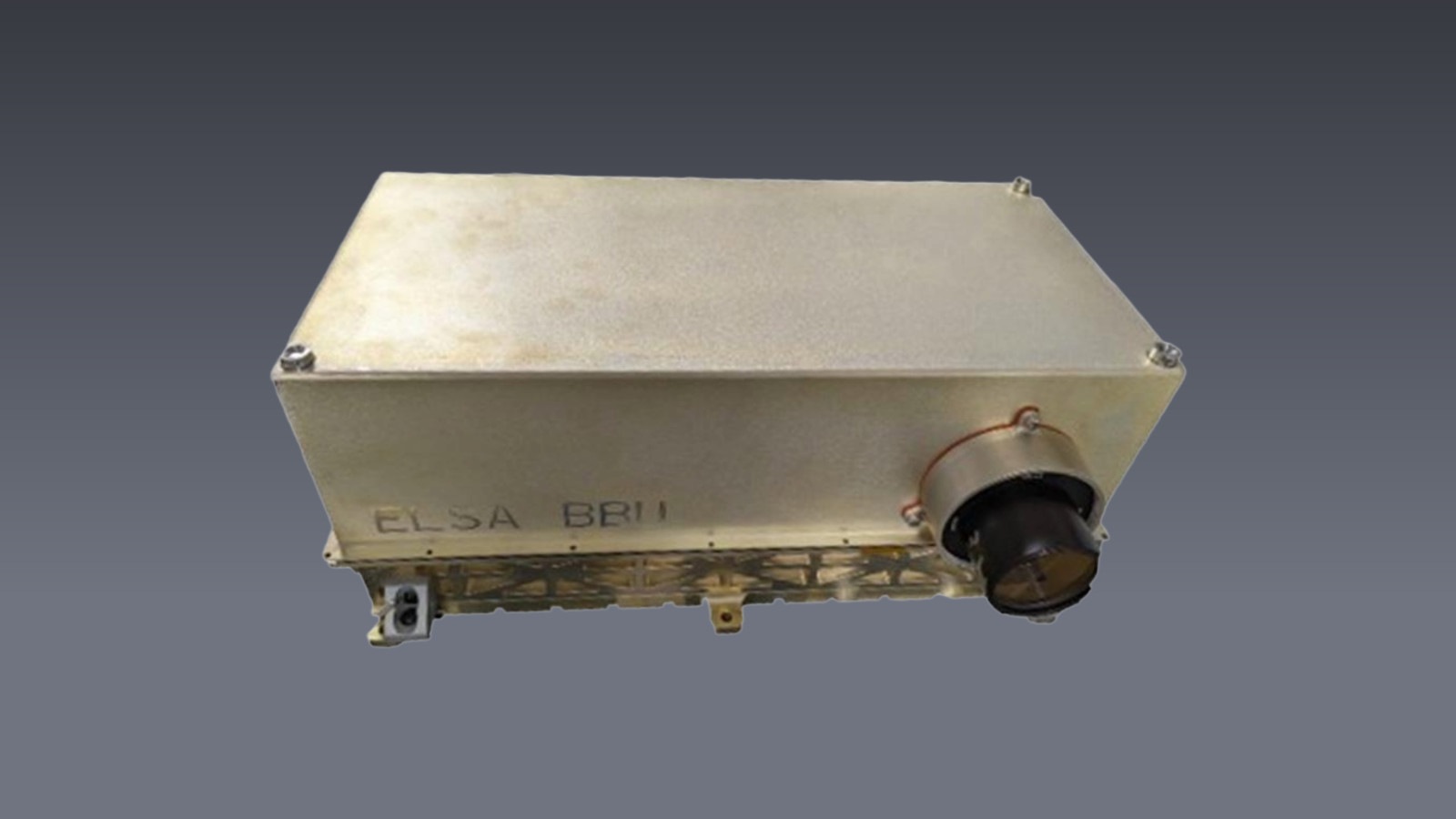
The distinction between demonstration and readiness matters. ELSA’s page says lessons from testing are feeding firmware and electronics updates. It does not present that development process as a finished deployment. Across the broader sensors business, electrical, mechanical and optical engineering sit alongside airborne and space-based lidar work and Leica surveying equipment. Collecting useful information begins well before an analyst opens a map.
A new name for the same difficult work
This is a business with corporate layers. Established in 2010 as Intergraph Government Solutions, it became Hexagon US Federal in January 2017. The announcement retained the independent board and existing leadership structure. Joe Fehrenbach, then president and chief executive, explained the naming decision:
“Six years ago, we were acquired by Hexagon and now it’s time to evolve.”
Joe Fehrenbach / January 2017
Another change arrived in May 2026, when the federal business adopted Octave Federal branding. Parent Octave separated from Hexagon and began New York trading that month. The old company website now takes visitors to the new federal site. For someone evaluating the business, following that redirect is more useful than relying on an old directory entry.

The economics mix software licenses and subscriptions, hardware, engineering, maintenance and support. Government buying routes include its GSA Multiple Award Schedule. Cybersecurity and quality processes are part of this commercial reality: the company reports CMMC Level 2 achievement in June 2025 and an ISO 9001:2015 quality management system. Those credentials answer particular procurement questions; they do not replace program-specific evaluation.
There is a people business underneath the equipment list. The current careers page recruits public-safety specialists, software engineers, cybersecurity engineers and program managers. It advertises education assistance and a veterans’ employee resource group. Its stated values emphasize clarity, trust and responsibility. Those are employer descriptions, but the range of jobs is revealing: delivering these systems takes people who understand operations as well as people who can write code.
The part buyers should copy
The useful lesson is a purchasing habit: evaluate the complete workflow. Cherry Point’s live operation supplied evidence before wider dispatch deployment. General Atomics’ architecture matched browser and desktop needs to shared infrastructure. ELSA’s testing continues to inform revisions. Each case directs attention toward the connections between components and the conditions in which people will use them.
Start by tracing one piece of information through the proposed system. Who collects it? Where is it processed? Which person or application receives it next? The dispatch, mapping and navigation examples suggest a useful way to organize that conversation around actual handoffs. It is an editorial lesson from the company’s work, rather than a promise that the same configuration will suit every agency.
That approach suits agencies with demanding integration needs and the resources to specify, test and maintain a system. A small team seeking a quick standalone mapping tool may need much less. The sensible first question is practical: what decision must this technology support, and what evidence will show that it can? Start there, and the long catalog becomes easier to read.