The file was supposed to be in an attorney’s office. The computer said so. But the file had moved, and the computer had stayed confidently behind. At an Ohio law firm handling tens of thousands of files, this ordinary mismatch was consuming time that case managers could have spent helping clients. CDO Technologies’ account of the project begins with a familiar workplace mystery: everyone has a system, yet someone is still looking under a desk.
- CDO connects physical assets to records people can use.
- CATS combines tracking software with RFID, barcodes, and enterprise integration.
- Its broader business serves defense and commercial customers with IT and cybersecurity.
The file was here a minute ago
The law firm’s problem was the handoff. Several attorneys might use the same file. Manually updating its whereabouts had become unreliable. CDO recommended barcodes and radio-frequency identification, or RFID, then divided the building into sections. Weekly inventories established a recent location. A handheld reader’s Geiger-counter feature helped staff search the right area.
That arrangement contains a useful piece of restraint. The customer needed a workable way to recover files. A weekly inventory and a targeted search could help. The technology served the rhythm of the office, including the inconvenient fact that people carry paper from room to room.
Follow the cart, then buy the reader
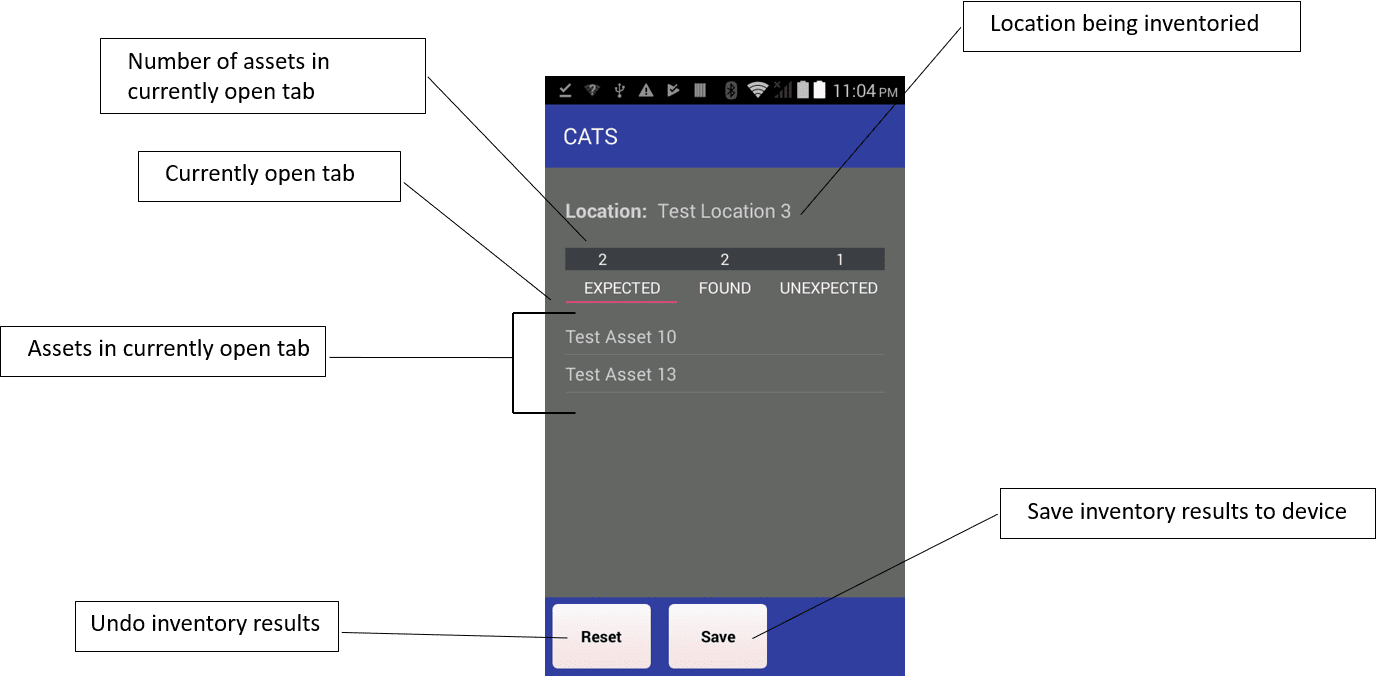
CDO’s Critical Asset Tracking and Visibility Solution, CATS, supplies the software behind such projects. It stores asset information and location histories, supports inventories and transfers, and exchanges data with enterprise systems. It can run in-house, in a data center, or in the cloud. Offline collection can synchronize after reconnection. The useful record depends on when and where something was actually scanned.
Consider another CDO case: a building-products manufacturer replacing hundreds of reusable carts each year. Carts traveled between two facilities and customers, then vanished into overlooked storage areas. CDO studied the routes and installed RFID reading portals at docks and places where carts tended to disappear. Connecting CATS to the manufacturer’s enterprise resource planning system added shipment context.
The company reports better cart returns and fewer replacement purchases. The revealing detail is the order of operations: observe the movement, identify the blind spots, then position the readers. Buying hardware came after understanding why the hardware was needed.
- 01TagGive it an identity
- 02ReadCapture the handoff
- 03RecordKeep the context
- 04ActFind, return, verify
In a separate shipping project, incorrectly identified and miscounted pallets left orders incomplete. CDO examined staging and shipping, placed scan portals at checkpoints, and linked CATS with the customer’s order system. It reports human-error reductions of up to 15% in that case. Treat that as a project result reported by the supplier, rather than a forecast for every warehouse.
The road remembers who dug it up
RoadTag applies identification to something that hardly moves: pavement. Contractors place programmed RFID tags beneath the final layer of a street repair. An inspector can retrieve information about responsibility, permits, and warranty timing. CDO tested more than a dozen tag types, according to its product description. The material surrounding a tag belongs in the engineering brief.
After field testing in Dayton, CDO packaged RoadTag commercially in 2015. A 2016 RFID Journal report identified the next challenge as operating procedures: distributing tags and deciding what information belonged with them. Robert Zielinski, then a CDO director, explained the product decision simply:
“We decided generalizing a solution made sense.”Robert Zielinski · RFID Journal, 2016
500 tags per year, programming station, mobile reader, software, and support. Three-year subscription. Historical sheet marked 111616v2; not current pricing.
That bundle shows how CDO sells an operational system: software accompanied by equipment and support. The business also delivers integration and continuing services. A customer buys the means to use the data, including help when the system needs attention.
The other half of the business

Air Force veteran Al Wofford founded CDO in 1995 to serve the Air Force and other defense customers. Its history describes research software evolving into enterprise systems, with commercial work later producing an asset-management system. Today its customer list spans military branches, federal departments, Procter & Gamble, and Premier Health.
The portfolio extends into managed IT, help desks, cloud migration, cybersecurity, telecommunications infrastructure, and aerospace systems engineering. These services put CDO between equipment makers, software systems, and the organizations responsible for keeping operations running. Partners include Zebra, Brady, and CipherLab. RFID integrators such as Lowry Solutions offer overlapping capabilities; CDO’s particular combination includes its own tracking software and a long defense-services history.
Recent announcements reinforce that federal position. CDO reports late-2025 selections for AIT-7, IT-IM, and SHIELD contract vehicles. Those selections provide routes to future orders. The advertised ceilings describe purchasing capacity across the vehicles, not money already earned by CDO. In January 2026, it also announced third-party CMMC Level 2 certification, relevant to protecting controlled unclassified information in defense work.
A Dayton vehicle-access project makes the integration work tangible. Checking credentials by hand created queues at city lots. CDO helped identify vehicles automatically with passive RFID, while the entrance itself was reconfigured: a wider driveway and more distance between the street and gate gave traffic room to move. Tags had to suit everything from waste trucks to riding lawnmowers. The city’s problem crossed software, radio performance, staffing, and civil layout. Solving only one of those would have left a queue somewhere else.
Start where the record goes cold
The practical lesson is available before any purchase. Follow an object through the organization. Identify the moment its recorded location becomes unreliable. Decide who needs that information and what they will do with it. Then choose a capture method. CDO’s own guidance allows for barcodes when the application makes them appropriate.
The conditions matter. A reader needs a suitable tag and environment. An inventory needs a repeatable routine. Someone must resolve the unexpected item on the screen. CDO’s work is most interesting at precisely these small seams: the office doorway, the loading dock, the contractor receiving a permit. That is where a record can finally keep up with the work.