On May 26, 2020, a federal relief program acquired something legislation alone could not supply: a working route from a farmer’s application to a payment. Creative Information Technology says its team launched the nationwide Coronavirus Food Assistance Program application after six weeks of development. Behind that deadline sat a familiar institutional problem. A promise had to become a sequence of records, approvals, obligations, and transactions.
- CITI builds and runs software for government agencies and commercial organizations.
- Its products connect identities, health records, and human services workflows.
- The buying decision includes integration, data extraction, and ongoing support.
That sequence is a useful way into CITI. The company’s website offers the usual vocabulary of enterprise technology: cloud, analytics, mobile development. Its projects tell a more interesting story. The work often starts where separately maintained systems must cooperate, and where a technical inconvenience can become somebody else’s delayed service.
Six weeks, four handoffs
For USDA’s Farm Service Agency and Farm Production and Conservation Business Center, CITI adapted its agile development process to an emergency. Its account describes software spanning application submission, approval, obligation, and payment processing. The company subsequently built a separate system for the second round of CFAP benefits in autumn 2020.
The financial scale needs care. The $16 billion cited in CITI’s case study was authorized farm assistance, rather than the price of its software. That distinction matters whenever a contractor appears beside a large public number. Money administered, money available to procure services, and money earned by the contractor describe different things.
- 01ApplySubmit the request
- 02ApproveReview the claim
- 03ObligateCommit the funds
- 04PayProcess payment
There is a practical detail beneath the speed. In another USDA account, CITI describes reusing automated test assets from Common Farm programs to create test data for CFAP 2 and Quality Loss Adjustment work. The useful lesson is specific: preparation for one application can shorten the testing work of the next. Speed has a maintenance history.
The hard part was getting the data
CITI’s State Department warehouse case begins with an office assembling information from independently maintained systems. Staff compared, integrated, and calculated data manually. Delays accumulated before analysis could properly begin. A mandate for a centralized repository changed the assignment: make the department’s information usable together.
CITI describes obstacles including incompatible data, security concerns, difficulty obtaining access, and organizational politics. Its historical account reports a warehouse combining seven source systems and more than 675 million transactions, with reporting covering over 200 posts. Those figures describe that implementation, rather than a current company-wide dashboard.
“Provide the right access, to the right people, at the right time”
CITI’s identity-management proposition
For a prospective buyer, the institutional obstacles are as instructive as the database size. Purchasing an analytics tool does not settle who may release a record, which department owns its definition, or who resolves a disagreement. The warehouse case suggests that governance belongs inside the engineering assignment.
One person, several credentials
The same coordination problem appears in manageID, CITI’s identity, credential, and access management product. An organization may need to connect someone’s digital account, smart card, certificate, and permission to enter a building. manageID supports identity proofing, credential issuance, access workflows, lifecycle management, and governance, in cloud or on-premises configurations.
The product page describes connectors to physical access systems, single sign-on, multifactor authentication, and self-service functions. The person remains the organizing unit while credentials change around them. That becomes particularly useful when employees move roles or leave: permissions have a lifecycle, and administration continues well beyond the first successful login.
CITI advertises modular subscription pricing for manageID. A buyer can therefore discuss functionality and deployment scope together. The worthwhile demonstration would follow one identity from enrollment through a role change to termination, including the systems that must receive each update.
Let the application retire
Healthcare presents a related puzzle. Replacing an application does not erase the need for its records. CITI Healthcare’s Data Retention and Interoperability Solution, DRIS, archives clinical and other enterprise data so organizations can decommission legacy applications while preserving access to information.
DRIS supports access to archived records within the patient context of an electronic health record. CITI describes subscription and perpetual-license options, maintenance, and a one-time professional services charge for extracting each application’s data. The economic question is concrete: do avoided legacy costs justify extraction, archiving, and support? An application with modest running costs or difficult extraction may produce a different answer.
Products with people attached
Founded in 1996, CITI names Sunil Sharad Kolhekar, Alankar Joshi, and Bill Thomas as co-founders across its biographies. Thomas, who leads the data warehousing practice, studied chemistry. His biography also includes organizational politics among his areas of experience. Anyone who has tried to reconcile departmental databases may appreciate the pairing.
The business combines software products with custom engineering, implementation, staff augmentation, and operations. Customers include public agencies and healthcare organizations. Buyers comparing CITI with another integrator or a specialist product vendor need to compare responsibility as carefully as features: who connects the systems, tests the result, and keeps it running?
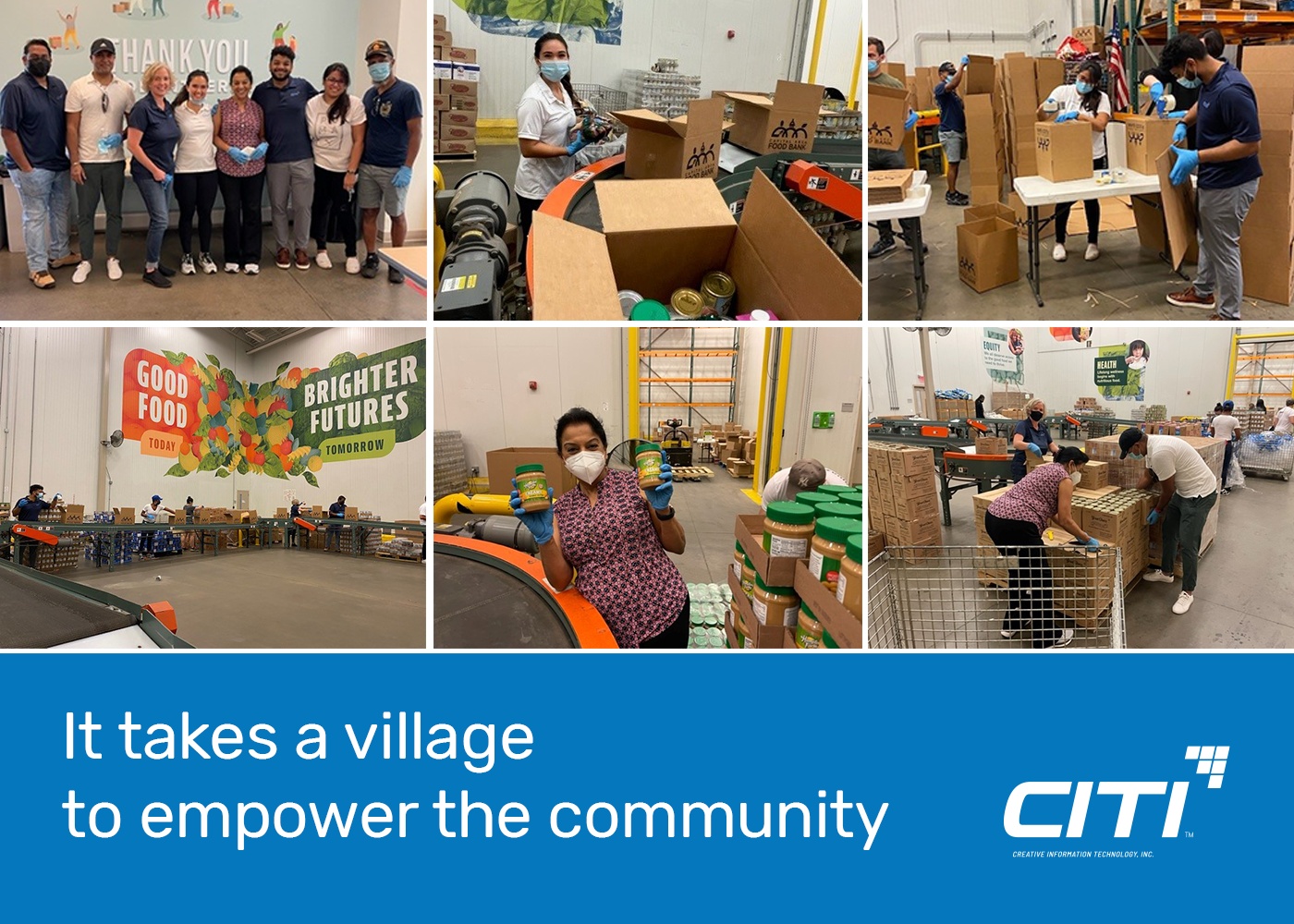
Its public culture has a similarly practical side. Alongside food-bank volunteering, CITI reported an early childhood education project in April 2026 that renewed two centres and benefited 122 children. Those activities give a more tangible view of its community work than a statement of corporate values alone.
The $90 million distinction
In June 2022, CITI and C3 AI announced a five-year HHS blanket purchase agreement with a stated $90 million value. It lets HHS procure CITI services and C3 AI technology, with C3 AI products supplied through Carahsoft’s GSA schedule. The announcement describes a purchasing framework, rather than $90 million of booked CITI revenue.
The division of labor is revealing: C3 AI supplies an application platform; CITI provides development and integration services. Across farm relief, identity credentials, and hospital archives, CITI’s recurring job is making a system fit the institution using it. The detail a reader can copy is simple enough: follow the whole transaction before deciding which piece of software to buy.