ai-analytics
(53)
The Small Agency That Learned to Be Everywhere
For forty years, MCS Health has sold a peculiar advantage: the attention of a specialist shop with the reach of a network. Its 2025 reset shows what happens when a boutique decides scale should be borrowed, not owned.

The Quality-Control Room That Learned to Listen
MaestroQA turned the dreary ritual of spot-checking support tickets into a searchable record of what customers actually say. Its next act is bigger, stranger, and now called Rippit.
Secoda Put a Search Bar on the Data Swamp
Every company says its data is valuable. Secoda tackles the less glamorous problem: helping people find it, understand it, trust it, and stop asking the same analyst where the revenue table lives.

Poppulo Quit Chasing Customers. Now It Helps Bosses Reach 50 Million Employees
The Irish software company escaped a crowded email market by going narrow. Three decades, several mergers, and 600,000 screens later, it is betting that the next corporate battleground is not sending more messages - it is proving that anyone noticed.

Consumer Edge Turned Your Receipts Into Wall Street's Early-Warning System
Consumer Edge began as one analyst's escape from Wall Street turf wars. Now it turns card swipes, receipts and web traffic into an unusually practical answer to the question every brand and investor asks: what is the customer doing before the quarter closes?

Connor Jones Is Building a Place Where AI Work Can Stick Around
After years inside finance and operations, the BitBoard co-founder is giving AI analysis a memory - with dashboards, traceable logic and a stubborn respect for work that can be checked.

Ben McRedmond Is Building the Spreadsheet He Had to Fail Once to Understand
After Intercom, an ambitious email startup, and one candid post-mortem, Ben McRedmond arrived at a counterintuitive product doctrine: build the whole foundation, change less than your ego wants, and place one large bet where it matters.

Charles Miglietti Bet That Business Data Needed a Better Story
An early startup taught him to find the customer before polishing the product. A decade later, the Toucan CEO is still turning complicated technology into something people can actually use.
YipitData’s Coupon Business Died. The Data Exhaust Became a $1 Billion Company
Yipit started by saving shoppers from coupon-email purgatory. When daily deals cooled, its founders discovered that hedge funds would pay far more for the machinery underneath - a pivot worth studying by anyone sitting on an overlooked data asset.

Hamzah Chaudhary Is Turning Business Intelligence Into a Builder’s Medium
Lightdash began as a scrappy internal tool that a customer asked to use. Hamzah Chaudhary turned that accidental signal into a broader argument: data teams should build with the discipline, freedom and leverage of software teams.

AIRLINQ
The connected world runs on a mess of SIMs, carriers, invoices and national rules. AIRLINQ wants to turn that mess into one control panel - and make every connected car, meter and machine easier to operate as a business.

Zonka Feedback
The platform for actionable customer feedback in the AI era.

Unwrap Reads Every Angry Review So PMs Don't Have To
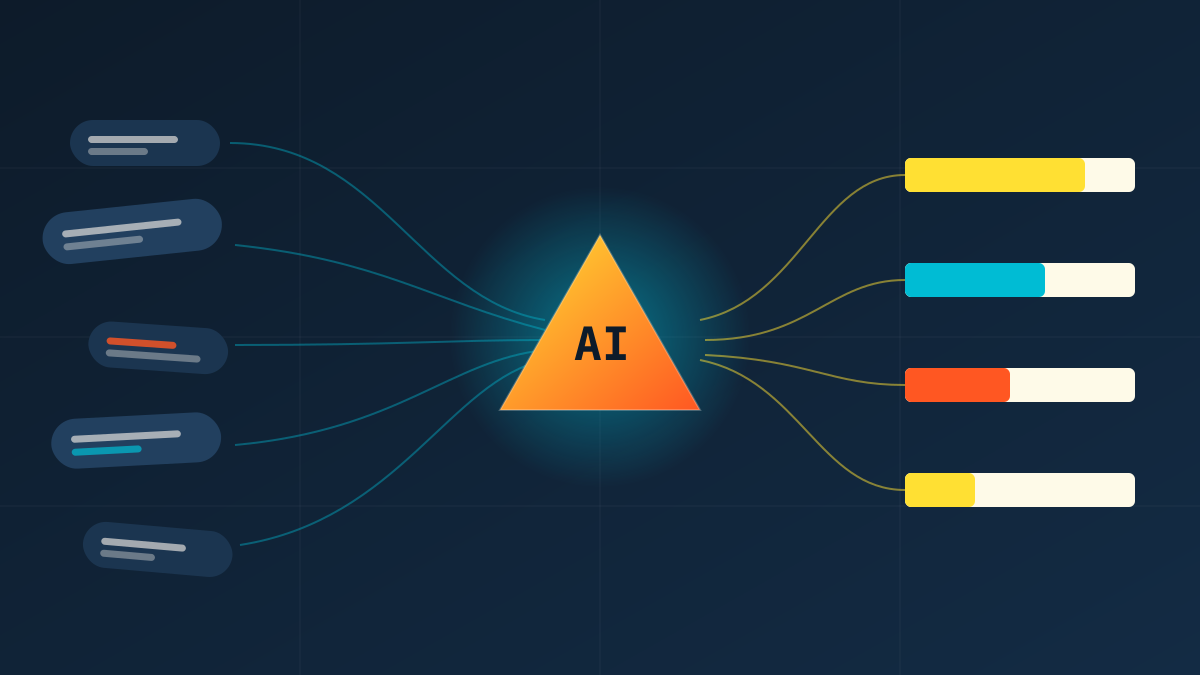
The AI feedback platform, built by two ex-Alexa product managers, folds support tickets, app reviews and social posts into patterns teams can act on. Microsoft, Lyft and Perplexity are paying to skip the guesswork.
Unwrap Turns Customer Complaints Into a Product Roadmap
The Santa Barbara startup, built by two Amazon Alexa veterans, uses AI to read the reviews, tweets, and support tickets your product team never gets to - and tells them what to build next.
Pendo
The companies winning the AI era ship software people genuinely love to use. Pendo surfaces where users and agents struggle and then helps you act on it, turning experience gaps into business results.
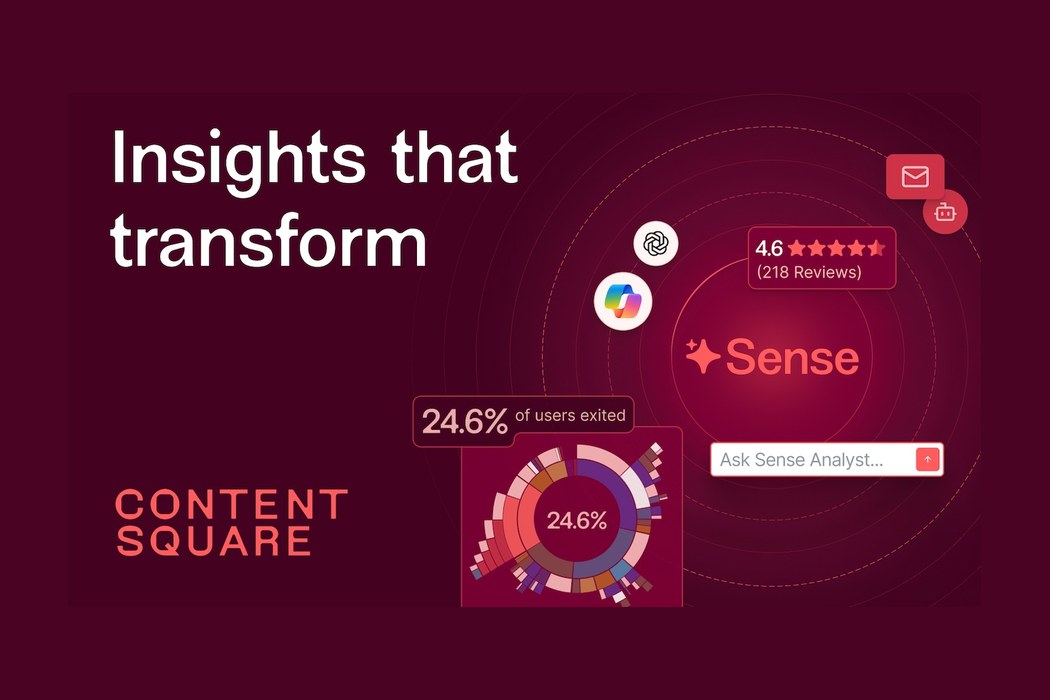
Contentsquare
The Paris company that watches a billion clicks a day so brands can finally see what their customers were trying to do - and where the website got in the way.
Aprisium
Aprisium is a Singapore deeptech startup that builds on-site, real-time contaminant detection systems for water and other fluids. Using patented electrochemical sensors paired with AI analytics, it lets water utilities, industrial manufacturers, data-center operators and shipping firms detect pollutants - including heavy metals and PFAS - at the source in minutes rather than shipping samples to a lab and waiting days. The company raised an oversubscribed US$7M Series A in 2024 and deploys across Singapore, the Philippines and Australia.

The 2% Problem: Why Your QA Scorecard Isn't Telling You About Your Customers
Traditional contact center QA reviews roughly 2% of calls and reports the result as if it describes the whole operation. This page frames the choice between sampling and reading 100% of conversations as an architectural decision rather than a feature difference, comparing how CallMiner, NICE Nexidia, Qualtrics XM Discover, and Spiral by UJET handle coverage, discovery of unknown issues, setup time, and whether output reaches a product team or stops at a QA scorecard. The core argument: a 2% sample tells you about your scorecard, not about your customers.
Cashboard
Cashboard is a New York-based, Y Combinator-backed (S22) startup building a semantic layer that sits between a company's financial data and AI. It stores the metrics, data models, mappings and permissions that let AI agents - and finance teams - produce accurate, governed FP&A work: reports, dashboards and analysis pulled from 900+ connected systems. Founder Julian Rowlands frames the goal as turning AI into a 'trusted FP&A machine' and, eventually, the 'solo CFO.' The company raised a $5M seed led by FINTOP Capital in July 2026.

Pylon
Pylon is a Cairo-based smart infrastructure platform that sells electricity and water utilities a subscription-based Smart Metering as a Service (SMaaS). Its software layers on top of any meter - old or new - to cut losses, improve revenue collection and give operators real-time visibility, all at zero upfront cost. Founded in 2017 and backed by Y Combinator (S21), Pylon runs across more than a million metering endpoints in Egypt and the Philippines.

Top Road
Top Road is a Sydney-based, Y Combinator-backed startup that gives creators no-code payment and analytics tools to turn custom GPTs into revenue-generating apps inside the OpenAI GPT Store. Its GPT Tools action lets builders add subscription paywalls, collect emails, whitelist users, and track usage - without writing code. The company says it has enabled more than USD 300K in subscription revenue for GPT builders.

EngageRocket
EngageRocket is a Singapore-based HR technology company that turns continuous employee feedback into actionable people-analytics. Founded in 2016 by two former Gallup leaders, its cloud platform runs engagement, lifecycle and pulse surveys (BELONG), 360-degree and multi-rater feedback (GROW), and performance workflows (PERFORM), pairing survey software with people-science advisory. It serves enterprises across 30+ countries - including Toyota, Sephora, Nikon, Epson and CGS-CIMB - to improve engagement, reduce turnover and support data-informed HR decisions.

Populix
Populix is an Indonesian technology-driven consumer research company that connects businesses, academics and government bodies with a verified panel of more than 700,000 respondents across Indonesia. Founded in 2018 by Cambridge graduates Timothy Astandu and Eileen Kamtawijoyo, it blends a mobile respondent app, a self-serve survey platform (PopSurvey) and AI tooling (the NeXa research assistant and synthetic respondents) to deliver market, policy and society insights faster and more affordably than traditional survey agencies. The Jakarta-based firm has raised about $14.2M to date, most recently a $4.3M Series B in 2025.

Quantela Inc.
Quantela is a smart-city technology company that helps cities and communities digitize urban infrastructure through an AI- and IoT-powered data platform. Founded in 2015, it evolved from a dashboard tool into a full urban infrastructure platform spanning smart lighting, traffic, public safety, digital advertising and citizen services. Quantela is known for pioneering an 'outcomes-based' business model, funding projects up front in exchange for a share of the resulting revenue or savings, and operates across the Americas, EMEA, India and Asia-Pacific.

Dana Kim
Dana Kim is the co-founder and CEO of Highlight, a New York-based product intelligence platform that modernizes in-home product testing for consumer brands. A former qualitative market researcher who spent years collecting insights the slow way - standing in stores with paper surveys for brands like Coca-Cola and Nike - she went to Wharton for an MBA, met co-founder Ethan Kellough, and built a technology-driven alternative that pairs a proprietary consumer community with logistics automation and AI analytics. Founded in 2020, Highlight has raised more than $30 million and works with brands including Nestle, Procter & Gamble and Mondelez. Kim has been named to GreenBook's 2022 Future List and Inc.'s 2024 Female Founders 250 list.

Datavations
Datavations is a New York-based, AI-powered market intelligence platform built exclusively for manufacturers and distributors in the building materials and home improvement industries. It aggregates granular, store-level and SKU-level retail data across thousands of stores to give suppliers the cross-retailer visibility they otherwise lack - helping them optimize pricing, inventory, and product assortment, and walk into merchant meetings armed with data their retail partners don't have. Founded in 2020 by Philip Odelfelt, the company raised a $17M Series A in July 2025 led by Forestay Capital.

Equals
Equals is a next-generation spreadsheet built for business analytics. Founded by two Intercom veterans, it pairs the familiar spreadsheet grid with live connections to data warehouses and business tools, version control, real-time collaboration and, more recently, AI-assisted analysis. The company positions itself as 'AI for the numbers that can't be wrong,' aiming to give finance and go-to-market teams a single, trustworthy place to model ARR, pipeline, retention and other core metrics without exporting CSVs or standing up heavyweight BI stacks.

Lambent
Lambent is a Boston-based B2B software company that turns existing Wi-Fi and sensor data into anonymous, predictive occupancy and space-utilization analytics. Its SaaS platform, Lambent Spaces, helps space planners at colleges, universities and corporate campuses understand how buildings are actually used - without installing new hardware or tracking individuals - so they can make data-driven decisions about renovations, capacity, energy use and real estate. Founded in 2017 as Armored Things and rebranded to Lambent in 2022, the company works with customers including the University of Tennessee, Knoxville and partners such as Siemens, Planon and HPE Aruba Networks.

MarketLeap
MarketLeap is an AI-driven ecommerce accelerator that helps consumer brands launch and scale on global marketplaces such as Amazon, Walmart, eBay, OTTO, BOL and TikTok Shop. Founded in 2022 by former Amazon and Jumia executives Mamoun Benkirane and Mekki Mouaddeb, the platform combines automation, analytics and hands-on operations - including listing optimization, dynamic pricing, marketing, inventory forecasting and VAT/tax compliance - under a 'skin in the game' model that absorbs marketing costs and runs on 30-day rolling contracts. The company raised an $8M Series A in February 2025, bringing total funding to about $10.7M.
Omnisient - Collaborative Consumer Intelligence
Omnisient is a privacy-preserving data collaboration company that lets banks, insurers, retailers and consumer brands analyze their first-party data together without ever sharing or exposing it. Using privacy enhancing technologies, US-patented Crypto-IDs and AI-powered data clean rooms, the platform matches mutual customers across datasets so lenders can score credit-invisible and thin-file consumers using alternative behavioral data - all while personal information never leaves the owner's environment. Founded in Cape Town and now expanding into the United States, the company protects hundreds of millions of consumer records for more than 100 enterprises.