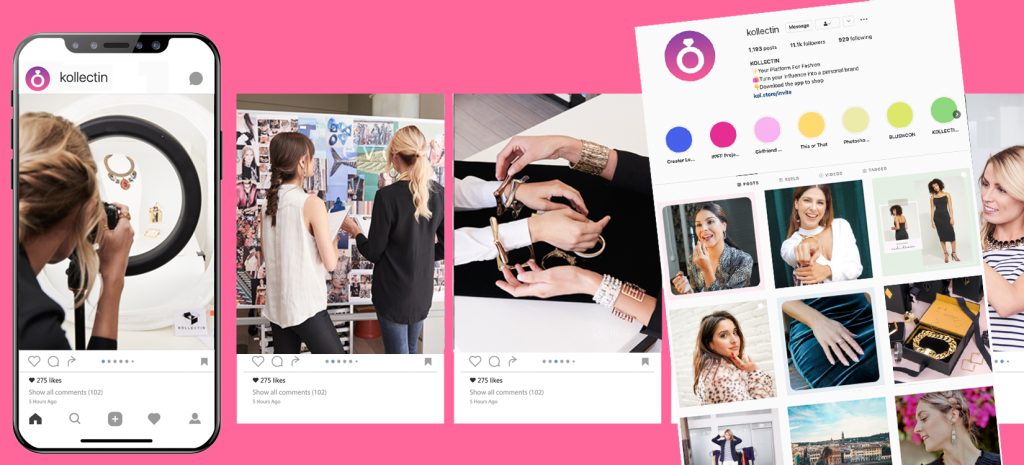
A jewelry app arrives with a problem that a camera can help solve: it needs something people will want to look at. When Kollectin launched in 2017, BLACK + GOLD built its Instagram presence with design, influencer material and original photography. The assignment included a day in Los Angeles, two models and a crew of six. Thirty finished photographs came out of the shoot. Jewelry supplied the sparkle; planning supplied the inventory.
That little production ledger is a useful introduction to BLACK + GOLD. The Santa Monica studio works in the space between making pictures and putting them to work. Its founder and creative director, photographer Elizabeth Waterman, brings an editorial eye to commercial assignments. Around those images, the business offers campaign direction, brand strategy and communications. The photograph is a beginning. A client still needs somewhere to publish it, a reason to publish it and something to say.
A studio with a photographer at the center
BLACK + GOLD describes its work through three connected disciplines: campaigns, production and strategy. Photography sits alongside motion and art direction; positioning sits alongside launch planning. The stated customers include fashion, beauty, lifestyle, wellness and entertainment brands, as well as artists and founders. It is a broad market, but the portfolio has a recognizable center of gravity: people, personal style and products whose appearance matters.
Waterman’s background helps explain that emphasis. She studied fine art at the University of Southern California, and her artistic practice includes performers, portraiture and subcultures. Her books include MONEYGAME, published by XYZ Books in 2021, and CANDYLAND, published by Unicorn in 2024. Those are the founder’s artistic projects, with their own subjects and publishing histories. They also explain why an agency bearing a commercial brief might approach it with an artist’s attention to presentation.
The studio’s business proposition is continuity. A client can discuss the desired impression, commission the imagery and plan the campaign within the same creative relationship. For a founder who is simultaneously running a business and trying to explain it, that connection can be valuable. There are fewer separate briefs to reconcile when the visual direction and the publishing plan are being considered together.

Thirty pictures is a deliverable you can count
The Kollectin assignment puts some boundaries around the otherwise elastic phrase “content creation.” The shoot moved between downtown Los Angeles locations and the company’s showroom. The resulting photographs became part of an account assembled from several kinds of material. Custom production provided a consistent visual base, while design and influencer contributions gave the feed other voices.
Production output, not a measure of sales.
For a prospective client, the transferable idea is to brief a usable collection. Decide which products, situations and formats must be covered before production begins. A collection can give an editor choices across a campaign; a single beautiful frame has fewer jobs available to it. The exact count will depend on the assignment. The useful discipline is agreeing what the finished work must contain.
That also makes the commercial conversation more concrete. This is a commissioned service business: the customer buys creative work and execution scoped around a brief. A sensible request would identify the audience, intended channels, delivery date and required assets. Decisions about models, locations, image usage and revisions belong in that conversation. Comparing proposals becomes easier when each one is answering the same production question.
Sometimes the founder is the format
For Karen Ballou, founder of skincare company Immunocologie, the subject was the person behind the products. BLACK + GOLD developed “Conversations with Karen,” a series of video interviews with skincare influencers, alongside photography and social engagement. The agency’s case study says the series became a feature on Immunocologie’s website.
Its reported results include more than 500 new followers per month on each channel and more than 2,000 average monthly engagements. Those are the agency’s own figures, useful as a description of its claimed campaign performance. A buyer should read them as audience activity rather than a calculation of product sales.
The format itself is the more portable idea. A founder who has knowledge and useful questions can sustain a series with guests. The conversation supplies a reason to return, while the founder gives the brand a recognizable person. For another business, that might mean interviews with designers, customers or practitioners. It requires someone willing to show up repeatedly and contribute something beyond a product pitch.
The book needed a life outside the book
BLACK + GOLD’s work around MONEYGAME extends the same logic into publishing. The portfolio identifies the assignment as in-house. Waterman made the photographs; XYZ Books published the volume. The agency then produced promotional video, email activity, bookstore cross-promotions and materials for gallery partners. Its account says the book sold out within months.
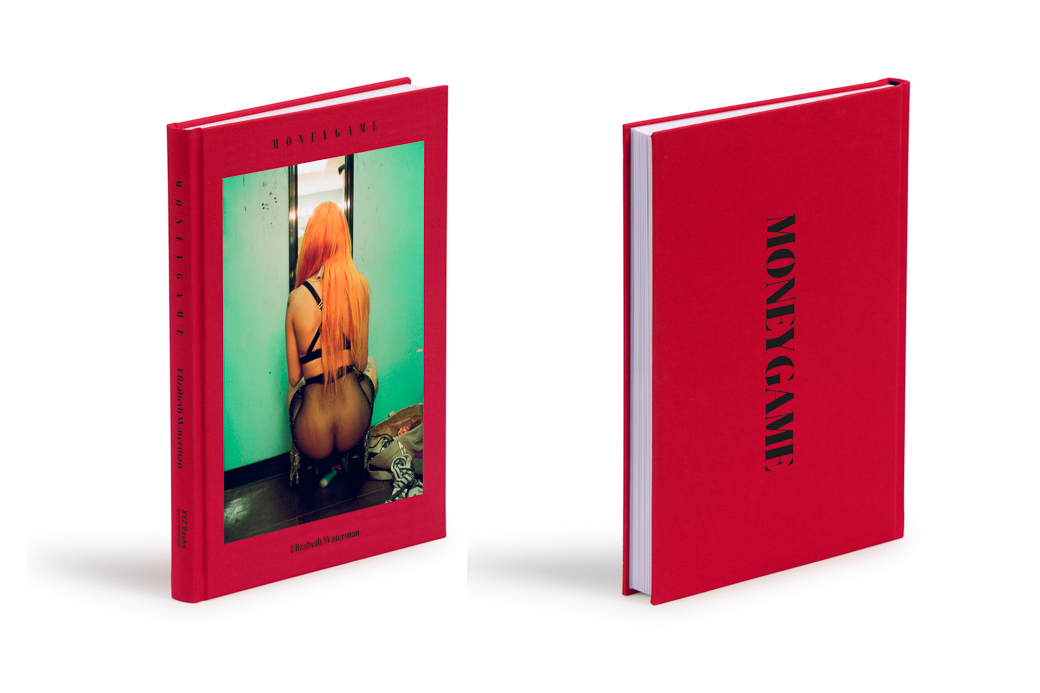
Exhibitions at Boogie-Wall in London and ViCA in Los Angeles were part of the documented work. So were book-launch activities, bookstore promotions and a fine-art print catalog. Each asks something different of the same body of photographs: a reason to attend, an object to buy, a story to cover or a print to consider.
For artists and publishers, that is a practical distinction. Completing the object and introducing it to an audience are separate jobs. A release plan can connect them early, with images prepared for the places where potential readers already browse. The agency’s contribution here reaches beyond running an account. It includes the less photogenic business of coordinating the materials around an artistic release.
- 01DirectionChoose the story and audience.
- 02ProductionMake the photographs and motion.
- 03PublicationShape the feed, email or launch.
An editorial map of the services, not a fixed package.
Before distribution came permission
The pictures behind MONEYGAME had an earlier problem: Waterman needed access. In a 2021 interview with 1854 Photography, she described being turned away by at least ten New York clubs before one in Queens admitted her. Entry did not immediately bring acceptance. She returned, brought doughnuts and helped gather dollar bills from the stage.
Then she showed the dancers her photographs. In her telling, “they liked how I saw them.” It is a small remark with a large implication for anyone hiring a portrait photographer: the subject has an opinion about the result, too. Trust affects what the camera gets to see.
“they liked how I saw them”
Elizabeth Waterman
On earning her subjects’ trust, 1854 Photography, 2021
Her account in It’s Nice That places the breakthrough in July 2016. She describes the early awkwardness of entering a workplace where people did not understand her purpose, followed by gradual familiarity. Conversations revealed lives beyond performance, including parenting and paying down college debt. The project’s subject became more specific as she learned about the people inside it.
That experience should not be reduced to a networking trick. The lesson for a creative brief is to allow time for access and understanding. If a campaign depends on real people appearing at ease, a tight schedule and a clever visual reference may be insufficient. The production needs their participation, and they need a reason to give it.
Twelve days, with people in the frame
The Sidewalk Project holiday campaign brought Waterman’s interests into a nonprofit assignment. In 2022, BLACK + GOLD produced portraits of women participating in the organization’s program, together with images and video of staff. The planned release ran across Instagram, Twitter and email over twelve days.
The agency describes this work as pro bono, motivated by Waterman’s affinity for sex workers and desire to contribute. That describes the service arrangement, rather than an itemized production budget. It also gives a concrete example of the studio putting its capabilities into community work: portrait-making, staff visibility and a coordinated publishing schedule.
For an organization planning a campaign, the useful feature is the bounded sequence. A defined run gives individual portraits a place within a larger narrative. It can also help a team decide what must be photographed before launch. The subject remains a person, even when the calendar calls the picture an asset.
Buying the eye, and the work around it
The rest of the portfolio shows the range of that eye. “The Modern Man,” dated 2015, is a website and social campaign for Boarding Pass NYC, with lifestyle imagery placing bags alongside work and activity. A 2022 Dayne Plescia assignment centers on personal-brand photography. A separate Hollywood shoot produced styled Stormy Daniels portraits for Waterman’s book project. These are different briefs, with different relationships to a product or a personality.
A company considering BLACK + GOLD is choosing among several ways to organize that work. It could commission a photographer, employ a social manager, build an internal team or hire a studio that connects those responsibilities. The case for this studio rests on its visual sensibility and the breadth of work surrounding the shoot. A buyer should assess both against the actual assignment.
The portfolio is also a useful place to test taste against purpose. Look at whether a product remains legible inside the styling, whether a portrait suits the person’s public role and whether a collection offers enough variety for its intended use. A fashion-led treatment can be appealing without fitting every business. Clients should bring examples of the situations they need to solve, including the unglamorous ones: a small email image, a product detail or an introduction to a founder. Those uses deserve a place in the brief alongside the campaign’s most expressive picture.
For a brand with approved imagery and a narrowly defined posting task, extensive creative direction may be unnecessary. For one whose main problem is an unclear identity or a shortage of original material, the production side becomes more relevant. The productive question is specific: what do we need people to see, and what will we do with the pictures once we have them?
See the work. Meet the photographer.
Explore the studio’s portfolio, discuss a brief or hear Waterman talk about running the business.