Before there was The Branding Boutique LA, there was Kitty Obsession. It is a pleasingly uncorporate place to begin the story of a branding executive. Arielle Nicole Lanzkowsky’s earlier business sold cat products, and in 2019 it joined Startup UCLA’s Summer Accelerator. The future agency founder arrived with a venture of her own, something to explain, and the recurring founder’s assignment of persuading other people to care.
Today, Lanzkowsky is the founder and CEO of a branding and marketing agency serving premium and luxury businesses. The change in subject matter is considerable. The underlying question is familiar: how do you make a business understandable, recognizable and worth someone’s attention? Her career becomes more interesting when followed through the smaller ventures and working relationships that came before and alongside the title.
First, the cats
Startup UCLA’s 2019 roster pairs Arielle Lanzkowsky with Shelley Lanzkowsky under Kitty Obsession. The accelerator gives early companies ten weeks of workspace, guidance, legal services and mentoring, ending with a pitch to entrepreneurs and investors. For a founder, that is an education with an audience. An idea has to leave the comfortable surroundings of its creator’s head and become something another person can follow.
Pitching gives language a practical examination. The founder knows every detail; the listener has just arrived. Somewhere between those positions lies the explanation that makes the business intelligible. An accelerator builds repeated opportunities to attempt that explanation, hear what lands and try again. It is a useful setting for someone who would later make communicating businesses her business.
In a 2020 joint interview, Lanzkowsky and fellow founders Riley Rojas and Audra Huffmeyer described meeting through the accelerator. Their account emphasized practicing communication, delivering pitches and learning how to speak to investors. They also discussed preserving a professional working relationship within a friendship. The people and the practice carried into another venture together.
That early chapter puts some substance behind a sentence in Lanzkowsky’s own description of herself: “I am a UCLA graduate and have always had an entrepreneurial mindset.” The cat-products business gives the phrase an address and an assignment. Entrepreneurial ambition had already taken the form of a company, followed by the work of explaining it to a room.
The client becomes the agency founder
Lanzkowsky founded The Branding Boutique LA in 2021. Her explanation for the move begins with launching ecommerce ventures and noticing a gap in agency work: creative ideas needed more business strategy and structure behind them. It is an origin rooted in having occupied the customer’s chair. She had experience building the thing that an agency would eventually be asked to present.
The distinction matters in an ordinary purchasing decision. A founder commissioning a website is paying for an attractive object, certainly, but also for a way to explain a business. A product photograph needs to help a prospective customer understand something. A social account has to keep making sense after the launch excitement has worn off. The assignment continues after the first approving glance.
At The Branding Boutique, the service list connects strategy and positioning with visual identity, social management, websites, production, partnerships and paid campaigns. Its social work includes designated Strategy Days. That name has a reassuringly prosaic quality in an industry fond of promising inspiration on demand. A day can be scheduled. People can arrive prepared. Decisions can be made before another image needs posting.
Keeping those disciplines together creates an organizational task for the founder. A designer, an account manager and a person planning a campaign each approach the same business from a different direction. Their decisions have to meet somewhere. In this kind of agency, the quality of the work depends partly on how clearly the business can explain its own intentions internally.
A business education with several entrances
UCLA keeps appearing in Lanzkowsky’s story. She completed undergraduate studies there before the accelerator chapter, then returned for an MBA at UCLA Anderson School of Management. Her listed MBA dates are 2024 to 2026. By then, she was studying business while already running an agency. The classroom and the company were concurrent parts of the same period.
There is a different texture to learning management when people already depend on your management decisions. An organizational question has colleagues attached to it. A discussion of positioning has actual clients somewhere in the background. Lanzkowsky’s chronology places formal study after practical experience had begun, giving the two kinds of learning room to overlap rather than forming a neat queue.
The connection extends to A26 Ventures. Its team roster lists her in marketing and identifies her as the Branding Boutique founder. A26 brings together MBA students, alumni and other members of its network to support founders. For Lanzkowsky, it adds another working context to the university relationship: a place to apply marketing experience alongside people approaching early businesses through other disciplines.
Jonathan Hernandez supplies a more personal view of that connection. After agency internship experience, he described becoming a lead marketing intern at A26, working with Lanzkowsky and its leadership, coordinating projects and making event content. His account thanks her for teaching and encouraging him. Here the university network has a visible working mechanism: someone learns, receives responsibility and carries that experience into another setting.
“Her mentorship has not only sharpened my skills”
Theodora Tuomey, colleague recommendation
The work of making room
Other colleagues describe a similar teaching role. Theodora Tuomey credits Lanzkowsky with feedback, shared knowledge and encouragement to attempt unfamiliar challenges. Melissa G. describes monthly team goal-planning sessions. Taken as individual accounts, these details offer a closer view of leadership than a collection of polished adjectives. There is a routine, a conversation and a person receiving guidance.
The useful unit here is the specific act. Feedback requires attention to somebody else’s work. A planning session asks what each person is trying to do and how that fits the coming weeks. Encouraging a new challenge involves allowing someone to do work they have yet to master. These small managerial decisions are part of what makes a creative business function.
Emily Chen’s account of working at The Branding Boutique LA names the areas she learned about: entrepreneurship, social media management, content creation and market research. She thanks Lanzkowsky for taking a chance on her. It is a compact description of an early professional opportunity, with enough detail to show what the opportunity contained.
Lanzkowsky’s volunteer roles also include chairing The Giving Boutique CA and mentoring with Core Academy and Create Now. Education runs through those commitments. Alongside her own returns to learning, there is a repeated involvement in other people’s development. A founder profile usually follows one person upward. These accounts make it possible to look across, toward the people working and learning nearby.
A calendar enters the picture
Then there is the paper planner. The Branding Boutique offers The Life Edit, which combines daily, weekly and monthly planning with longer-range goals. In February 2025, Lanzkowsky signed its trademark application as CEO. After ecommerce and agency services, the calendar supplies another physical product in the story, one organized around the rather demanding task of giving intentions a place in time.
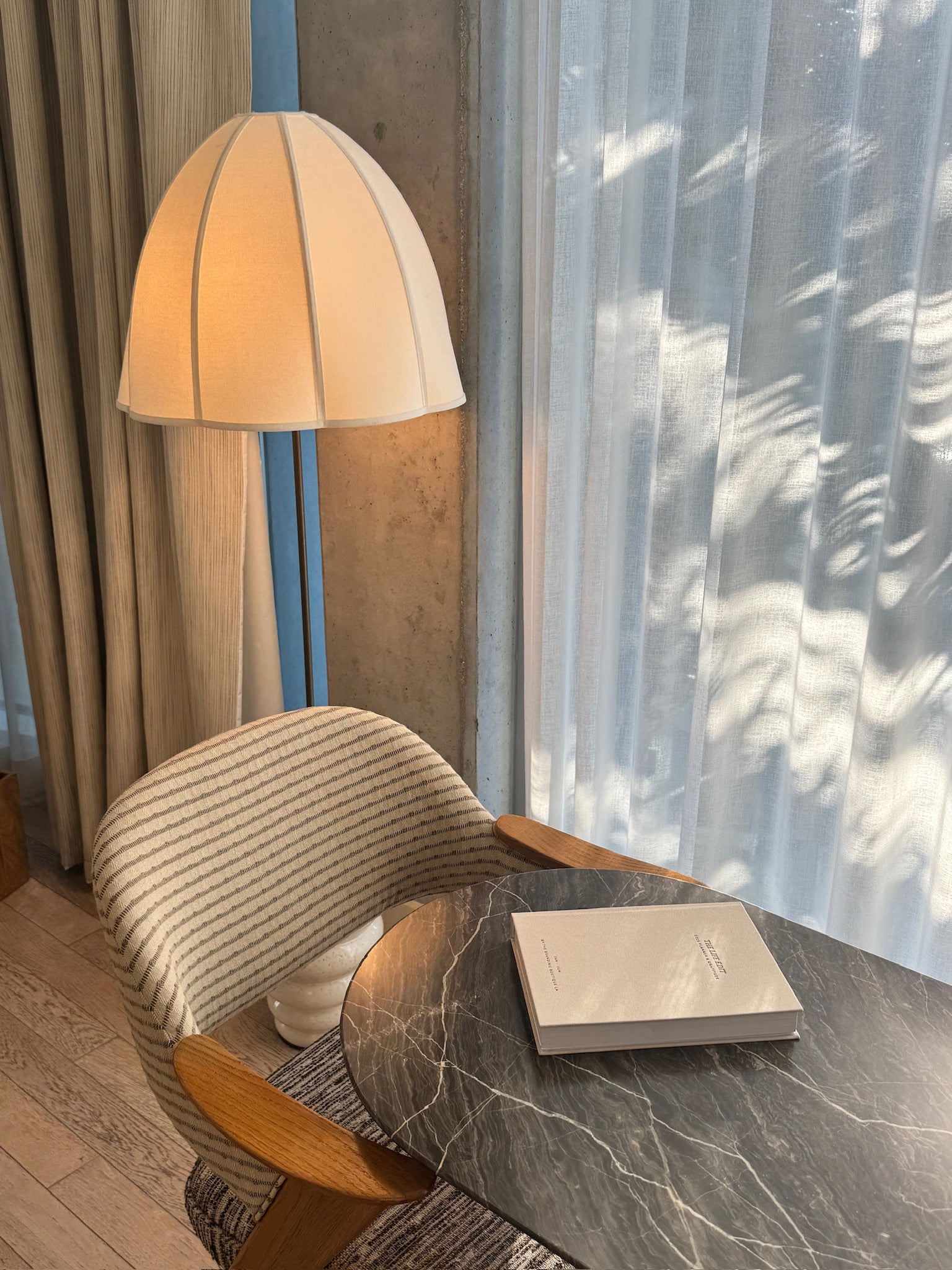
The product moves between a five-year view and the immediate business of a day. Its structure breaks goals into smaller planning intervals. That design has an affinity with the agency’s interest in turning a larger direction into repeated decisions. A brand needs consistency over time. A calendar makes time annoyingly specific. Thursday remains Thursday, however persuasive the five-year vision.
It is also a return to selling an object. A planner has materials, a format and pages someone must actually want to use. The agency can describe an intention, then give it a cover and an interior structure. That makes The Life Edit an interesting companion to Lanzkowsky’s earlier ventures: the founder working on how a product is presented is still part of the picture.
What happens after the first impression
By October 2026, the agency’s journal was publishing articles about perceived expense, color and content audits. The titles move between appearance and evaluation. What makes something feel expensive? What is color communicating? Which work deserves to continue? These are agency publications, and their subjects show the public conversation the business is choosing to have.
Lanzkowsky’s earlier self-description includes singing, reading, snowboarding, podcasts and hiking. These are ordinary interests, a welcome interruption to the procession of ventures and degrees. A person can spend the working day discussing recognition and positioning, then want to read a book. A biography benefits from allowing both activities to occupy the same life without making either prove a business lesson.
The route from Kitty Obsession to The Branding Boutique LA has several such registers: product founder, student, agency executive, colleague and mentor. Its coherence comes from work repeated in different settings. Explain an idea. Ask for feedback. Organize the next attempt. Give someone else a chance to do it. Before Lanzkowsky sold branding as a service, she had businesses of her own to explain.