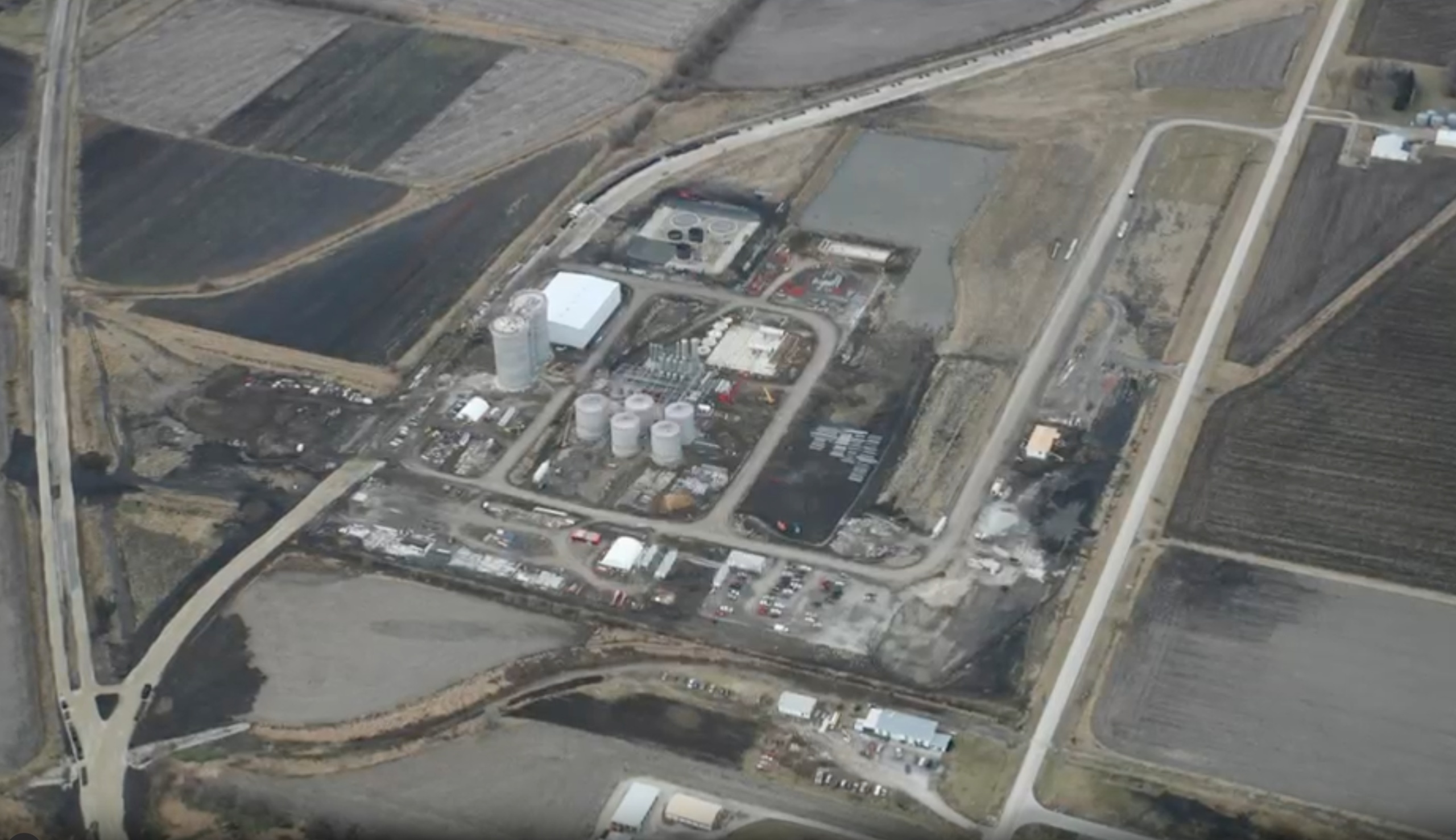
Barry A. Ellsworth once posted photographs of two ethanol plants and gave himself the builder’s credit. Then he corrected the sentence. He had raised the money and hired the people who built them. It was a small revision, but a useful introduction to the co-founder of Green Plains: a financier looking at an industrial landscape and remembering when it was still an idea.
He invited readers to look at the railcars to understand the size of the undertaking. A line of freight cars is a more persuasive unit of measurement than an adjective. In his telling, the plants had started in his imagination; their output eventually went into vehicles far beyond the Iowa sites where they stood. He ended the post with encouragement for anyone entertaining a large idea of their own.
“The world needs what YOU have to offer. Don’t ever forget that!”
Barry Ellsworth, reflecting on the plants
A financier goes to Iowa
Ellsworth’s route to ethanol began well away from a fermentation tank. Born in Tooele, Utah, in 1954, he describes a childhood that included skiing, music and work. His campaign biography recalls delivering milk, galloping racehorses and riding races as a teenager. He also played drums in bands. There was, apparently, more than one way to keep time.
After high school, he spent a summer in Europe, staying with families in four countries. A church mission took him to Mexico City the following year. He remembers the people, the food and the language with affection. These are the experiences he now chooses to put near the beginning of his public biography, ahead of the balance sheets and political arguments.
He graduated from Brigham Young University in 1977 with a communications degree and later attended law school in California. Finance became his working direction. His early employers included Dean Witter Reynolds, Wilson-Davis Securities and Prudential-Bache Securities. He subsequently owned Ellsworth and Associates and spent more than five years leading the financial consultancy Red Rock Investment Partners before Green Plains.
The background matters because the venture needed a person who understood capital formation. Its business involved making fuel and animal feed products, with the buildings and equipment still to be paid for. Ellsworth brought experience in raising money and taking companies public. His co-founder, Dan E. Christensen, brought a mortgage-finance and development background. The partnership placed financing experience at the beginning of an industrial project.
The railway beneath the pitch
Green Plains Renewable Energy was formed in June 2004. Ellsworth became president, chief executive and a director on June 29. The first plant would be built in Shenandoah, Iowa. A second project followed in Superior. Before either could become a working plant, the company had to secure the money that would carry it through development and construction.
Its initial public offering closed in November 2005 with about $34.46 million in gross proceeds. That number describes an early financing milestone, rather than the full cost of building the business. The company also needed debt financing. Its first project demanded a combination of investor money and borrowed money, with the practical commitments that each required.
By June 2006, Green Plains had added an American Stock Exchange listing alongside Nasdaq. Its listing announcement described roughly $34.5 million raised in the offering and loan agreements for $47 million to help fund construction and working capital at Shenandoah. Public-market visibility and project financing were moving together. The trading symbol was short; the list of things that had to happen behind it was considerably longer.
One of those things was a railway. In September 2006, the company announced that renovation of the spur from Red Oak to Shenandoah was complete. BNSF and Green Plains had worked on the project for more than two years. The line would serve the planned 50-million-gallon-a-year plant, giving the financing story a stretch of actual track.
Ellsworth thanked BNSF staff, including John Risolvato and Bill Brown, for the time they had put into the work. He also welcomed the line’s availability for that year’s harvest. The detail widens the picture beyond a founder and his shareholders: a plant belongs to a network of growers, builders, railway workers and customers. Getting it built means getting those relationships to work.
The moment to hand over the controls
Then came a change that is easy to flatten in a biography. Ellsworth did not simply leave every job at once. He resigned as president and CEO on February 27, 2007. Wayne Hoovestol took over as chief executive. Ellsworth remained a director and became executive vice president of compliance and development. The company still had two plants under construction.
His explanation was practical: Green Plains was moving from development toward operations. He pointed to Hoovestol’s experience running trucking businesses and serving on ethanol-company boards. A business preparing to produce and ship fuel required operating experience. The person who helped assemble the venture was making a public case for someone else to run its next stage.
Hoovestol, in turn, credited Ellsworth and Christensen with getting the company started and bringing it to that point. The exchange gives the transition its particular character. There were named people, different kinds of experience and a construction program still underway. Founding the company and operating its plants were connected jobs with different daily demands.
On July 30, Ellsworth resigned his remaining officer and director positions. He said he wanted more time with his family after three years devoted to the company. He also said his intention had been to recruit experienced management and that he believed the business was now in capable hands. The final departure came five months after the CEO handoff, a distinction worth preserving.
His place in Green Plains belongs to those founding years. The company’s subsequent development would involve other executives and decisions. Ellsworth carried the experience into a different kind of work: telling people how the beginning had happened. His later book, How I Made Six Million Dollars In Three Years, made the financial result part of the title. Modesty was evidently not the cover’s assigned task.
A prospectus becomes a story
In a book excerpt published in August 2024, Ellsworth recalled another part of the construction period. He said a Credit Suisse salesman had repeatedly offered an investment paying 7.75 percent, with a triple-A rating. Ellsworth’s account describes reading the prospectus, finding risks he disliked and declining the offer. He wanted the money available for the plants.
This is his retrospective telling, and its emphasis is revealing. He portrays himself as the custodian of money entrusted to a specific project. A higher return would have meant little if the funds could no longer do their intended job. In his version, understanding finance included knowing when to leave an attractive-looking offer alone.
The episode became part of a much broader argument about financial institutions. His 2024 book, Wall Street’s War on America and Its Attack on Affordable Housing, shifts the focus toward housing and financial power. Readers encounter an entrepreneur using his business experience to support a political critique. The critique is his; the plant-building experience supplies its personal point of departure.
Different rooms, the same arithmetic
There is another setting in which Ellsworth brings up Green Plains: a school board meeting. In September 2024, he addressed Clark County trustees in Las Vegas. He introduced himself as a longtime resident and a father whose children had attended public schools. Before discussing money, he spoke proudly about his daughter’s academic accomplishments and her leadership in DECA.
He then connected his business story to family circumstances, recalling that the prospect of another child had pushed him to earn more. The comment moves the founding story into a domestic frame. At the microphone, the ethanol company was part of an explanation of who he was and why he thought his financial experience belonged in the discussion.
The next beginning
His books range across different audiences. The Little Stream sits alongside Broken Pickers, his Green Plains account and the later housing book. Finance has supplied material, but it has never been his only subject. The range makes the communications degree look less like a detour: a substantial part of his later work involves putting an argument in front of readers.
Electoral politics provided another audience. Ellsworth ran in Nevada’s Democratic U.S. Senate primary in 2012. His current website presents a Democratic presidential candidacy and returns repeatedly to economic power and the interests of working Americans. These are campaign ambitions, expressed in his own terms. They extend a public life that continued long after his Green Plains executive duties ended.
The photographs of the ethanol plants remain a useful place to return. Ellsworth’s correction about who built them gives other people their work back while identifying his own. He helped arrange the money and the team. The structures followed. Whatever readers make of his subsequent arguments, that early chapter has a visible shape: two Iowa projects, the people who brought them into being and a founder who eventually handed over the controls.