There is a particular kind of calm that comes from knowing which problem must be solved first. John Oceguera learned it in the North Las Vegas Fire Department, where job titles arrived in a long practical sequence: firefighter, paramedic, engineer, captain, battalion chief, assistant chief. Later, in the Nevada Assembly, the alarms were metaphorical and the arguments lasted longer. The operating question was much the same. What matters now, who needs to move, and what happens if nobody does?
That habit now sits in the chief executive's office at Strategies 360. Oceguera bought the public affairs and communications firm through his company, Rise West Partners, in a deal completed on January 15, 2026 and announced in April. He had already run the firm's Nevada practice and served as chief strategy officer. Ownership changed the noun after his name, but it did not send him into foreign territory. For three decades, he has worked where systems meet consequences.
A Nevada education, in every sense
Oceguera was born in Reno in 1968 and raised in Fallon. His biography from an earlier campaign describes a household led by a single mother who taught school. Money was limited, work was ordinary and early: mowing lawns, working at an ice plant, taking a job at a disposal company. There is no need to varnish the origin story. Its usefulness lies in the way it explains his later appetite for responsibility. Work was not a personal brand. It was what helped the household hold.
His education accumulated the same way, one layer answering the next. He earned an associate degree in general studies from Western Nevada College, another in fire science from Truckee Meadows Community College, a bachelor's degree in fire administration from Cogswell College, then a master's in public administration and a law degree from the University of Nevada, Las Vegas. The collection looks eclectic only from a distance. Up close, it is a course of study in how institutions behave: operationally, administratively, politically and legally.
The extracurricular line on his old legislative biography is even better: volunteer activities, outdoor activities, firefighter competitions. Between 1992 and 2000 he appeared in World Firefighter Games, Pan American Firefighter Games and Firefighter Combat Challenge world championships. Before he competed for votes, he practiced doing hard things against a clock.
“I'm very busy, but it's really rewarding when you see something you've done that is directly affecting people.”John Oceguera, speaking in 2007
In 2007, the comment carried unusual weight. Oceguera was serving as Nevada Assembly majority leader while working as a battalion fire chief. It is difficult to imagine a more literal version of public service's competing calendars: committee rooms in Carson City, a growing fire department in North Las Vegas, family life in Las Vegas. Busy was not conversational filler. It was the architecture of his week.
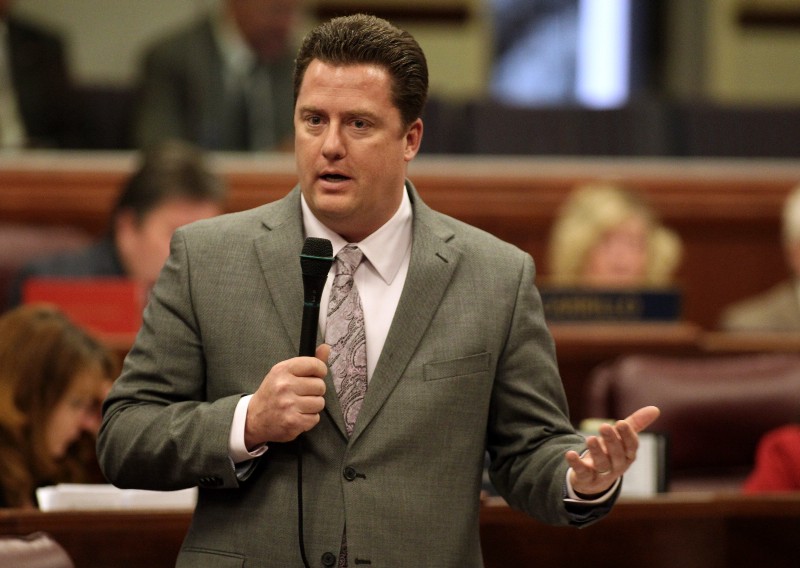
The speaker with a radio on his résumé
Voters first sent Oceguera to the Nevada Assembly in 2000 to represent District 16 in Clark County. He moved through leadership posts with striking regularity: assistant majority floor leader, majority floor leader, then speaker in 2011. The promotion made him the first Native American to hold the Nevada Assembly's top job. Oceguera is a member of the Walker River Paiute Tribe, and the milestone placed a personal history inside the institutional history of the state.
His speakership arrived in an inhospitable season. Nevada was still dealing with the wreckage of the recession, and lawmakers faced a budget gap measured in billions. In his opening speech, Oceguera paired civility with an argument for structural change. He asked whether lawmakers would patch the state up for two years or use the moment to rebuild and invest. The language was restrained, but the choice was not.
Committee assignments had prepared him for the tangle. Across his tenure he worked on commerce and labor, transportation, judiciary, ways and means, elections, homeland security, revenue structure and redistricting. This was policy as machinery rather than theatre. His fire-service writing followed the same approach. He wrote trade-magazine pieces about political involvement, public support and what to do when served with a subpoena. Even his bylines carried an operator's concern: what is the process, and what should a person do next?
Losing the vote, keeping the work
Term limits put an end date on Oceguera's Assembly career. In 2012 he became the Democratic nominee in Nevada's 3rd Congressional District and lost to incumbent Joe Heck, receiving 42.9 percent of the vote. He tried again in 2016, entering the crowded Democratic primary for the 4th District. That campaign ended in another loss.
Political biographies are tempted to hurry through defeats, as if a reader might mistake them for a contagious condition. Oceguera did something more useful with his. During the second race, he said the best lessons come from defeats and acknowledged learning plenty from the first. He had spent years as the person at the microphone. The next chapter placed him beside the people who needed to understand microphones, votes, coalitions and consequences.
At Strategies 360, his work came to include political campaigns, Tribal Affairs and cannabis policy, along with broader government relations and public affairs. The firm's description of his method emphasizes coordinated advocacy, communications and coalition engagement. It is consultancy language, yes, but the career underneath gives it a pulse. A coalition is what a legislative leader needs. Coordination is what an incident commander needs. Communication is what both discover they needed five minutes earlier.
Priorities under pressure
Coalitions under scrutiny
Strategy across both
Buying the place where he advised
The 2026 purchase of Strategies 360 turned a long advisory chapter into an ownership story. The deal put the firm's assets under Rise West Partners while preserving Strategies 360 as the operating name. At announcement, the company said it retained 40 employees working across Alaska, Nevada, New Mexico, Oregon and Washington. The service mix ranged from government affairs and research to communications, design and digital marketing.
Oceguera's public language around the acquisition was notably sober. He said he believed in the company wholeheartedly. More revealingly, he named “stability and predictability” as priorities for staff and clients. Corporate announcements often reach for disruption because it looks lively in a press release. A former assistant fire chief knows that disruption is merely a condition. The job is to make it manageable.
That does not make Oceguera allergic to change. His career is full of it. It suggests he distinguishes movement from drama. He moved from northern Nevada to Las Vegas, from fire operations to legislative leadership, from campaigning to counsel, and from employee to owner. Each move preserved some portion of the last role's knowledge. Reinvention is an attractive word, but translation is closer to the truth.
“We are prioritizing stability and predictability for staff and clients.”John Oceguera, on the 2026 acquisition
A career drawn to consequential rooms
Oceguera now advises people at the intersection of policy, politics and community impact, a phrase broad enough to sound frictionless. The actual intersections are anything but. Tribal governments, regulated businesses, elected officials and neighborhood coalitions arrive with different authorities, memories and measures of success. Alignment cannot be willed into being. Someone has to know which question belongs to which room.
His membership in the Walker River Paiute Tribe is part of that understanding, particularly in work involving tribal governments. So is a life spent across Nevada: born in Reno, raised in Fallon, serving North Las Vegas, legislating in Carson City, living and working from Las Vegas. Local knowledge is often reduced to a list of contacts. Its deeper form is pattern recognition. It notices the history beneath a proposal and the relationship behind an objection.
In a 2026 Native Edge conversation, Oceguera traced the route from fire chief to politician to tribal and state work, then to control of a multistate consulting firm. The episode also found room for his off-the-beaten-path Nevada recommendations. This feels right. A person can spend decades decoding institutions and still know that the quickest way to explain a place may be to tell someone where to drive.
The through line is not ambition alone, though there has plainly been plenty of it. It is an attraction to consequential rooms. A fire station dispatch, an Assembly chamber, a campaign headquarters and a client meeting differ in volume and dress code. All become tests of judgment when the answer is unclear and the clock refuses to be impressed.
Oceguera has collected titles because he kept accepting those tests. The current one may be his broadest: preserve a firm, direct its people and decide where it goes next. For someone who began in emergency response, the mandate is familiar. Read the scene. Understand the system. Give people a useful next move.