The cell tower is still standing. That is the awkward thing about a power failure: the machinery you can see may be perfectly intact. In July 2024, Hurricane Beryl damaged the electricity supplies serving telecommunications infrastructure on Jamaica’s south coast. Months later, Digicel Jamaica’s chief executive, Stephen Murad, explained what followed. The operator had promised the prime minister it would invest in renewable energy. By March 2025, Caban was part of that response.
- Caban combines batteries, software, installation and ongoing operations.
- Telecom operators are its core customers; Flow and Digicel are public examples.
- Service contracts spread payments over time, with no upfront equipment purchase.
Here is the interesting part. Caban’s product includes the battery cabinet, but also the work of making it useful: assessing a site, arranging capital, installing equipment, watching performance and sending help. A network operator can buy that bundle instead of becoming the coordinator of a small energy business.
The outage before the signal disappears
Telecommunications has an electricity problem hidden inside its connectivity problem. A tower needs power through the night, through a grid interruption and through the uncomfortable interval when a fuel delivery does not arrive. Solar panels change where some electricity comes from. Storage and controls help determine whether it is available when the equipment needs it.
Caban’s founders, engineers Alexandra Rasch Castillo and Brian Pevear, started the company in 2018 to tackle fossil-fuel dependence in critical infrastructure. Telecommunications in the Americas became its initial market. The appeal is practical: many sites need similar functions, yet each has its own load, grid conditions and installation constraints. Solving the repeatable parts creates a business; respecting the differences makes the equipment useful.
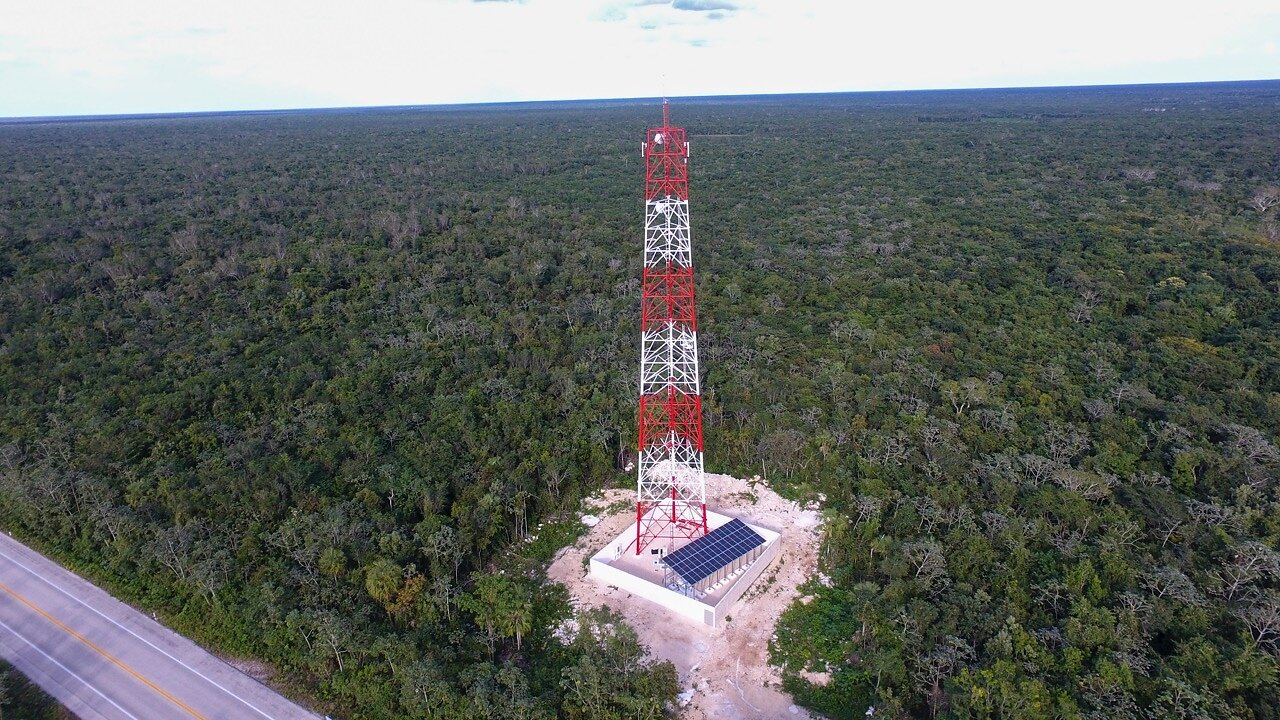
A small site explains the bigger idea
At Yallahs, Jamaica, the operator Flow used Caban’s Enduro platform with solar generation to replace a diesel generator and lead-acid batteries. Caban’s account dates commissioning to December 2021 and the site’s migration to March 2022. It reported approximately 800 kilowatt-hours of solar generation a month and 55 gallons of avoided diesel consumption per month.
Those are site results reported by Caban, rather than a promise for every installation. Their usefulness is their scale. The project did not require reinventing a national electricity system. It changed the equipment serving a particular communications site. Repeat the approach across a portfolio and a collection of small power decisions becomes consequential.
The cabinet has a control room
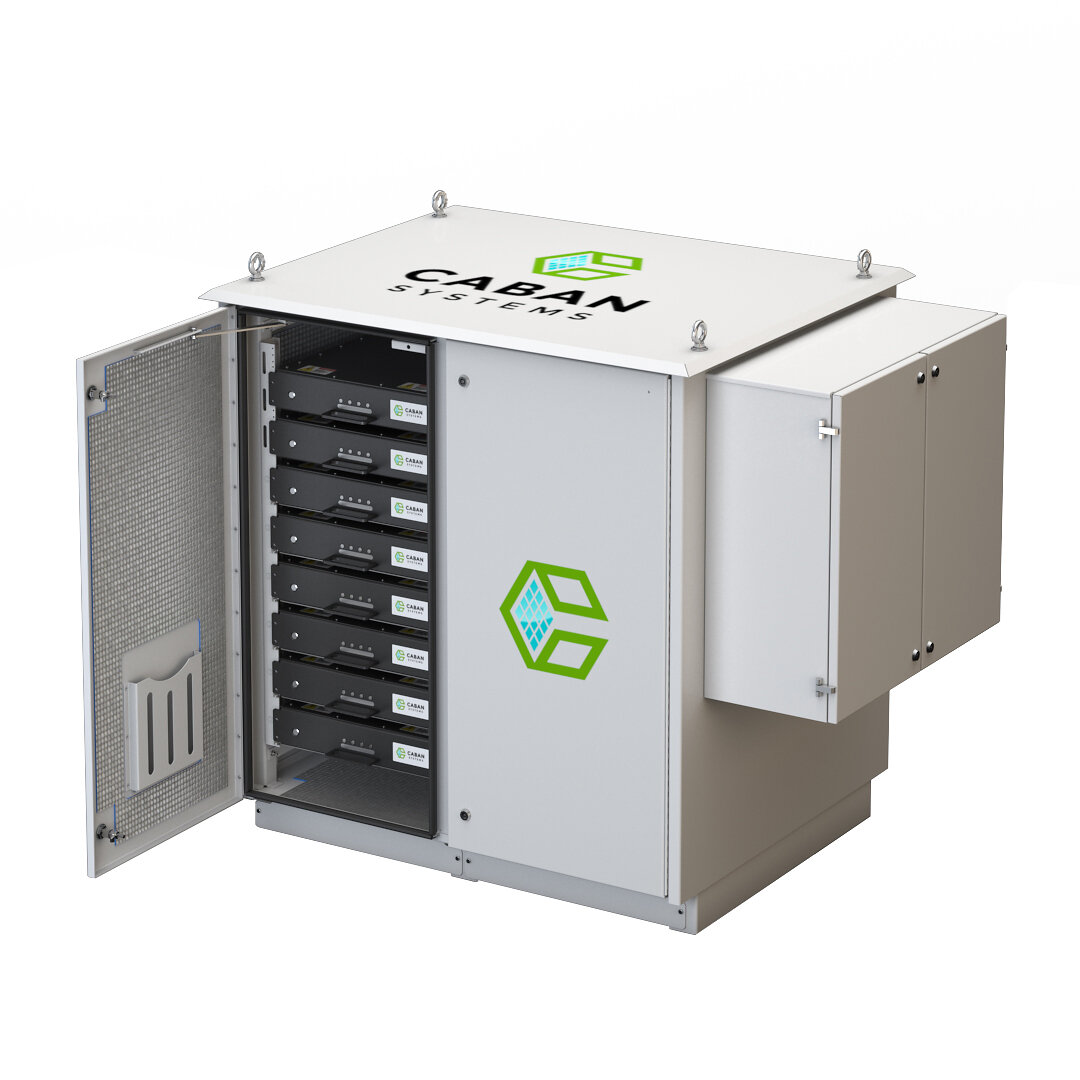
Caban’s storage range includes Enduro, Solario, Monaco and Optimo, with different systems listed for off-grid, unreliable-grid and grid-connected settings. Its lithium-ion storage supports primary and backup power. The choice belongs inside a site design, alongside the available energy sources and the equipment that must stay powered.
Continuo is the software layer. Operators can inspect battery charge, temperature and load, look back at historical trends and see which devices are active across a fleet. Energy and sustainability reporting sit alongside that operational view. For someone responsible for scattered sites, knowing which cabinet needs attention can matter as much as knowing its specification.
The company’s published customer process starts with load data and economic objectives, then moves through modeling, contract selection, installation and ongoing support. Its working method combines local teams with remote specialists. That is a revealing choice of emphasis: the customer is buying a functioning installation, including all the less photogenic work around it.
The contract is part of the engineering
A cheaper operating bill is not much help if the equipment purchase never clears the budget. Caban offers equipment leasing, full-service Energy-as-a-Service and outright purchase. Its advertised service terms run from five to twenty years. Under full service, Caban owns the equipment and the customer pays recurring fees.
The full-service offer advertises 99.99 percent power reliability under a service-level agreement. That is a contractual proposition, with terms to examine, rather than a universal measurement of every deployed system. Likewise, zero upfront payment describes when the customer pays. It does not make the energy free.
- 01Measure
the load - 02Design
and finance - 03Install
and operate
The comparison is with the whole alternative: buying batteries and solar separately, arranging maintenance, managing fuel and keeping operating responsibility in-house. Integrated telecom power suppliers, including IPT PowerTech, also serve this market. Caban’s pitch is the convenience and accountability of combining those jobs with financing.
Growth needs a careful reading
In January 2023, Caban announced $43 million closed toward a $51 million Series B target. It reported more than 500 operating customer sites across ten countries, plus more than 1,400 additional sites under contract. Operating sites and contracted sites describe different stages of work. A signed agreement still needs equipment, commissioning and support.
In April 2025, Caban announced another $50 million in equity, led by majority shareholder Ember Infrastructure, to support service deployments. Its September Jamaica update described plans to equip 511 of Digicel’s nearly 900 local cell sites with solar and batteries. That figure describes the announced program, rather than proof that every installation was complete.
“we made a commitment to the Prime Minister of Jamaica that we would invest in renewable energy”Stephen Murad, Digicel Jamaica CEO / March 2025
A battery company changes its boundaries
Then came a change in who makes the hardware. In January 2026, KULR announced a five-year preferred battery supply agreement with Caban and the purchase of certain manufacturing assets. KULR’s filings put the asset purchase price at approximately $2.52 million. This was a purchase of selected assets, not an acquisition of Caban.
The useful lesson is to design around the customer’s adoption problem as carefully as the battery. Start with measured demand, compare lifetime costs and decide who will carry operating responsibility. Solar availability, storage capacity, maintenance access and contract length still constrain the answer. A site that needs short-term flexibility may find a long service commitment unattractive. Caban’s proposition makes sense where the operator wants dependable power and a partner to manage the machinery behind it.