At CES in 2012, Ashwin Navin’s company had $27,000 in its account and a booth measuring ten feet by ten feet. The decoration amounted to a couple of company stickers. The team spent a meaningful share of its remaining cash on the space and the internet connection needed to demonstrate its software. A trade show is an expensive place to discover whether anybody cares.
Then Mark Cuban stopped. After roughly half an hour of questions, he committed $500,000. For the co-founder of the business that became Samba TV, the encounter changed the arithmetic of survival. The small booth had done its job: it made a complicated idea available for inspection.
It is a useful opening scene for Navin because so much of his working life has involved making something visible. At BitTorrent, that meant a commercial future for a technology associated with unauthorized downloads. At Samba, it means the audience scattered across television, streaming, and other screens. There is always an audience somewhere. Persuading an industry to look in the right place is the harder assignment.
The modem before the boardroom
Navin traces his appetite for opportunity to his parents, who emigrated from India to the United States in the 1970s. In his account, they wanted room to build without the restrictions they had experienced at home. Their example taught him and his brother Alvir to associate effort with possibility.
A computer arrived early in that story. He remembers being about five when he first used one. His parents bought hardware despite the expense and their limited familiarity with it. Later came modems, borrowed telephone lines, and conversations with people far beyond his immediate surroundings. Before the internet became an industry, it was a way to find other people who shared an obsession.
College offered too many directions at once. He tried subjects, activities, and a campus publication before learning the value of narrowing his attention. The lesson survives in his advice to pursue an interest deeply before it becomes fashionable. His first job after graduation was in investment banking in San Francisco, a location that kept technology close enough to be more than an after-hours enthusiasm.
A dealmaker meets a protocol
He graduated from Claremont McKenna College in 1999 with a dual bachelor’s degree in government and economics. His early résumé includes investment banking and research work at Merrill Lynch and Goldman Sachs. He also helped start Epoch Partners, the technology-oriented financial services business acquired by Goldman Sachs in 2001.
At Yahoo, which he joined in 2002, his work concerned corporate development: acquisitions, divestitures, partnerships, and strategy. His responsibilities extended to markets including India and Korea. This was training in the machinery around technology, where an invention’s prospects can depend on a contract as much as on its code.
In 2004 he joined Bram Cohen to build BitTorrent, Inc. Cohen had invented the protocol. Navin became the company’s co-founder and president, responsible for the business side. Keeping those roles distinct matters. The story gets more interesting when the person who knows how to negotiate meets the person who knows how to make the files move.
BitTorrent’s problem was partly reputational. Its ability to distribute large files efficiently had made it useful to people sharing unlicensed films. Navin pursued agreements with the very businesses whose content was circulating. Warner Bros., Paramount, and other media companies became partners. A distribution mechanism could have a legitimate commercial use even when its most conspicuous users had given Hollywood reasons to dislike it.
The company acquired µTorrent in 2006 and introduced commercial products in 2007, including an entertainment network, a software development kit, and BitTorrent DNA. The work required more than an optimistic presentation about the internet’s future. It required turning a popular protocol into something customers, partners, and investors could understand.
Years later, Navin revisited the µTorrent decision with less ceremony. In an October 2026 essay, he described the attachment to BitTorrent’s existing Python client as a sunk-cost problem. His recollection was that the team had to abandon a cherished approach and follow actual usage toward a C++ client developed outside the company. The recollection gives his dealmaking a sharper edge: sometimes the best agreement is the one that lets you stop defending your own work.
The living room declines a keyboard
Navin left BitTorrent in 2008 and started the venture initially known as Flingo. Television was his next frontier. His early argument was unusually attentive to the furniture: people relaxing in front of a screen did not want a keyboard and mouse installed on the coffee table.
In 2011, he argued for improving the television experience people already enjoyed. Phones, tablets, computers, and TVs could work together without requiring viewers to turn an evening’s entertainment into an IT project. Flingo’s SyncApps technology shared information about the program being watched with other devices on a home network. Another feature let viewers send web video to the television.
He also proposed cooperation with existing media businesses. Cable and satellite agreements had value; new technology could build on them. It was a practical position for someone whose previous job had involved bringing Hollywood into conversation with peer-to-peer distribution. The remote control would remain welcome. The coffee-table keyboard could find another line of work.
Samba TV developed automatic content recognition technology, using video fingerprints to identify what was appearing on a screen. That capability helped shift the business toward measurement and advertising. Knowing what a television displayed could inform a much larger question: how should media businesses understand the people watching it?
A simplified view of the questions behind Samba’s measurement business.
The people a rating can leave out
As viewing spread across devices, Navin kept returning to the gap between where audiences spent time and where the advertising industry counted them. In 2016 he discussed ad skipping and the difficulty of measuring attention across screens. A bought advertisement and a watched advertisement were becoming increasingly awkward things to treat as interchangeable.
By 2023, his attention included measurement across countries. He wanted large advertisers to have a consistent view of performance rather than a collection of disconnected local methods. The ambition was convergence: different screens and markets brought into a measurement system useful enough to guide spending.
There is also a personal reason he cares about who enters the count. In a January 2024 interview, Navin connected representation in audience data to his experience growing up in an ethnic household in the United States. He questioned how much attention the industry had given to inclusiveness. If the data underrepresents a community, decisions about programming and advertising inherit that omission.
“Having grown up in an ethnic household in the US”
Ashwin Navin, discussing audience representation, 2024
This is where a technical business acquires cultural consequences. Measurement helps decide which audiences a company pursues and which stories appear commercially viable. Navin’s stated goal is to make the underlying picture more representative. The quality of a count depends on whose presence it records.
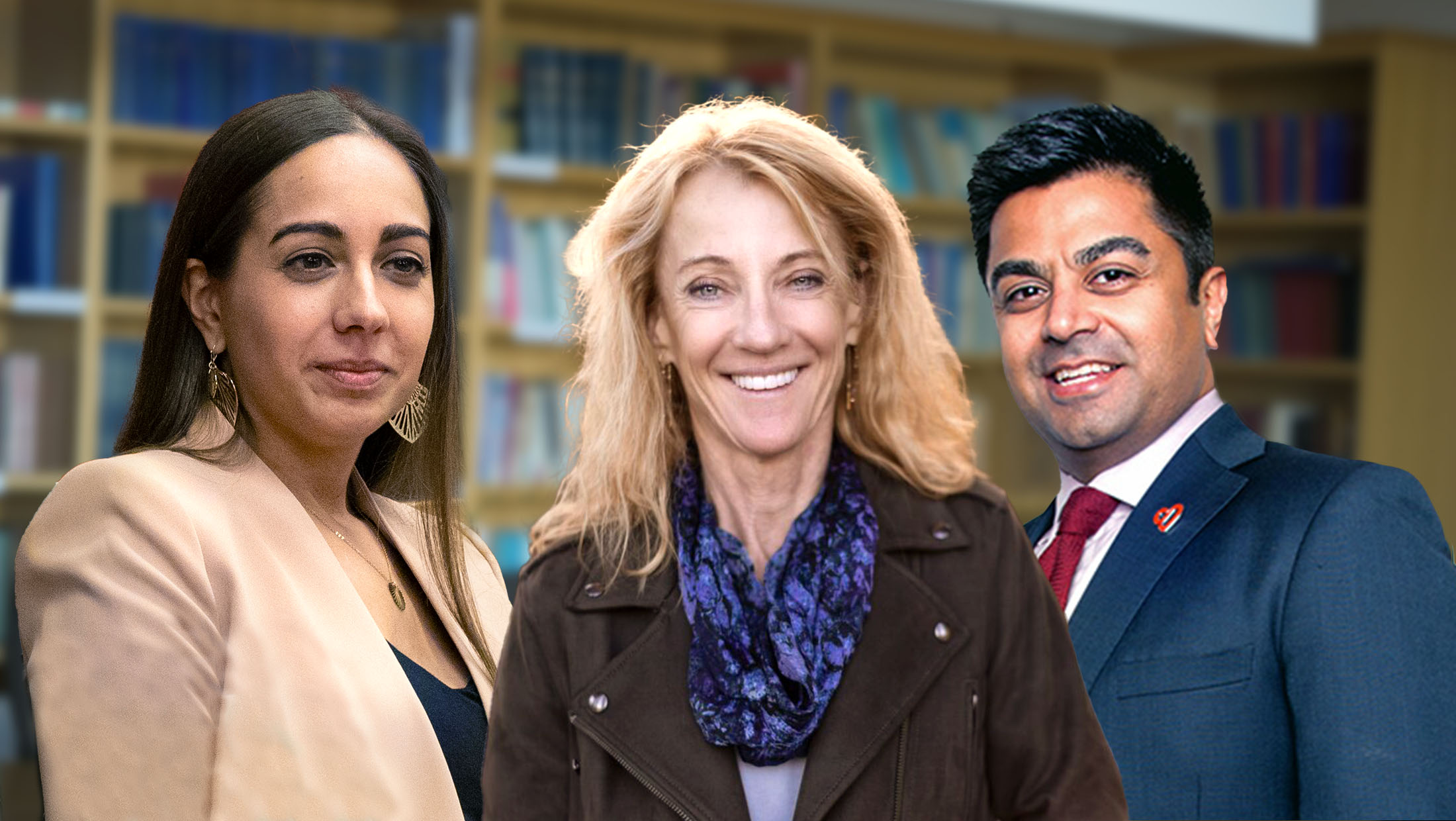
His connection to Claremont McKenna continued beyond graduation. In December 2023 the college announced his appointment to the Rose Institute of State and Local Government’s Board of Governors. He spoke about returning to campus and contributing to a collaboration among academics, students, and professional researchers.
The appointment brings his two college subjects back into view. Economics deals with allocation; government asks how collective decisions get made. His career has repeatedly landed where those questions meet technology, whether the subject is distribution, access, or the information businesses use to decide what deserves their money.
Following attention out of the television
Samba’s acquisition of Semasio in October 2024 expanded that pursuit into the open web. Semasio’s contextual technology analyzed page content, adding a different kind of information to Samba’s video capabilities. The acquisition also widened its international footprint.
Navin’s explanation was practical: people cannot personally watch and classify every video at the scale the advertising market requires. Machine learning can help analyze text and images and make that context useful for advertising decisions. Here, AI concerns the work of interpretation as much as the production of new material.
In December 2025, Samba announced a $30 million venture-debt facility, with provision for up to $30 million more. It described plans to use the financing for AI-based advertising tools, partnerships, global operations, and acquisitions. Borrowing gives a company resources and obligations together. The announcement marks another stage in a business whose early demonstration depended on the cash left in its account.
In September 2026, Samba and X announced a partnership to measure how entertainment advertising on X influences behavior beyond the platform, including television viewing and cinema ticket sales. The question has moved well beyond whether someone noticed a post. Advertisers want to know whether a campaign changed what people subsequently did.
Navin’s career has followed that widening field of inquiry. Files led to distribution agreements. Connected televisions led to audience data. Audience data led to comparisons across platforms and, increasingly, to outcomes. Each step asks an industry to account for activity it previously struggled to see.
Keep the bet. Change the hand.
The investor in Navin works alongside the operator. His published investment list includes Crunchyroll, vidIQ, OpenDNS, Inworld AI, GGWP, and OpenCode. He is also a co-founder of i/o Ventures. The interests range from entertainment distribution to tools that help creators and developers do their work.
His recent writing makes the connection explicit. In September 2026 he introduced Undivided, a conversation series about people who learn to use new media tools before established organizations adjust. Its first conversation featured Bob Sabouni and the development of Marvel’s entertainment business. Navin’s curiosity is about the uncertain period before a successful formula looks inevitable.
His October essay returns to that uncertainty from the founder’s chair. He recommends setting milestones, listening closely to customers, and separating evidence from polite encouragement. His account of Samba’s early volatility distinguishes commitment to a larger opportunity from attachment to a particular feature. Persistence can include changing the thing you build.
An August essay on priorities offers the domestic version of that argument: put the important things into the calendar before smaller demands occupy it. Attention is finite whether you are allocating an advertising budget or an afternoon. For a person whose business measures attention, the parallel is pleasantly inconvenient.
There is room in his personal account for multiplayer games, John Coltrane, and unexpected parcels containing useless trinkets sent to friends. The last habit suggests that even a professional student of targeting can enjoy a delivery nobody requested. Behind the negotiations and measurement systems is someone still interested in what happens when a connection surprises you.
Keep following the conversation
Read Navin’s personal journal, his essay on founder judgment, and his introduction to Undivided. Find him on LinkedIn and X, or explore Samba.
Watch: NYSE Floor Talk · 2024 IAB NewFronts presentation · Bob Sabouni on Undivided.
Further reading: The CES encounter · Stanford’s BitTorrent-era biography · The Rose Institute appointment · Navin on audience representation · The Semasio acquisition · Samba’s X partnership.