A woolly mammoth is an excellent way to get people’s attention. Software for organizing scientific work has a tougher assignment. Kent Wakeford has been involved in both propositions, through Colossal Biosciences and its spinout, Form Bio. The contrast makes his career worth a second look. Before the scientists, there were advertisers, game developers, entertainment companies and professional players. The subjects changed considerably. The need to assemble a functioning business kept coming back.
Wakeford’s route is best followed through those changes. He began as a corporate attorney, moved into internet business development, co-founded an advertising verification company, helped operate Kabam and co-founded the esports organization now called Gen.G. By 2022, he was leaving Colossal’s daily operating work to become Form Bio’s co-CEO. It is a career with several apparent detours, each involving the practical business of getting people, technology and a market to work together.
A lawyer learns the language of distribution
His early credentials pointed toward a conventional professional career. Wakeford earned his undergraduate degree at UCLA, then attended USC Gould School of Law from 1993 to 1996. He graduated Order of the Coif, worked as an article editor on the Southern California Law Review and received awards for scholarship and entertainment law. There was plenty of evidence that he could do the reading.
At O’Melveny & Myers, he represented movie studios, record labels and media companies. These were businesses whose work depended on agreements: who owned something, who could distribute it and what each party would receive. His subsequent career would put him on the operating side of industries with many of the same questions, even as the delivery mechanisms changed.
Wakeford worked at AOL from 1999 to 2004, focusing on business development. His responsibilities included partnerships across AOL properties and the wider entertainment business. The move placed him inside an internet company at a time when media distribution was acquiring new channels and new gatekeepers. A legal background had become part of a broader commercial job.
He then served as president of The Enthusiast Network, followed by a senior role at Clearspring, the social-sharing business associated with AddThis. Publishing, communities and sharing tools all figured in the early chapters. The résumé was already following the changing ways people found and passed around digital content.
When an ad needed a second opinion
In 2009, Wakeford helped launch AdSafe Media, later known as Integral Ad Science. Its original concern was straightforward: an advertiser should have some assurance about the content beside which an advertisement appears. On the internet, an available advertising slot and a suitable advertising slot can be very different things. A bargain can become expensive once the neighbors introduce themselves.
That November, Wakeford published an essay about transparency in advertising exchanges. He examined a tension between buyers wanting to know where their ads would run and publishers wanting to protect their direct sales channels. An exchange could open access to inventory while leaving participants uneasy about exactly what they were buying.
His argument favored independent ratings built on scalable data science. The interest lay in making a market easier to evaluate. AdSafe’s business gave him a founder’s role in a problem that sat between several parties, each with its own incentives. That experience belongs beside the better-known gaming chapters: measurement was already a central concern in his work.
Games grow up, and travel
Wakeford joined Kabam full time in 2011, after advising the company, and later became its chief operating officer. Kabam developed and published mobile games, including titles connected to entertainment franchises. Its business required more than a compelling screen. Development teams, licensing relationships, distribution and marketing all had to arrive at roughly the same party.
In a 2014 interview, he discussed recruiting experienced game executives as Kabam pursued more ambitious mobile releases. He pointed to its Vancouver studio and Marvel Contest of Champions, alongside hires with experience at Electronic Arts. His explanation of the next phase tied game design to development talent and the ability to bring consumers into a title.
The following year, he discussed another shift: Kabam was moving toward a smaller selection of games built around recognizable brands and higher production ambitions. This was a company adjusting its approach as mobile gaming changed. Wakeford’s public role included explaining those adjustments, connecting the decisions inside the company to the market outside it.
More than 1,000 employees and games played by over 500 million people during the company’s growth.
Those figures give the operating work some dimensions. Wakeford helped grow Kabam across seven countries and helped lead its sale to Netmarble, a transaction his Colossal biography values at $800 million. The reach belonged to a company and its teams. His contribution was in helping organize and transact a business that had become international.
A good game needs an organization
In 2017, Wakeford and fellow Kabam executive Kevin Chou helped establish KSV Esports. The organization’s teams included Seoul Dynasty in Overwatch. Competitive gaming brought a different business into view: players, coaches, leagues, sponsors and fans, with the match as the event around which everything else gathered.
KSV became Gen.G in 2018. Wakeford explained the earlier name with unusual economy: “KSV was always more of a placeholder name for our organisation.” The replacement stood for Generation Gaming. Its initials also read as “good game,” a familiar sign-off that did double duty as a brand. Some names require a consultant’s presentation. This one had a useful head start.
Wakeford described an international ambition, with activity in North America, South Korea and China. The earlier Kabam experience mattered here. The executive team had operated in China and developed relationships in its gaming industry. A new organization could draw on that history while facing a different set of responsibilities.
Gen.G also worked on making competitive players recognizable beyond a scoreboard. Content staff produced videos that brought viewers closer to the people playing. That work gave the organization something to offer between matches. A fan could follow a personality, a team and an unfolding season, rather than waiting for the next result.
Wakeford’s discussions of esports included the business gap between a large audience and what that audience spent. It was an operator’s question inside a spectator business. Winning attracted attention; an organization still had to develop relationships with fans and commercial partners. The next match would not take care of every invoice.
- 2009AdSafe Media
Advertising verification - 2017KSV / Gen.G
Competitive gaming - 2021Colossal
Scientific company building - 2022Form Bio
Computational software
The television detour
Another venture joined his advertising and gaming experience. Wakeford co-founded tvScientific with a group that included Bill Gross, Jason Fairchild and David Koye. The company built a connected television advertising platform, bringing digital measurement methods to a medium whose audience was increasingly watching through internet-connected screens.
When tvScientific introduced its gaming offering, Wakeford described television advertising as the next frontier for game marketing. The proposition was practical: connect an advertisement’s exposure to a subsequent action, then give marketers information they could use to adjust spending. A television audience was useful. Knowing what the advertisement accomplished made it more useful still.
The venture fits neatly into his earlier interests. AdSafe had addressed the uncertainty surrounding an advertising placement. Kabam had required ways to bring players into games. tvScientific worked on measuring outcomes across screens. These were separate companies, but the questions overlapped enough to make the sequence intelligible.
The mammoth’s software department
Colossal added a larger change of subject in 2021. Wakeford became a co-founder and chief operating officer of a company associated with Ben Lamm and geneticist George Church, pursuing species restoration and conservation work. The public proposition was unusually vivid. The company also needed people to run it and software to support its scientists.
That software developed into Form Bio. In September 2022, Colossal announced its first technology spinout and an oversubscribed $30 million Series A led by JAZZ Venture Partners, with participation from Thomas Tull. Wakeford moved from his daily COO responsibilities at Colossal to share Form Bio’s chief executive role with Andrew Busey, while retaining an advisory relationship with Colossal.
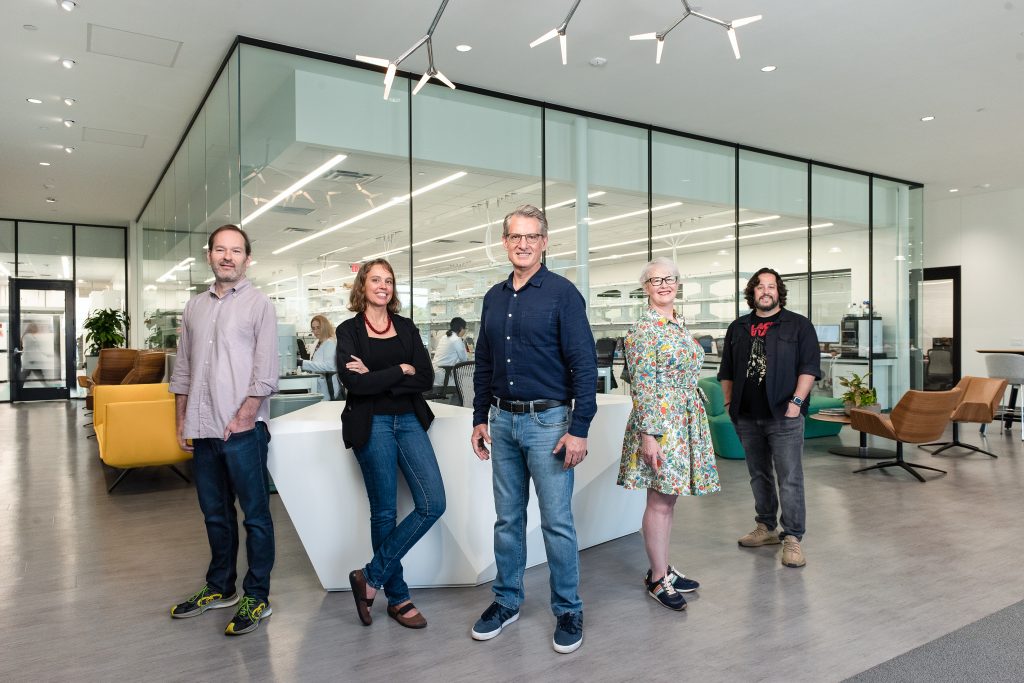
The new platform brought together work such as managing datasets, running scientific workflows, visualizing results and collaborating with colleagues. Tools developed for one undertaking had become the basis for a business serving other research teams. Form Bio’s launch was a useful reminder that the machinery built along the way can acquire customers of its own.
Wakeford’s launch message described the moment when the founders recognized broader uses for their software and machine learning work. He named biomaterials, biofuels, agriculture and food alternatives among the possible applications. The ambition extended beyond the original project. The common requirement was to help scientists use computational tools without making the tools consume the whole working day.
“Our mission is to empower scientists to reach their next discoveries with a fraction of the time and effort.”
Kent Wakeford, Form Bio launch message, 2022
For someone whose earlier companies dealt with advertising and entertainment, the customers were different. The commercial task still involved finding uses for technology, assembling specialists and making a product accessible. The scientists supplied the expertise in their fields. Wakeford’s chapter in the story concerned the company taking shape around that work.
A different seat at the table
Form Bio’s leadership changed in August 2025, when Michelle Chen became president and CEO. The announcement described Wakeford and Busey remaining engaged as strategic advisors and executive chair members of the board. The founding chapter continued through different responsibilities. A company biography needs room for these changes, as well as for the launch photograph.
Wakeford also began mentoring founders through USC x Techstars and Berkeley SkyDeck in 2025. The work he lists includes commercialization, fundraising, pricing and building a first executive team. Those subjects bring the career back to ordinary decisions. After several changes of industry, there are still customers to understand, people to hire and a business to organize.
Follow his route from entertainment law to Form Bio and the surprising transitions become easier to read. Wakeford has worked around changing ways to distribute media, measure advertising, play games, follow players and use scientific software. Each chapter has its own collaborators and demands. The next move has repeatedly begun where a new possibility needs a functioning company around it.