When AppLovin went public in April 2021, its co-founder Adam Foroughi had already spent years learning to proceed without applause. The company’s shares were priced at $80 and began trading around $70. His stake was worth roughly $2 billion. A public debut usually gets narrated as an arrival. This one carried a rather pointed footnote: venture investors had declined to finance the beginning.
Foroughi had described “countless meetings” in the company’s registration filing. The meetings produced no venture funding. There is a particular comedy to this arrangement. People paid to spot the next business of consequence can spend a considerable amount of time explaining why it should probably be somebody else’s problem.
He continued anyway. That decision would recur in different forms: keep operating when a sale disappeared, keep investing when the share price fell, keep questioning which parts of the company deserved to remain. The interesting part of his story is how often continuing required changing the business he was continuing.
A family starts over
Foroughi was born in Iran in 1980. In 1984, when he was four, his family moved to Southern California after fleeing the Iran-Iraq War. The family’s losses were more than background scenery in his later account of ambition. His father had to begin again in a different country.
Watching his father struggle to recover what he had built in Iran stayed with him. Years later, Foroughi connected his own drive to that experience. Success had a family history. It meant restoring some of what the move had taken away, even though a son’s company could never reproduce a father’s old life.
He attended the University of California, Berkeley. His degree was a B.A. in Business Administration. After college came derivatives trading, then entrepreneurship. Before AppLovin, he co-founded LifeStreet Media and Social Hour, both advertising technology businesses. By the time he started the company for which he is now known, he had already worked on the machinery that connects an advertiser’s money to a customer’s attention.
AppLovin’s corporate record places the start of his tenure as chief executive in December 2011. John Krystynak and Andrew Karam joined him as co-founders. The familiar startup ingredients were there: friends, technical work, a market moving quickly. The comfortable funding story was absent.
The problem inside the phone
The business addressed a deceptively ordinary frustration. Someone makes an app. Somewhere, people might enjoy it. Getting those people to discover it can be expensive, and being discovered once does not ensure a business survives. Mobile software made distribution easy in one sense and brutally crowded in another.
Foroughi’s early AppLovin work linked customer acquisition with what happened afterward. A project on his professional profile makes the idea unusually concrete. In October 2014, the company worked on personalized restaurant recommendations for OpenTable. The system used information including location and previous booking behavior, then connected an advertisement to the restaurant’s page inside the app.
That example is useful because it removes the fog around advertising technology. The task was to make a recommendation specific enough to prompt an action. A restaurant booking is a more demanding verdict than a pleasant impression of a restaurant.
As AppLovin developed, mobile gaming became a central market. Games needed players; developers needed ways to earn money from their audiences. The company built tools on both sides of that exchange. Foroughi’s problem expanded from finding customers for an app to operating a platform that could make those introductions repeatedly.
Failure, with the romance removed
Foroughi had little interest in turning setbacks into a lifestyle. In a 2015 essay, he argued that startup culture had made failure too easy to celebrate. He distinguished mistakes that teach something useful from poorly considered ideas that simply consume time and money.
His prescription was blunt: “fail smart and infrequently.” A charmingly unfashionable ambition for an industry capable of awarding a standing ovation to a postmortem.
The distinction helps explain his persistence. Continuing after rejection does not require pretending every decision was correct. It requires separating a useful business from the assumptions that need replacing. His writing leaves room for ambition, but gives advance thought a seat at the table too.
He also warned against dwelling on a failure until it becomes larger than the original mistake. Learn, then move. It is practical advice for someone whose working life would later include a proposed sale that could not be completed and a public market that changed its opinion with remarkable enthusiasm.
“fail smart and infrequently.”
Adam Foroughi, 2015
The exit that did not happen
AppLovin agreed to a sale to China’s Orient Hontai Capital at a valuation of about $1.4 billion. U.S. opposition to the transaction disrupted that plan. By late 2017, the arrangement had shifted toward debt investment rather than the anticipated acquisition.
The consequence was substantial: Foroughi was still running an independent company. A founder can spend years working toward an exit, then find the decision to remain has effectively been made elsewhere. In this case, the business had more time to develop.
In July 2018, KKR agreed to invest $400 million, at a reported valuation of $2 billion. AppLovin was expanding beyond advertising tools into game publishing through Lion Studios. Capital would help it finance and grow that broader operation.
The sequence complicates the easy story of a founder who simply refused to sell. He had agreed to a transaction. It failed to proceed as planned. What mattered afterward was the company he built with the time that remained.
- 2011CEO tenure begins. Early venture funding does not materialize.
- 2018KKR agrees to invest $400 million after the planned sale falls apart.
- 2021AppLovin begins trading on Nasdaq.
A price on conviction
Going public did not make the judgments kinder. Foroughi later recalled AppLovin shares falling from roughly $115 to $9 during the decline that followed its IPO. He described a market capitalization that reached about $3.8 billion. For someone accustomed to evaluating a business from inside it, the outside verdict was severe.
His response included borrowing to repurchase shares. That put money behind his disagreement with the market. It also put risk there. Debt still needs servicing when conviction is sincere, and a falling share price does not owe its owner a recovery.
The operating answer involved the advertising model itself. AppLovin launched Axon 2 in the second quarter of 2023. Foroughi’s subsequent explanation emphasized prediction: use signals and feedback from advertising interactions to improve the next decision. The business would earn its recovery through better results for customers.
There is a useful distinction between the two decisions. Buying shares changes who owns the company. Improving the model changes what the company can do. In Foroughi’s account, both mattered, but the technical work supplied the business with a reason to justify his confidence.
Dinner has a higher bar
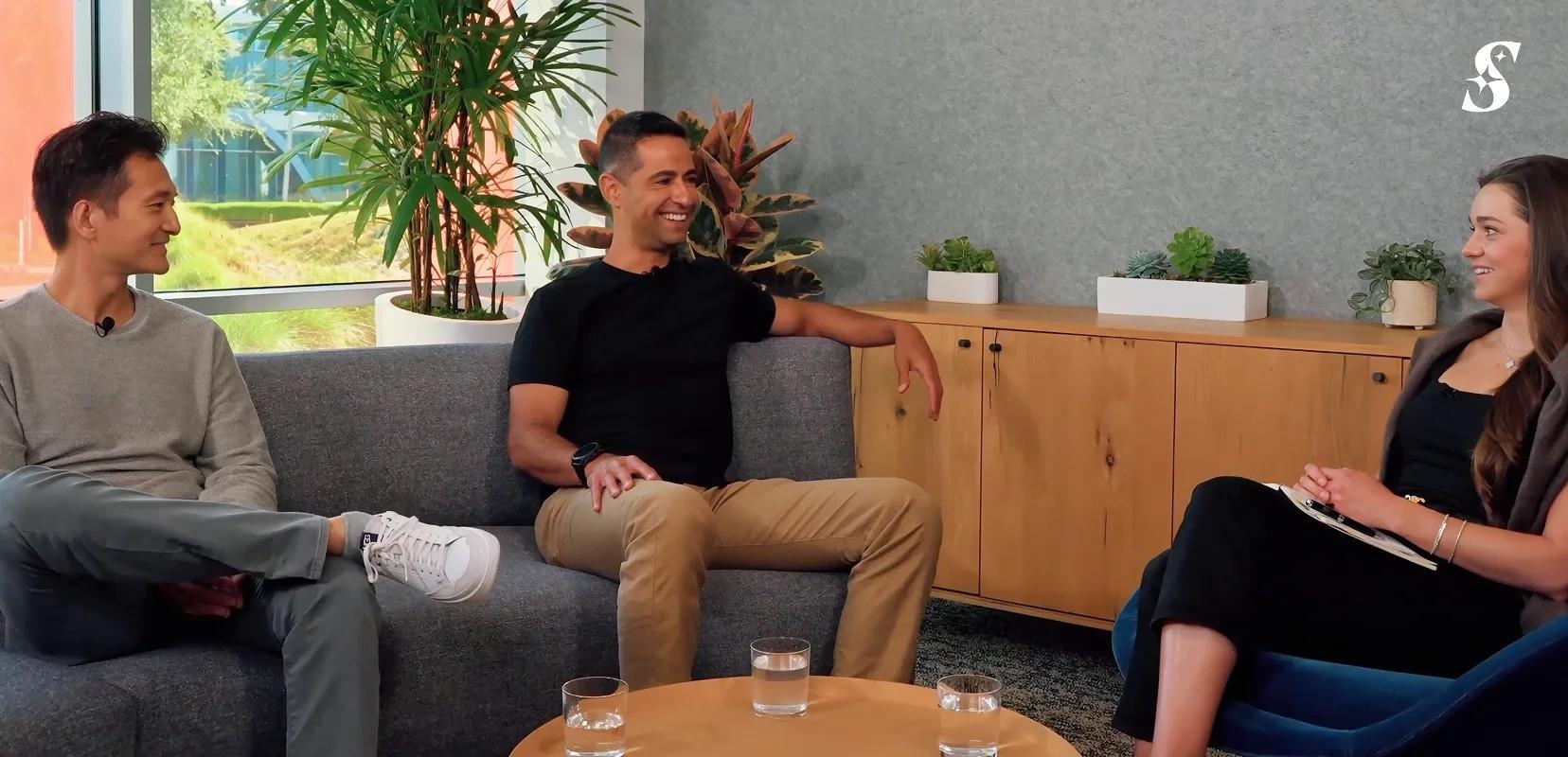
Foroughi’s management writing can sound impatient, especially when the subject is ceremonial activity. He favors promoting employees for demonstrated achievement rather than waiting for the annual review calendar. A strong contribution, in his view, should be able to change a person’s prospects when it happens.
He has also argued that developing managers internally gives colleagues a visible route forward. The point is partly retention and partly continuity: somebody who already understands the company needs less time to learn its habits. It is a preference rather than an absolute rule; he acknowledges that outside hiring sometimes supplies necessary skills.
His attitude toward time has a domestic counterpart. In 2019, he was raising five children with his wife. He managed his own inbox and did not have a personal assistant. Work dinners faced a high threshold because they competed with dinner at home.
This makes his dislike of unnecessary meetings more understandable. Every hour used for a discussion has somewhere else it might have gone. He expected meetings to have a clear purpose and employees to attend when they could contribute. A calendar could not certify its own usefulness simply by being full.
In an earlier essay about working parents, he advocated flexible schedules and attention to results. Some employees could divide the day around family commitments and resume work later. His argument made room for a fairly ordinary reality: capable people have obligations outside the office, and their usefulness cannot be measured by the chair they occupy.
Selling the games, keeping the engine
By June 2025, Foroughi was narrowing the company’s focus. AppLovin completed the sale of its mobile gaming business to Tripledot Studios on June 30. The final terms included $400 million in cash and approximately 20 percent of Tripledot’s fully diluted equity.
Ten studios moved in the transaction, including PeopleFun, Machine Zone and Lion Studios. Titles such as Wordscapes and Project Makeover belonged to the operation being sold. Those games had helped build AppLovin’s history; the next phase would concentrate on the advertising platform.
The transaction shows a different kind of attachment to a company. Foroughi could value the games business and still decide it should leave. Keeping every operation because it once helped would have made the past a permanent member of management.
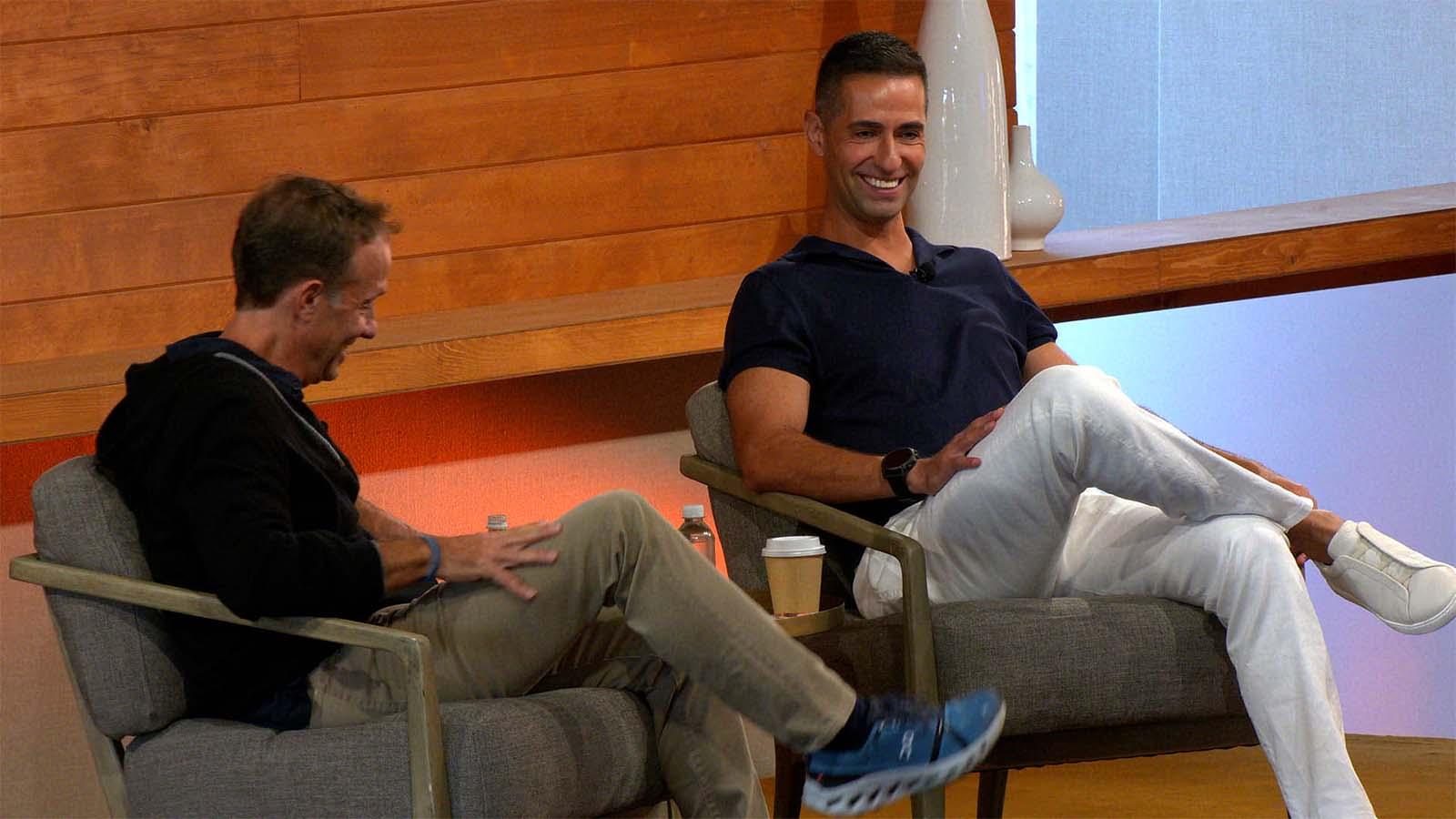
At a technology conference in September 2025, he described the continuing purpose in plain terms: help an advertiser find a customer and produce a conversion. Neural networks had changed how well that task could be done. The ambition remained tied to an observable commercial event.
An eight-dollar name, a wider door
In June 2026, AppLovin opened its self-service advertising platform to all advertisers. The previous version had required a referral. Foroughi presented the change as the result of feedback and revisions that made getting a campaign live simpler.
There was also a small retreat in the naming department. The platform had been called Axon. Customers continued calling it AppLovin, so the company brought the advertising product back under that name. Axon remained the recommendation engine. Foroughi explained that AppLovin itself had started with an $8 domain purchased for an app.
It is an agreeable detail in a business usually discussed in billions: the customers declined the new name, and the founder listened. The revised platform aimed beyond game developers toward businesses selling products, acquiring purchasers or collecting leads. The question was whether the machinery built around mobile games could bring useful customers to more kinds of company.
The financial scale was already considerable. For the second quarter of 2026, AppLovin reported $1.924 billion in revenue, compared with $1.259 billion a year earlier. Net income was $1.267 billion. Those are company results, not a measure of one person’s talent, but they establish the size of the operation for which he remains responsible.
Quarter ended June 30, 2026
In September, he addressed another part of that responsibility: data practices in ad quality tools. He said AppLovin was removing user-level detail from Ad Review and retaining aggregated reporting for publishers. He also stated that the tool’s data was not fed into Axon. The argument concerned what a network should be allowed to collect when checking advertisements served by others.
Foroughi’s latest chapter thus contains both a wider invitation and a proposed limit. More businesses can use the platform. The tools around it need rules about the information they handle. His career has repeatedly returned to the same practical test: after the meeting, after the naming exercise, after the market has voted, does the business work? The next answer will come from the customers who spend money on it.