"The rug dealer who out-invested Stanford MBAs."
The first check Pejman Nozad ever wrote as a venture capitalist came out of future rug sales commissions. He didn't have the money yet. He committed to earn it. That tells you everything about how he operates.
He arrived in the United States in 1992 with $700, no English, and nowhere to sleep. Within a week he was washing cars in San Jose. Within a month he'd talked the owner of a yogurt and coffee shop in Redwood City into letting him live in the attic above the store, rent-free, in exchange for labor. Police stopped him at the door one night, certain he was breaking in.
A few years later, he was selling Persian rugs on University Avenue in Palo Alto - the same street where Google, Facebook, Palantir, and PayPal all traced roots. His clients were VCs and founders. He visited their homes, spent time with their families, served Persian tea in the gallery's back boardroom. He learned their pattern of thinking. When Andy Rubin walked in off the street in 2000, Pejman didn't see a potential customer. He saw a founder worth backing. He wrote a check for $400,000. Rubin went on to build Android.
"Whatever you do in life, if you become the master of it, something magical happens. I rest assure you there's no better rug salesman than me."
- Pejman NozadThat investment taught him a hard lesson about dilution - Danger's $500M exit to Microsoft returned only 2x for Pejman because he didn't manage pro-rata rights. He didn't repeat the mistake. In 2007, he became the first investor in Dropbox. When Drew Houston needed to get in front of Sequoia, Pejman orchestrated the introduction with such creative urgency - implying multiple top VCs were already circling - that Houston later referred to him in Forbes as "our pimp." Sequoia reportedly made $2 billion on that deal.
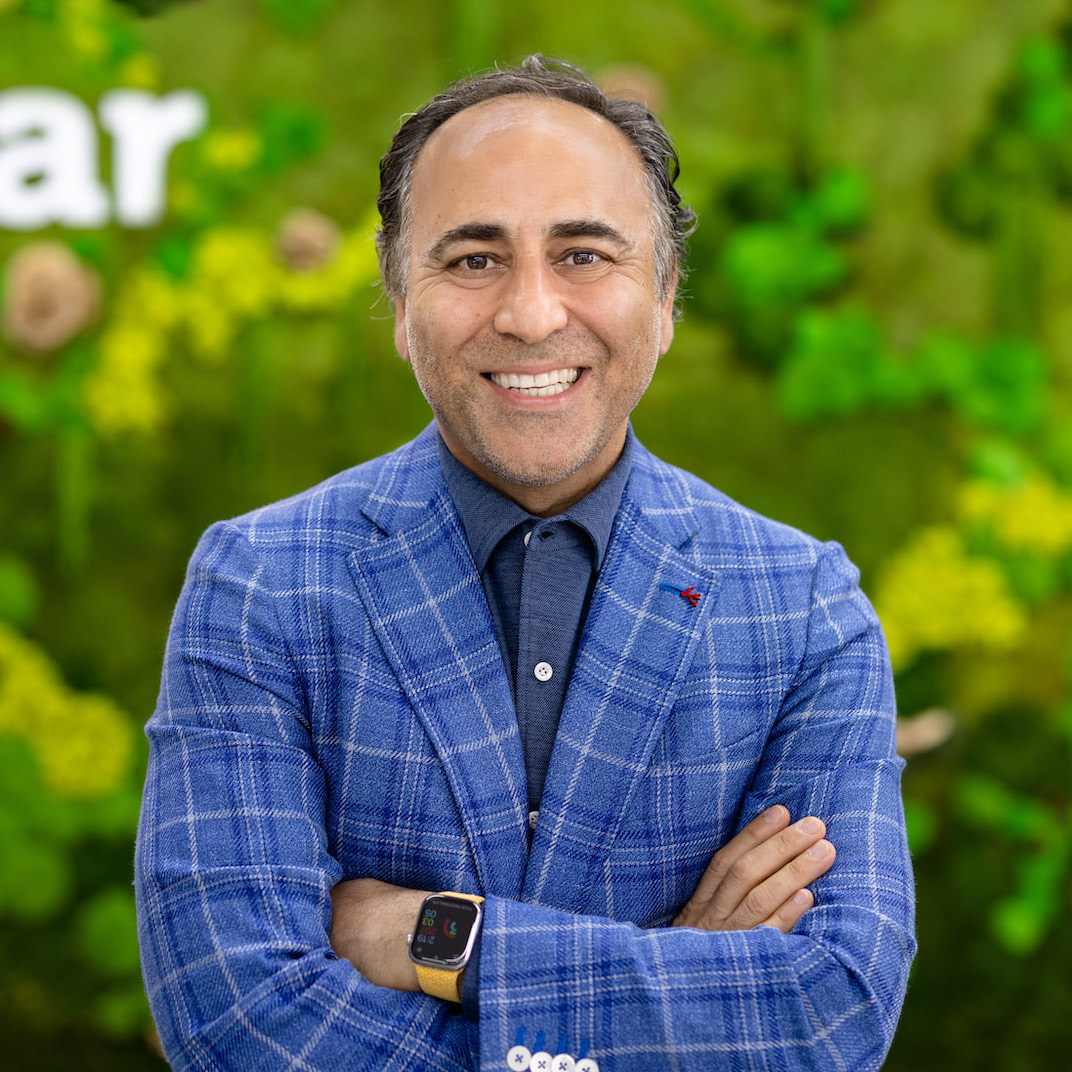
In 2013, Pejman co-founded Pear VC with Mar Hershenson, a three-time founder with a Stanford PhD in electrical engineering. The name "Pear" stitches together their names - "Pe" from Pejman, "ar" from Mar. By 2023, Fund IV closed at $432M - one of the largest seed-only fund raises in history, 270% larger than Fund III. Portfolio companies are collectively valued at nearly $50 billion. Forbes has named him #1 on the Midas Seed List three years in a row.
He has no Stanford CS degree. No Harvard MBA. He never worked in tech before investing in it. He beat everyone anyway, with Persian tea and pattern recognition.
When Pejman landed in the US in 1992, he worked as a car washer driving an hour each way, then negotiated his way into an attic above a Redwood City yogurt shop - free rent for labor. He attended English classes at community college in the evenings. He owned a $750 used car and had almost nothing else.
The yogurt shop attic is not the detail that matters. What matters is that he parlayed it into a sales job at Medallion Rug Gallery on University Avenue, Palo Alto - where his real education began.
He sold up to $8 million in Persian rugs a year. But he was explicit: he never sold rugs. He sold the feeling of a rug in your home. He visited clients' living rooms. He knew their families. He served Persian tea in the gallery's back boardroom to Sequoia partners, KPCB partners, and first-time founders.
The entire Sequoia Capital partnership came through that boardroom. Doug Leone bought rugs. John Doerr bought rugs. And they all took Pejman's calls when he eventually became a VC himself.
"I never sold rugs itself... I always explain the impact of the rug in your home."
- Pejman Nozad - on sales, storytelling, and the VC craftAt age 16 in Tehran, he wrote sports columns. At 18, he hosted Iran's most popular sports radio show. He played professional soccer in Iran before a scholarship took him to Germany. By the time he hit University Avenue, he had a broadcaster's instinct for what people find interesting and a salesman's ability to listen. Silicon Valley rewarded both.
In 2005, Pejman Nozad was offered a $50,000 investment in Facebook at an $80 million valuation. The deal fell apart over a dispute about office lease terms. At that valuation, a $50K check would have returned approximately $500 million at peak. He didn't analyze the founder wrong. He over-analyzed the deal. His lesson, repeated in interviews ever since: "Don't overanalyze exceptional founders. Get on the rocket ship."
Founder quality is the primary variable. Everything else - terms, office leases, structure - is secondary when the founder is exceptional.
Speed matters at the seed stage. Deliberation on peripheral details kills deals that would have defined careers.
His DoorDash seed check - $1.9M - returned $440M. He got on that rocket ship without hesitation.
| Company | Sector | Role | Outcome |
|---|---|---|---|
| DoorDash | Delivery / Consumer | Seed — $1.9M | ~$440M post-IPO return |
| Dropbox | SaaS / Cloud Storage | First investor (2007) | IPO 2018 — $7.9B market cap |
| AppLovin | Mobile / AdTech | Early seed | Major public exit |
| Danger (pre-Android) | Hardware / Mobile | Angel — ~$400K | $500M Microsoft acquisition (2x) |
| Gusto | HR / Payroll SaaS | Early seed | Unicorn |
| Guardant Health | Oncology / HealthTech | Seed | Public — NASDAQ: GH |
| SoundHound AI | Voice AI | Early investor | Public — NASDAQ: SOUN |
| Vanta | Cybersecurity / Compliance | Seed (via Pear) | Unicorn |
| Branch | Mobile Attribution | Seed (via Pear) | Unicorn+ |
| Aurora Solar | Climate Tech / SaaS | Seed (via Pear) | Series D+ funded |
| Addepar | Fintech / Wealth Mgmt | Early stage | Unicorn |
| Lending Club | Fintech / Lending | Angel (pre-VC) | IPO 2014 |
Fund IV represented a 270% step-up from Fund III — one of the largest seed-only fund raises in history.
Pejman Nozad has been explicit about his framework across dozens of interviews and talks. These six signals, in his own framing, are what separate fundable founders from the rest.
I did not have much money then, but I had hope.
Capital is now a commodity. Courage and emotional endurance are the true scarce resources.
When someone truly understands the problem they are solving with great depth, they are less likely to burn out when the going gets tough.
In the early days of a company you can change your idea - but it's very hard to change your co-founder.
How can you say no to someone you haven't even met?
Being successful here does require a healthy dose of tenacity.
He didn't go to conferences. He didn't send cold emails to founders. He invited Stanford CS students with Persian surnames for tea. Some became unicorn founders. One was acquired by Google. The relationship came first. The deal came later - sometimes years later. This is still how Pear operates.
He spent nearly all of his $700 calling the woman who became his wife of 31+ years. They have two children. He lives in Atherton, California. He has attended six FIFA World Cups, two as a credentialed sports journalist. His favorite book is The Power of Now by Eckhart Tolle. He sits on the board of Sheffield United - a 135-year-old football club - because soccer never left him.
He spent most of his last $700 on international phone calls to Tehran - calling the woman who would become his wife. He had $700 when he landed. He arrived essentially broke by week two. The calls were worth it.
PersonalPolice stopped him at the yogurt shop door late one night. He was coming home from English class to sleep in the attic. They thought he was a burglar. He was just an immigrant trying to get to bed.
1992 — Redwood CityThe Danger investment in Andy Rubin returned only 2x on a $500M Microsoft exit - because Pejman hadn't managed pro-rata rights. He never made that mistake again. Rubin later built Android. The lesson cost him more than money.
2000 — First Check, Hard LessonDrew Houston called Pejman "our pimp" in a Forbes cover story for the way he orchestrated Dropbox's Sequoia meeting - implying urgency and competition that made Sequoia move fast. Sequoia made roughly $2 billion. Pejman calls it relationship-building.
2007 — The Dropbox Deal$50K. Facebook. $80M valuation. 2005. Office lease. Gone. The deal collapsed over lease terms on a space that no longer matters. His rule ever since: when the founder is exceptional, get on the rocket ship. Don't read the fine print on the landing gear.
2005 — The MissPear VC operates a custom gelato truck. The 30,000 sq ft San Francisco office is reportedly the largest VC office in the US. For a firm that started with a rug gallery boardroom and Persian tea, the scale of the hospitality tradition has stayed consistent - only the square footage changed.
Pear VC Culture