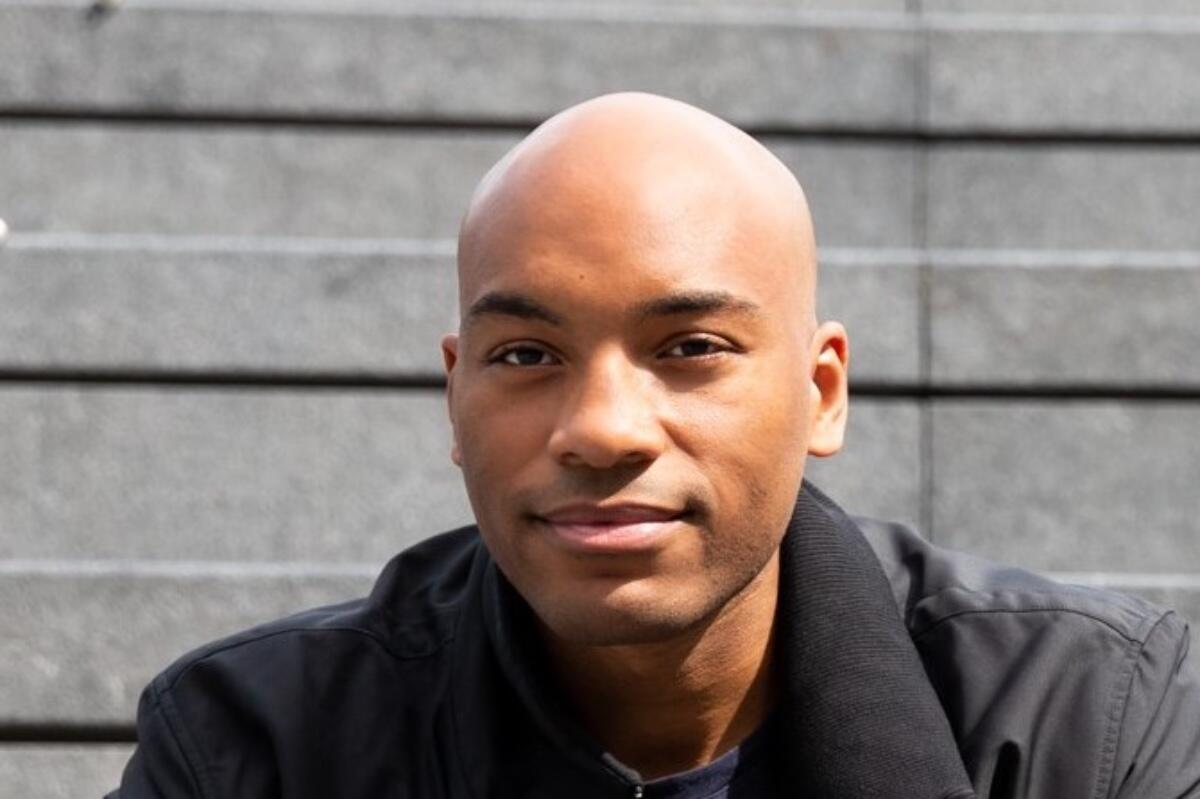
A hobby, a hunch, and a gap nobody had filled
Christian Facey did not arrive at the top of anyone's list. He got into Kingston University through clearing, after his A-Level results came in below what he had hoped for. He has been open about not being treated as a high flyer early on, and about the deliberate work he put into studying how to improve his own aptitude and get past the mental barriers that came with that start.
What he did have was range. By day he moved through the machinery of big-tech advertising - a run of roles at Google that included associate account strategist, agency strategist, and a stint at Google Launchpad, followed by a move to Facebook as a marketing science partner. At Google he managed more than $100 million in agency ad budgets, which is where he learned, up close, how advertising is bought, measured, and justified. It is also where he met Wilfrid Obeng, the engineer who would become his co-founder.
By night he made things. Facey produced hip hop and jazz, and built casual and hyper-casual mobile games for fun. Those two hobbies were not a distraction from the day job. They turned out to be the thesis. When he started experimenting with streaming his own audio into his own games, he noticed something strange: the mobile gaming industry, worth well over $100 billion, and the audio advertising world had never really been connected.
That was the spark for Audiomob. The idea was simple to state and hard to build: audio ads that play inside a mobile game without interrupting it. No paused level, no forced 30-second video, no player rage-quitting because a screen took over their phone. The player keeps playing while the ad plays alongside them. Developers earn money without wrecking the retention numbers that keep their games alive.
Leaving the safe thing
Facey and Obeng left their corporate jobs, put personal savings into building a minimum viable product, and raised a first $1 million. The timing looked terrible. They were launching in 2020, in the teeth of a global pandemic. Facey has called being a first-time founder in that window a "baptism by fire," and has spoken candidly about starting therapy to handle the stress of scaling a company through so much uncertainty.
What carried them through was less luck than method. Facey talks constantly about execution as a discipline you train, not a talent you are born with. He credits strong PR through 2020 and 2021, and a willingness to pivot when the market shifted, for getting the company to a Series A. The technical moat helped too: Audiomob built device-level audio analysis so its ads can read the audio state of a game and slot in without disrupting it.
The bet paid off. Audiomob closed a $14 million Series A led by Lightspeed Venture Partners, with Makers Fund and Google among the backers, at a valuation north of $110 million. In 2021, Facey and Obeng were named to the Forbes 30 Under 30 list. Facey has also been listed on Hurun UK Under 30 and won a Start-up Entrepreneur of the Year award. The company grew past 30 million users worldwide, with offices in London, New York, and a research lab in Abu Dhabi.
The unknown unknowns
Ask Facey what the hardest part of building a company is, and he does not point at competitors or fundraising. He points inward. The real challenge, he says, is "trying to educate yourself on the unknown unknowns" - the problems you cannot see coming and have no framework for. He is a reader of Ryan Holiday's stoic-flavored business books, "Ego Is the Enemy" and "The Obstacle Is the Way," and it shows in how he frames setbacks as material to work with rather than walls to hit.
His view on balance is bracing. Quoting Google's CFO Ruth Porat, he has said flatly: "There is no work life balance, work is a way of life." At the same time he has talked about trying to carve out roughly half a day a week, and about wanting real balance once he can hire the directors to make it possible. Both things sit next to each other in how he talks - the drive and the awareness of its cost.
There is a wider mission woven in. Facey and Obeng set up a mentorship program aimed at the diversity gaps in tech hiring and investment, and deliberately opened it to founders of every background rather than making it exclusive. It is a small thing next to a Forbes list, but it is the kind of leverage a list cannot give you: leaving a door open for people who did not start on anyone's high-flyer track either.
Beyond the game
Facey does not see Audiomob as a mobile-gaming company forever. The longer vision is an audio content discovery platform that reaches any screen where a video ad currently interrupts the user. Asked whether the format could cross into console and PC, he answered without hedging: "100%. Audio ads have the ability to cross over to any platform and any digital user experience where a video ad is currently blocking the user." He frames the company's job as expanding the market, not just grabbing share of it - with an eventual IPO named as a long-term goal.
Through all of it, one rule holds. User experience comes first, and the ad never blocks the game. It is the principle Audiomob was founded on, and the reason a hobbyist's late-night experiment turned into a company that advertising, gaming, and venture capital now all take seriously.