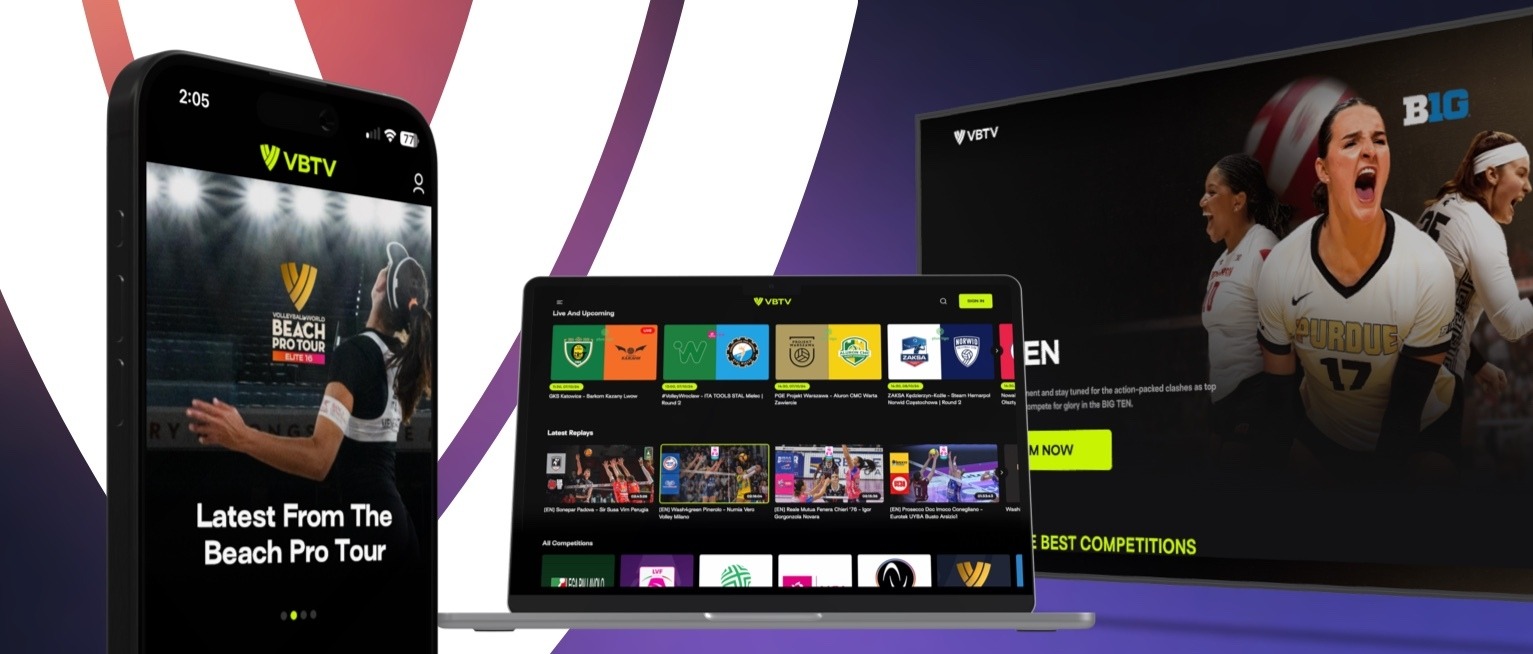
Volleyball World had reached 1.5 million members on VBTV when it announced a rebuilt streaming platform in September 2024. That is an awkward moment to change the machinery. The audience is already there. The matches will not wait. Yet the organization chose to replace a single supplier with a team of specialists: Applicaster, JW Player and Cleeng. The interesting part was what it wanted to buy.
Control. In its account of the switch, Volleyball World explained that moving away from Endeavour Streaming would give it more flexibility over the customer experience and the front end. Applicaster supplied the app layer. The audience number belonged to VBTV before the new platform could prove itself; it was the responsibility the partners inherited, rather than a trophy they had earned.
- Applicaster’s Zapp lets media teams build and manage their own streaming apps.
- Reusable components and server-controlled interfaces reduce repeated development work.
- The bargain is more choice over the experience, with more partners to coordinate.
The bill arrives after the ribbon is cut
Consider the ordinary life of a streaming home screen. A tournament begins. A series finishes. Someone wants the live channel moved higher. On a phone, this may be straightforward. On a television, navigation involves a remote control. Across several operating systems, an apparently small request can turn into several engineering jobs. The viewer sees a row of pictures. The business sees a queue.
Applicaster began in 2009 building custom apps for media brands. The company’s own history describes the limitations that pushed it toward Zapp: scaling development, reusing code and managing multiple apps across platforms. No spectacular disaster is required to explain the decision. Repetition was expensive enough. A bespoke business could make the next app; a platform could make the next change less laborious.
Co-founders Jonathan Laor and Neer Friedman brought consulting and gaming backgrounds, respectively, according to Laor’s 2020 interview. Those are useful perspectives for this particular nuisance: one concerns how organizations work, the other how people interact with screens. Zapp turns recurring app work into tools that can be reused and configured by the people running the service.
Move the furniture, keep the building
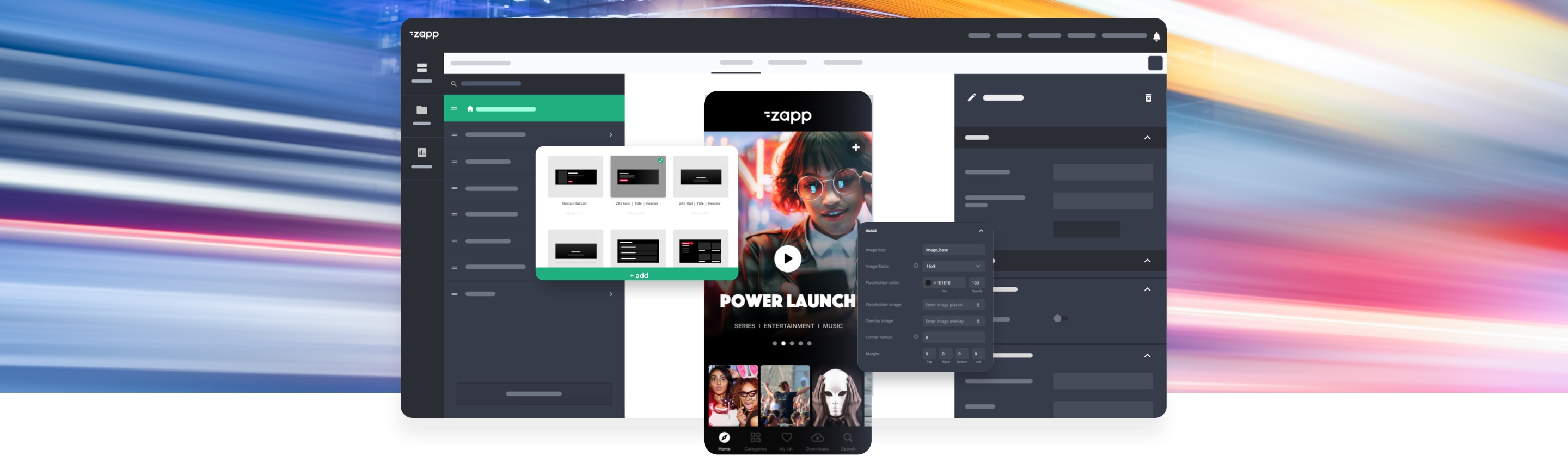
Zapp is a no/low-code app management platform for mobile, connected television and web. Its visual tools let teams arrange interfaces and configure supported features. Integrations connect the app to other services, including content, authentication and analytics. Applicaster advertises more than 50 third-party integrations. It is selling the means to operate a branded viewing experience, rather than a catalogue of programmes.
The technical idea worth understanding is server-driven UI. Parts of the interface are controlled remotely instead of being fixed inside the installed app. A team can change supported layouts, navigation or promotions without shipping a fresh store release for each adjustment. Think of moving the furniture while keeping the building. New native capabilities and custom integrations can still require development; the furniture metaphor has walls.
This gives Applicaster a particular place in the market. A media company can commission custom development, buy an integrated OTT service or assemble specialist providers. Zapp sits in that last arrangement, although integrations mean the boundaries overlap. Kaltura and Brightcove can appear in conversations about alternatives while also supplying technology an app uses. A sensible comparison starts with the job being purchased.
A dog show, a baseball game, a comedy set
The customers make the proposition less abstract. In Applicaster’s B Live account, OTT digital manager Ian Dwyer reported personally building and launching apps for more than six customers, averaging one month. Named examples included AKC.TV, Perfect Game, Mint Comedy and Clash.TV. This is customer testimony, not a timetable every buyer should expect. But the mix is revealing: different audiences can share substantial underlying app work.
There is a more regional example in Hungary. AMC Networks International Central and Northern Europe launched Zapp-powered SELEKT with Magyar Telekom in 2024. The announcement described 1,800 hours of content, with access tied to eligible television packages and a limited SELEKT Light offering. An app here is part of an existing commercial relationship. Identity and access matter as much as a handsome opening screen.
Predictable fees, unfinished work
Applicaster sells a fixed platform license. Its published Fast Forward offering describes no revenue share or penalty for audience growth. That is an appealing structure for a service hoping to become popular. It is also only one part of the budget. Video delivery, subscriber systems, implementation and specialist work remain things a buyer must account for. A predictable platform bill does not make the entire operation free.
Investors backed the approach. Applicaster announced $20 million in growth financing in March 2019, after reporting a doubling of annual recurring revenue, then $11 million in July 2020. Both financings were led by Viola Growth. In June 2020 it introduced Quick Brick, a framework intended to reduce the need to recode visual elements across platforms. The product’s direction stayed consistent: make repeated work reusable.
“We’re SaaS with friendly faces.”
Jonathan Laor / 2020 interview
That description matters because configuration software still needs people. Applicaster describes customer-success support, and its October 2025 App Dashboard announcement adds loading times, version adoption and feature-use visibility. These measurements help teams inspect the experience after launch. A viewer who cannot get an app to load is unlikely to appreciate its carefully selected colour palette.
Try the change before buying the promise
The useful lesson for other businesses is to test the everyday operation before celebrating the launch. Put real content into a prototype. Change a promotion. Check sign-in on the devices customers actually use. Decide who can make each adjustment. Teams with several related apps have more repeated work to remove; a single simple service may gain less from the machinery.
A specialist stack also demands someone responsible for its joins. Teams seeking one supplier for everything, or highly unusual features beyond the available components, should weigh that work carefully. Applicaster cannot supply compelling programmes or guarantee subscribers. It offers a narrower, practical advantage: when the audience teaches you something, the app need not be the last person in the room to learn it.
Open another window
Explore the product, meet the company, or watch the customers explain their choices.