The useful thing about a grocery basket is that it cannot pretend. A brand survey can capture intention. A campaign report can polish attention into a percentage. But a basket records a string of decisions made under fluorescent light, with a budget, a clock and a trip home still ahead. Ashish Khera, the Chief Marketing Officer of Healthy Planet, talks about retail from that physical end of marketing. The location matters. The weight of the basket matters. The way a customer arrived matters. Even the question asked beside a shelf matters, because it reveals where a store still has work to do.
That point of view is well suited to a company in the middle of becoming something larger. Healthy Planet began in 1995 as a small Toronto kiosk and built its name around supplements. It has since expanded into organic produce, specialty grocery, prepared food, personal care and ecommerce. By June 2026, the company said it operated 44 Ontario stores and shipped online across Canada. The change is not merely more square footage. It is a change in the job customers hire the store to perform.
Khera’s public account of that evolution is remarkably plain: customers pulled the business toward a more complete grocery offer. The company listened. For a marketer, this is a productive inversion. The brand did not invent a grand identity and force the operating model to catch up. It noticed a widening demand, then worked to make the stores, categories and customer experience agree with it.
A city corner becomes a laboratory
The clearest example sits at Yonge and Dundas in downtown Toronto. Healthy Planet opened a two-level location there in 2023. Khera later described it as a testing ground for multi-level urban retail - a chance to understand whether the format could work amid higher lease costs and different shopping habits. The test was not abstract. Customers who walk or take transit tend to visit more often, buy lighter loads and move through the city differently from suburban shoppers who drive and fill a larger cart.
That observation sounds modest, but it carries the whole operating plan inside it. A useful urban store needs the right footprint, assortment, staffing and flow for frequent, smaller trips. The marketing cannot promise convenience if the format was built for a different journey. Nor can the real-estate model ignore the way a customer physically carries the purchase away.
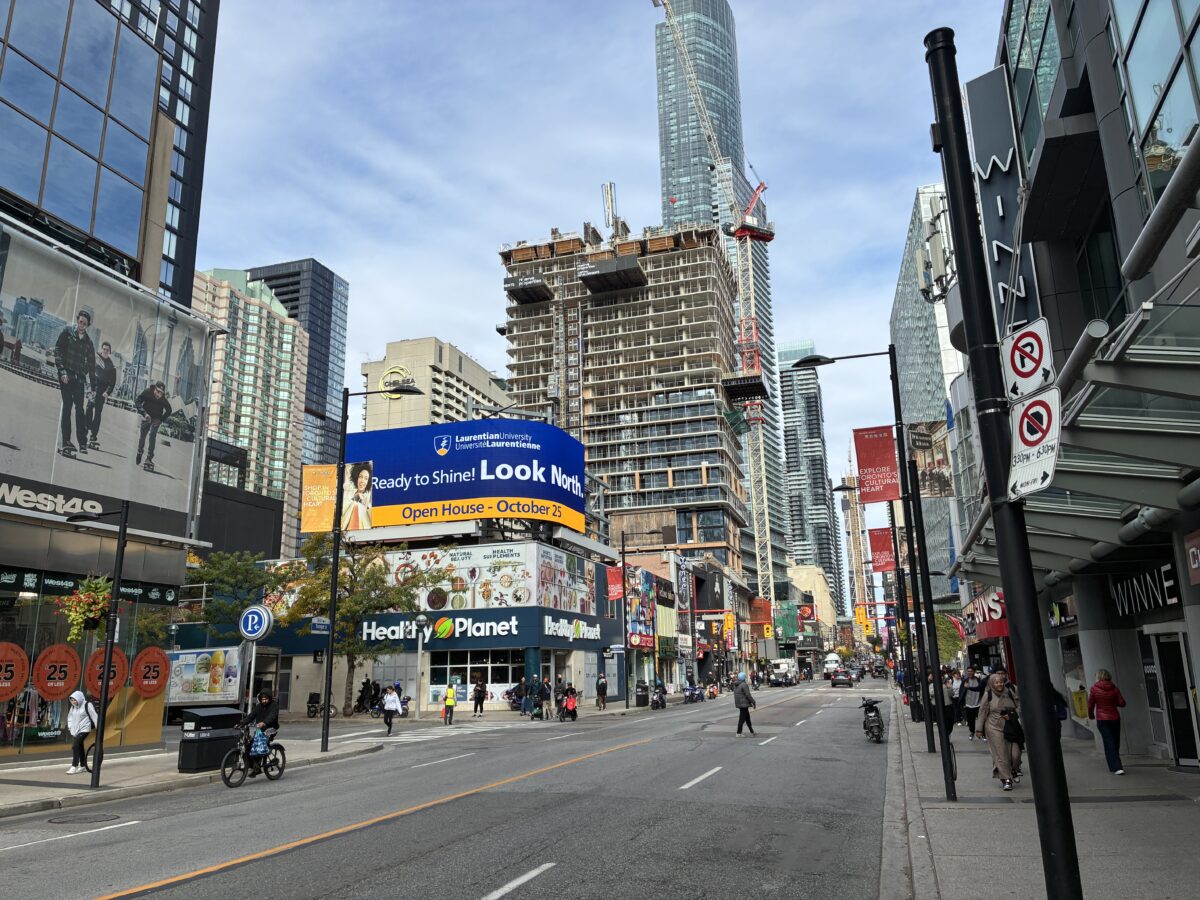
The downtown result helped support a larger commitment at Yonge and Eglinton: a planned 12,817-square-foot, two-level store. Khera said the company had circled the property more than once before the deal came together. In his phrasing, “Opening new locations takes time because we’re meticulous about getting it right.” It is a sentence about real estate, but it doubles as a philosophy of growth. A delayed right answer can be cheaper than a fast wrong one when the decision is a lease, a team and a neighbourhood promise.
“Opening new locations takes time because we’re meticulous about getting it right.”Ashish Khera on site selection
The store-learning loop
Marketing measured in inches
Khera arrived at this broad retail canvas through a career spent around categories where explanation matters. His public history includes Nikon, Dabur India, Abbott and Dentalcorp before Healthy Planet. Cameras invite technical comparison. Consumer goods depend on memory and distribution. Dental services ask a brand to earn confidence across many locations. Grocery compresses those demands into a weekly encounter with thousands of choices.
His formal business training includes ICFAI Business School from 2008 to 2010. His profile also records early certifications in Facebook social media marketing and Google digital marketing. They date from 2014 and 2015, when companies were still deciding whether those channels belonged at the centre of the marketing job. More than a decade later, Khera’s remit joins that digital layer to the oldest form of commerce: a person entering a shop and trying to make sense of a shelf.
The last few feet are where many polished brand ideas fall apart. A shopper may want to support a local company but cannot tell which product qualifies. They may be curious about a category but find its labels difficult to parse. They may arrive from an online ad and meet an in-store experience that speaks a different language. Closing those gaps is not glamorous. It is also where marketing becomes useful.
Healthy Planet’s work around Canadian brands shows the mechanics. The retailer has used online filters, dedicated sections and maple-leaf shelf tags to help customers identify Canadian-owned or Canadian-made options. Khera summarized the behaviour simply: “Where a strong Canadian-made option exists, our shoppers are choosing it.” The strategic act is not only carrying the product. It is making the option findable at the moment of choice.
The campaign gets attention. The shelf must finish the sentence.A practical retail principle
When the format carries the message
Healthy Planet Kitchen is another example of strategy becoming visible. The first Ontario store built around the Kitchen concept opened in Ajax in 2023, alongside a large organic produce department. Later that year, the Yonge and Dundas location became the second. Khera said the company intended to extend both prepared food and produce into more stores over time. This is product expansion, but it also changes what the name over the door means. A customer can move from buying a specialist item occasionally to picking up lunch, produce or a routine grocery basket.
That shift changes frequency, and frequency changes the relationship. A supplement-led trip may begin with research and happen at long intervals. Prepared food can create a reason to visit on an ordinary Tuesday. Produce can make the store part of a weekly rhythm. The categories do more than add revenue; they give the customer new occasions to remember the brand.
The physical format makes that proposition legible faster than a campaign could. A kitchen counter, a produce display and a broad assortment say “grocery” before the copywriter gets a turn. For Khera, who has described the company’s evolution in terms of customer requests, the expansion is a reminder that positioning is strongest when shoppers can see it, use it and carry it home.
The human layer of the brand
Findability is partly design and partly people. Healthy Planet positions trained staff as guides through product categories. A supplier’s account of a product-education webinar gives a small view of the machinery: more than 140 people registered, and Khera was among the Healthy Planet colleagues thanked for supporting the session. The anecdote is ordinary in the best way. Retail promises are kept through repeated acts of preparation long before a customer asks a question.
Former colleagues describe Khera as positive, proactive, collaborative and inclined to solve problems. One recommendation from his Abbott years emphasizes his willingness to embrace new challenges and keep learning; another remembers a colleague who managed stakeholders smoothly and helped others find a way through problems. These are personal qualities, but they are also operating tools. Store launches require coordination among leasing, construction, purchasing, merchandising, marketing and frontline teams. The CMO’s job reaches well beyond the ad.
This may explain why Khera’s public comments return to relationships and patience. He speaks about neighbourhood fit, conversations inside the store, local farmers and brands, and the time needed to prepare staff. The through-line is not sentimentality. It is the recognition that independent retail competes through accumulated detail. A national chain can buy reach. A smaller operator must give a customer reasons to come back.
A brand with muddy shoes
Khera’s 2023 essay connected Healthy Planet’s marketing strategy to affordability, community support, fair-trade sourcing and sustainability. “We want a healthier planet for all,” he wrote. The line is broad. The work beneath it is specific: relationships with local suppliers, selection policies, lower-waste programs and a product mix that has to make sense at the register.
There is tension in that work. Organic and specialty groceries have to compete for household budgets. Independent stores face expensive real estate. An expanding chain must standardize enough to operate well without flattening the differences among neighbourhoods. Sustainability can become decorative language if buyers, logistics teams and store staff cannot make it tangible. Khera’s most credible answers are operational: test the urban format, wait for the right site, make local products visible, prepare the staff, observe the basket.
The ambition is substantial. Healthy Planet has discussed a path toward 100 stores. Yet Khera’s framework suggests that store count is the outcome, not the unit of learning. The unit is the neighbourhood. What do people here ask for? How do they arrive? Which categories earn trust? What can this location carry without losing clarity? The chain can scale only if it keeps answering those questions at street level.
This is the stealable part of his playbook. Marketing is often asked to make a business look coherent. Khera’s version begins earlier, with the quieter work of making the business coherent in the first place. A location, a shelf marker, an ecommerce filter, a staff conversation and a prepared-food counter should feel like parts of the same thought. When they do, the brand needs less explanation. The store is already talking.