Company Wedding Tech · New York
A Sister's Wedding, a Quit Job, and the App That Won't Go Free
Sharmeen Mitha-Sehgal built Appy Couple after her sister's 500-guest Mumbai wedding turned into a logistics headache. More than a decade later, it still charges couples in a market that mostly gave the software away.
The story most wedding startups tell begins with a spreadsheet or a market-size chart. Appy Couple's begins with a family in distress. Sometime around 2010, Sharmeen Mitha-Sehgal watched her sister try to run a wedding in Mumbai for roughly 500 guests - a multi-day event, relatives flying in from several continents, and no software that made any of it easier. The tools that existed were, in her telling, either "beautiful emails or generic, poorly designed websites." She had a marketing career, not an engineering one. She quit the career.
What she built is Appy Couple, a New York company - legally AppeProPo, Inc. - that packages three things couples used to buy separately into one product: a digital invitation, a design-led wedding website, and a native mobile app that guests carry in their pockets before, during, and after the day. It is a small company that has been quietly running the same play for well over a decade, and its most interesting decision is the one it refuses to reverse: it charges money.
What it actually doesOne account, one wedding, one shared space
The pitch is consolidation. Instead of a mail-merge invite here, a template website there, and a group chat somewhere else, a couple enters their content once and Appy Couple generates a coordinated website and app from more than 500 design templates. No coding, no design degree required. From there the platform handles the unglamorous machinery of a modern wedding: guest lists with plus-ones and family groupings, address collection, and multi-event RSVPs so the rehearsal dinner, the ceremony, and the reception each get their own headcount, tracked in real time with notifications when someone responds.
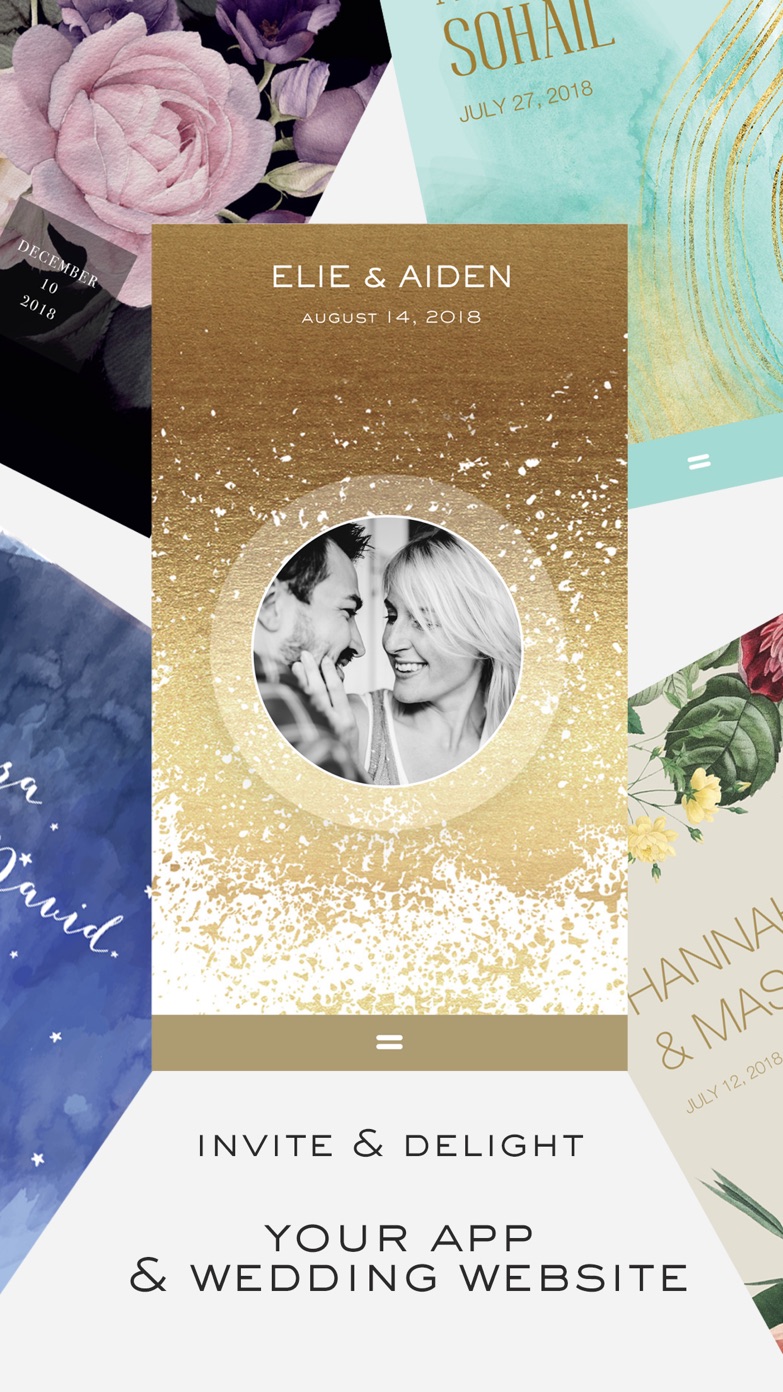
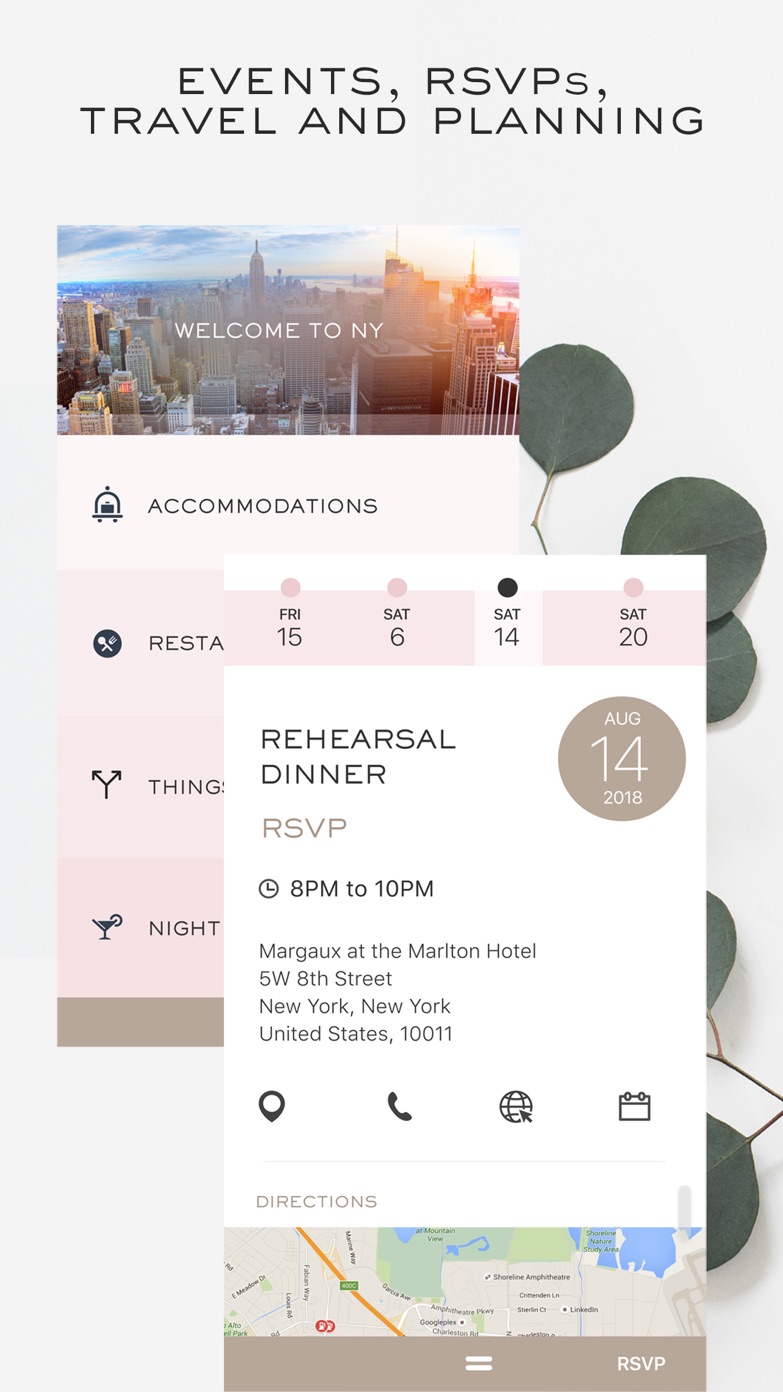
Then comes the part the company clearly enjoys. Guests can upload photos - with filters - that get stitched into a wedding-day slideshow. There is a digital guestbook, a set of virtual toasts, and a collaborative playlist. Hotel-booking widgets and maps handle the travel logistics. Privacy settings let a couple decide who sees what. The framing Mitha-Sehgal has used is that planning tasks should feel like "fun-to-do's" rather than chores - marketing language, yes, but it points at a real design choice: the app is built for guests to enjoy, not just for the couple to administer.
Who paysFree for the crowd, paid for the hosts
Here is the model in one line: guests join free, the couple pays. That split is doing a lot of quiet work. Because every guest downloads the app at no cost, each wedding becomes a distribution event - dozens or hundreds of people getting a live demo of the product at exactly the moment some of them are planning their own weddings. The couple, meanwhile, pays a one-time fee rather than a subscription, which fits how people think about a wedding: a single large occasion, not an ongoing service.
Pricing has moved around over the years. The platform has been sold across a lower Boutique Collection and a higher Luxury Collection, with figures cited anywhere from the mid-$30s to $149 depending on the era and the collection, plus add-ons like a custom domain and coordinating printed invitations. In its earliest days the company also earned from premium themed designs and affiliate commissions on hotels and travel. The through-line has stayed constant: the couple pays once, and there are no ads shoveled at their guests.
The contrarian betEveryone went free. Appy Couple didn't.
This is where Appy Couple gets genuinely interesting as a business, because the market moved against it. When it launched, charging for a wedding website was normal. Then Zola and Joy (withjoy.com) built free wedding sites with free RSVPs, Zola wrapped a registry around it, and The Knot and WeddingWire pulled in search traffic at enormous scale. Reviewers started asking the obvious question: why pay for something the big players give away?
Appy Couple's answer is that it is not selling a website - it is selling taste and a guest app. Its templates are the pitch, and its wager is that a meaningful slice of couples will pay for design and for a real native app that guests actually open on the day, rather than a free page they forget about. It is the premium lane, and it is a lonely one, but it has also proven durable. The company was still shipping app updates in late 2024 and collecting customer reviews into 2025 - a long run in a category littered with free apps that quietly shut down.
Borrowed prestigeHow a wedding app got Carolina Herrera to design for it
If your whole differentiator is design, you need proof of taste, and Appy Couple found a memorable way to get it: it recruited the fashion house Carolina Herrera to design its first Luxury Collection - a set of templates drawn from the house's own prints and decor. It is the kind of collaboration that a small startup usually cannot land, and it did double duty, upgrading the product and lending the brand a borrowed layer of fashion credibility. (An endearing detail: the company's own site has for years spelled it "Caroline Herrera." Fourteen years in, the typo has become a small in-joke.) Other design partners have included Wedding Paper Divas and Elli.
The moneyRoughly $2.7M, and a board seat for the lead
Appy Couple graduated from the Entrepreneurs Roundtable Accelerator in April 2012 and, remarkably, arrived at demo day with a 7,000-person waitlist while the product was still in beta - roughly a thousand new signups a week. That traction pulled in capital. In October 2012 the company raised a $1.2 million seed round led by ff Venture Capital's John Frankel, who took a board seat. A second raise of about $1.5 million followed in late 2013, bringing total funding to somewhere in the range of $2.7 to $3.1 million, depending on which database you trust. It is not a war chest; it is enough runway for a lean, design-driven team to keep a focused product alive. Co-founder and CTO Chris Hughes, who built the web services and apps, departed in 2016; Mitha-Sehgal has remained CEO throughout.
The timelineFrom Mumbai to a fourteen-year run
What to take from itWhere it works, and where it wouldn't
There is a copyable idea in here for anyone building consumer software: separate who enjoys the product from who pays for it, then make the enjoyers your distribution. A wedding is a room full of future customers. There is also a caution. In a market where the default price fell to zero, "we're the paid, prettier one" is a real strategy but a narrow one - it works when design is genuinely the reason people choose you, and it strains when a free competitor closes the design gap. Appy Couple has not been flawless, either; one widely cited review flagged an RSVP-reminder mishap where prompts reached contacts who were never formally invited. The lesson of the company is less "charge money" than "know exactly which small group of customers will pay you, and why."
For couples, the practical read is simple. If you want a free page and a registry, the big platforms will do it. If you care about how the thing looks and you want an app your guests will actually open on the day, Appy Couple is the option that has been obsessing over that specific moment - the phone in a guest's hand at the reception - longer than almost anyone.