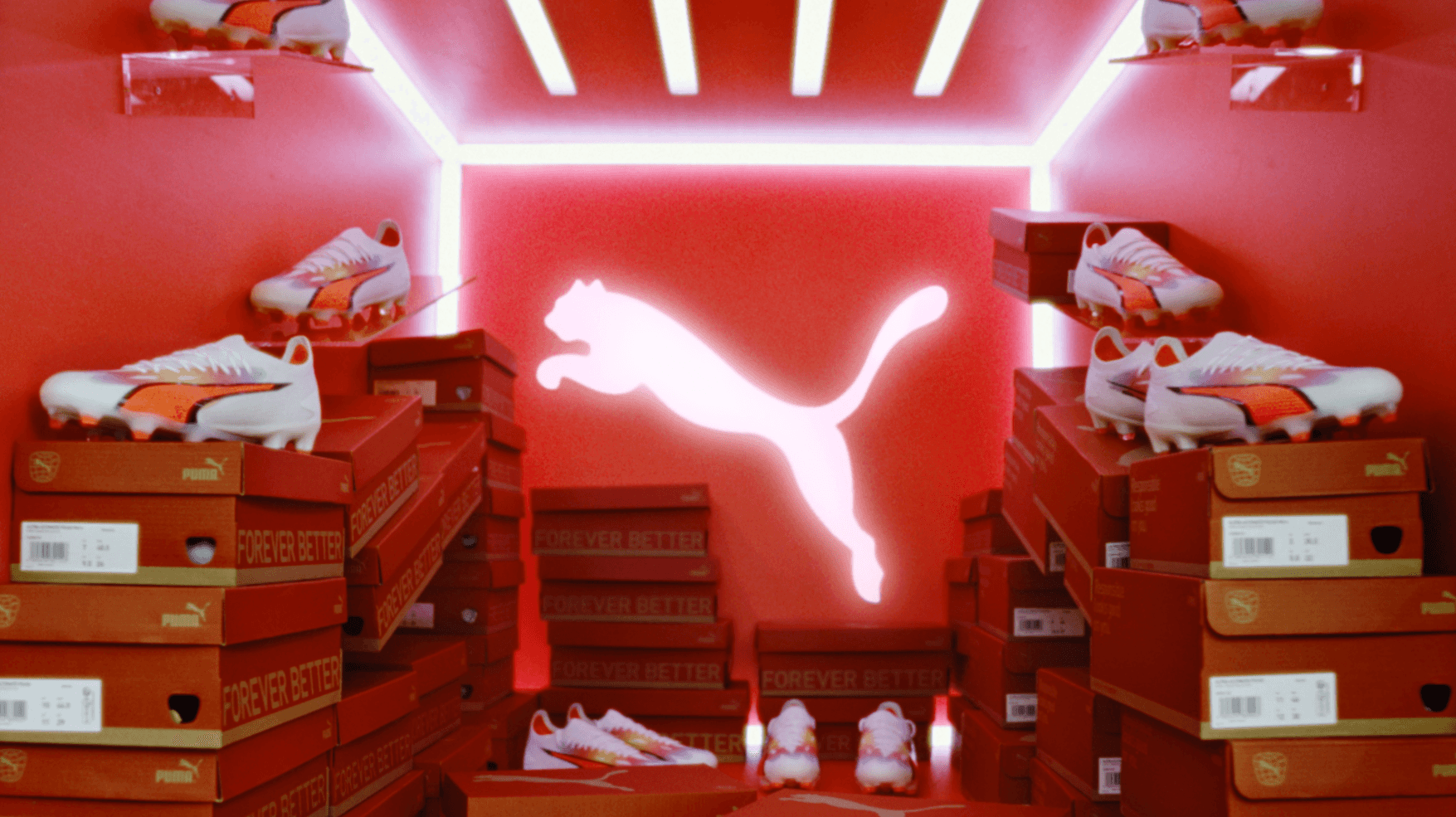
In Munich, Kingsley Coman sent strangers a file. The footballer was sitting in a van filled with PUMA boots; the file, delivered by AirDrop to nearby phones, revealed where to find him. Fans who reached the van first received a pair. This was advertising reduced to a peculiar little social fact: young people sometimes talk to the people around them by beaming files through the air.
The stunt is a useful introduction to APPLE TREE, the Barcelona communications company behind it. It did not begin with a television format, a media plan or an influencer deliverable. It began with a behavior. The channel came second. Then the cameras caught what happened, the footballer's audience carried it further, and a product launch became a story people could retell.
This sounds obvious until you notice how much of the agency business is organized in the opposite direction. There is a social team waiting for social content, a PR team waiting for news and an events team waiting for an event. The organizational chart quietly chooses the answer before anyone has properly asked the question. APPLE TREE has spent the past two decades trying to undo that habit.
A publicist walks into a creative pitch
Carme Miró, Kirsty Brown and Olivia Walsh founded APPLE TREE in 2007. The résumés hinted at the mix to come: Miró was a strategist and repeat entrepreneur, Brown a British journalist, Walsh an American creative director. Their firm was born in communications, but its current menu reaches across analysis, brand and corporate PR, creative, identity, digital, social, influencer marketing, branded content and live experience.
The distinction matters because PR agencies traditionally earned attention while advertising agencies bought it. APPLE TREE's bet is that a client rarely experiences those as separate problems. A weak reputation infects a product launch. A fine piece of content is useless without distribution. An event has a short life unless somebody designs the second life it will have in feeds, newsrooms and group chats.
Its phrase for the method is “New Thinking.” Agency slogans are usually harmless fog, but this one has a usable definition: combine strategy and creativity, then judge the idea by relevance and results. The firm sells to organizations whose communications puzzles spill across departments - CUPRA and SEAT, Radisson Hotel Group, PUMA, IKEA, Mahou San Miguel, B Lab Spain and many more. B Lab's directory says more than 400 brands have trusted it.
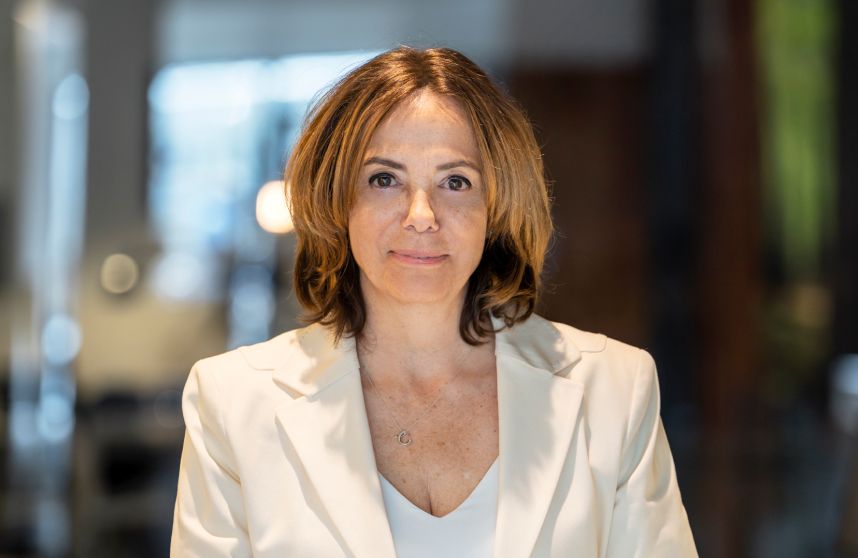
“A leader has the function of serving their people.”Carme Miró, in conversation with Forbes Spain
The arithmetic of owning more of the problem
The commercial evidence is unusually legible for a private agency. Group turnover rose from €23.6 million in 2023 to €29.9 million in 2024, then reached €32 million in 2025. APPLE TREE said the later growth came from digital creativity and influencer marketing, strategic PR and corporate reputation, social media and high-impact content. Much of it came from existing clients buying more.
Reported group figures include the London operation and Keepers. The 2024 total also included agency Orchard.
That last sentence is the tell. Integration becomes economically interesting when a reputation client asks for creative, a creative client asks for social, or a social brief grows an influencer arm. APPLE TREE acquired Keepers, its influencer specialist, in 2013 - before “creator economy” became boardroom vocabulary. In 2025, Keepers represented talent, advised brands and produced podcasts. The group did not have to bolt a fashionable capability onto the side; it had spent a dozen years learning it.
The model still has boundaries. APPLE TREE runs three offices - Barcelona, Madrid and London - and uses alliances where ownership would be expensive or slow. MAS Consulting adds public affairs. R4S adds sustainability transformation. For CUPRA's global corporate communications, partner agencies cover important European markets while APPLE TREE coordinates the hub. The choice is revealing: own the core thinking, rent some of the geography.
When a campaign becomes plumbing
Radisson Hotel Group's Creator Hub shows what happens when the agency stops thinking in bursts. Hotels need a constant supply of local, believable imagery. Small creators want access but struggle to reach large brands. Conventional influencer campaigns solve the match once, with paperwork and negotiation repeated the next time.
APPLE TREE and Radisson built a two-sided platform instead. Hotels publish content needs; nano creators apply for stays; agreed content flows into a central library. The exchange is not a cash fee but a curated three-night stay for two, plus rewards benefits. In four months, more than 300 hotels and 100 creators had joined. The first thing discarded was the one-off transaction. What replaced it was infrastructure.
What it cost: participating creators received hotel stays and benefits rather than traditional monetary compensation. What changed the model: audiences were placing more trust in creator-led material than polished corporate messages, while hotels needed content continuously. What the system bought: repeatable access, local variety and a shared asset library.
This is the company's sharpest lesson for other businesses. Do not copy the van or the creator portal. Copy the order of operations. Find an existing human behavior. Identify the friction that makes it costly or tedious. Build one idea capable of crossing channels. Only then choose the media. Bootdrop worked because AirDrop was already a game among nearby strangers; Creator Hub works because both sides already possess something the other values.
Purpose, with a score attached
APPLE TREE also sells positive impact, a phrase that can become suspiciously weightless in communications. Here there are at least a few anchors. It became a certified B Corp in November 2022 and currently carries an impact score of 80.8 - above the 80-point threshold, though hardly an invitation to declare the work finished. The strongest category is workers at 27.2 points; customers, at 4.1, is the smallest.
Before certification, the agency had already been hired to make the B Corp movement visible in Spain. Its campaign with B Lab Spain mixed media, influencers, companies and opinion leaders around ten public challenges. Separately, APPLE TREE says a reforestation program passed 5,000 trees in 2025, and it has backed women's football since 2020. These initiatives make sense beside the client work when purpose operates as a constraint on the idea, not varnish applied afterward.
The conditions matter. Behavior-led marketing fails when the behavior is imagined in a workshop rather than observed in the world. Value exchange fails when one side is doing disguised labor for a trinket. An integrated agency becomes a muddle when nobody has authority over the central idea. APPLE TREE's method is useful precisely because it is demanding: the insight has to be true, the exchange has to be fair, and the work has to help the business.
In 2026, the firm was named European Communications Agency of the Year at the EMEA SABRE Awards. Awards are an imperfect currency, but this one neatly marks the journey. A company born in PR had become the only PR-focused firm in Spain's leading creative-agency ranking, while still winning for reputation, digital and influence. It did not abandon its original trade. It made that trade the wiring behind a larger machine.