The cornfield was remote, which was the point. Rose Creative Marketing cut a 10,000-square-metre drawing of a Samsung Gear S2 into it, kept the work quiet, and waited for the aerial photograph. From above, the field looked as if a giant had misplaced his smartwatch. The picture required almost no translation. It produced more than 145 pieces of publicity and social coverage, and Rose reports a reach above 138 million.
This is the useful clue to Rose. The company lists ten practices, from public relations to experiential marketing, and that list sounds much like every integrated agency brochure written since the fax machine. But its memorable work is not really about a menu of services. It is about finding a physical or cultural shorthand that can survive the journey from an event to a newspaper, then to a phone screen, then into conversation.
A watch in a field is not just a stunt. It is a distribution system disguised as a joke.
The first export was the agency itself
A Boston shop learns to translate
John Rose founded the firm in Boston in 1984. Five years later, he took it into the Soviet market, where Rose describes the operation it established as Russia's first independent advertising agency. The timing matters. A Western brand entering that market could not simply ship in a slogan and change the alphabet. Products came with unfamiliar rituals, status signals and retail realities. The first thing likely to fail was not the media plan. It was the assumption that recognition and meaning were the same thing.
Rose became an interpreter. Its early work for Coca-Cola included what the agency says were Russia's first radio, outdoor-poster and trolley advertisements for the brand. Pepsi had nearly two decades of market familiarity. Rose's job was therefore larger than buying attention. It had to make Coca-Cola feel like an event in a market where its rival already felt like a fact.
That pattern repeated. The agency worked across consumer goods, electronics, food, luxury, entertainment, gaming, travel, automotive and healthcare. It says it served Samsung as exclusive product and corporate public-relations agency in Russia for more than 20 years, handling hundreds of launches and programs, including work around five Olympic sponsorships. For Logitech, it tried to move the company's reputation beyond computer peripherals into gaming, music and video conferencing. The work received Logitech's EMEA award for best PR and social-media strategy.
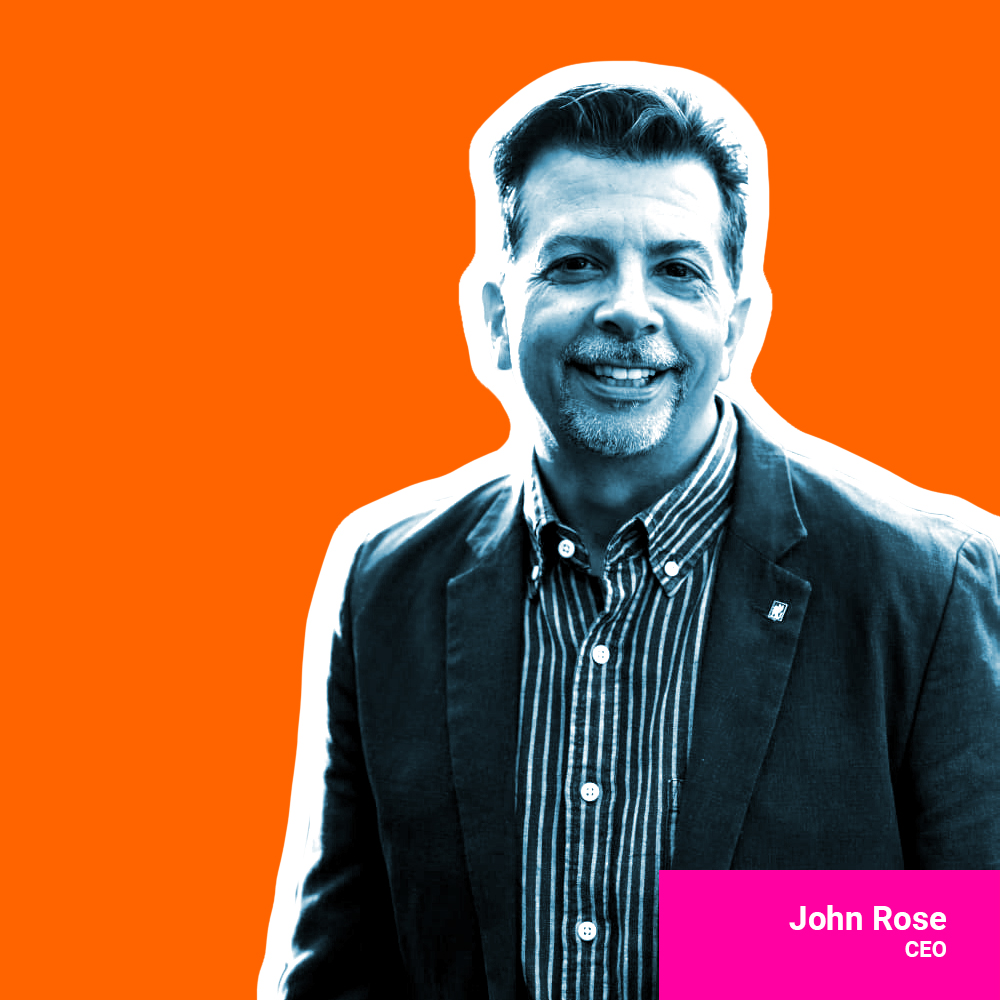

Galina Savina supplies the other half of the continuity. Rose identifies her as general director, a co-founder with John Rose of the International Advertising Association's Russian chapter, and an adviser to clients including BBC Studios, Coca-Cola, GSK, Lexus, Logitech, Samsung, Starbucks and Tourism Malaysia. In agency life, where teams often dissolve at the end of a pitch deck, decades of shared market memory are a product in their own right.
“Great marketing is a story that sells.”John Rose
One idea, several jobs
Integration without the group photo
Rose sells the familiar full-service bundle: strategy, advertising, PR, branding, social media, influencers, content, promotions, corporate communications and live experiences. The difference becomes clearer in the case work. Each channel is expected to do a separate job around one central idea.
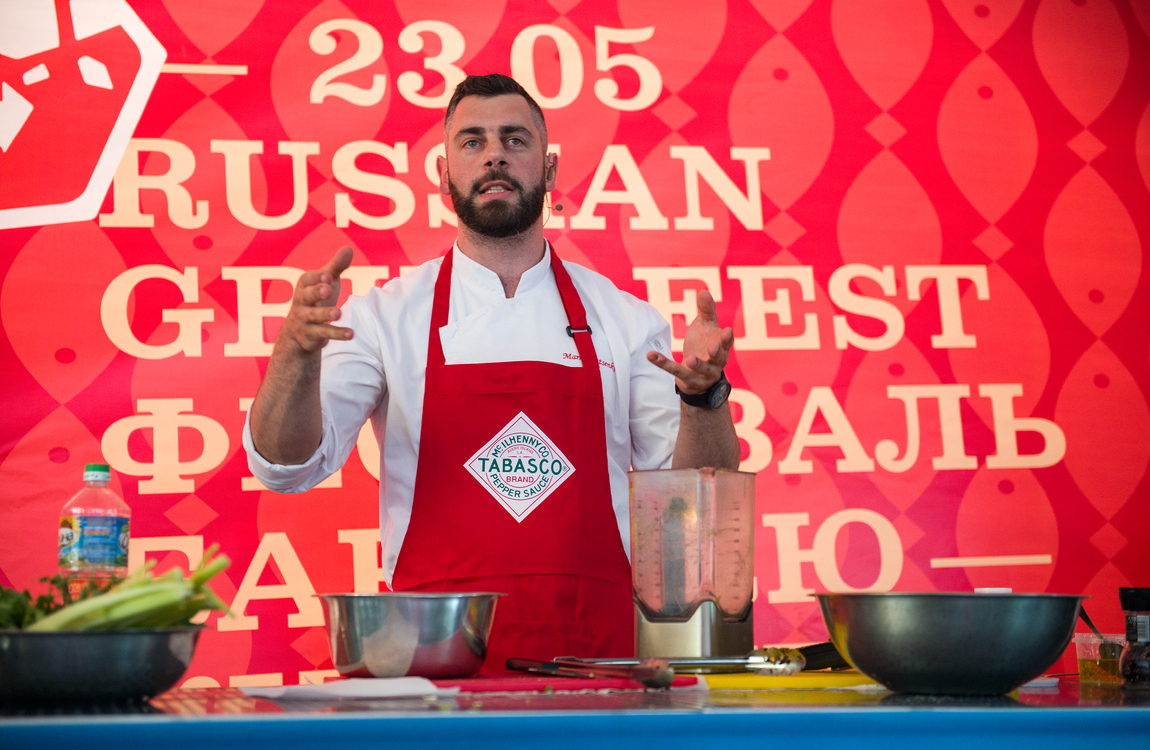
Consider TABASCO. Rose brought together chefs, bloggers, restaurants, retailers, events and special media projects around a simple product truth: the sauce works with far more than one dish. At Grill Fest in 2021, chefs used it in masterclasses that ran from burgers to cocktails. Rose reports more than 50 million in online publicity reach and another 360,000 in social reach. Across the wider account, the agency says brand recognition rose by more than 20 percent a year.
For the mobile game Free Fire, the components changed but the logic did not. Influencers supplied familiarity, lifestyle and gaming media supplied credibility, and a StreamFest partnership supplied a place for the community to gather. Rose says the first six months reached more than 50 million people across Russia, Kazakhstan, Kyrgyzstan and Ukraine. A two-week launch for the Russian character Dasha added 1.2 million in reach by hiring a cosplayer, arranging influencer interviews and giving gaming publications something visible to cover.
This is what another marketer can copy. Start with the sentence a local customer would use, not the line the headquarters team has already approved. Turn it into a picture or action that makes sense without a paragraph of explanation. Then stop posting the same asset everywhere. Give media a fact, creators a performance, customers an experience and retailers a reason to participate.
The caveat is equally practical. This approach depends on access to local judgment, enough coordination to keep many partners moving together, and an idea with genuine news or social value. It is a poor fit when regulation leaves no room for spectacle, when the product has no demonstrable truth, when the event cannot produce a compelling image, or when a brand needs a fast direct-response sale more than durable recognition. A cornfield is memorable. It is not a substitute for product-market fit.
The map keeps moving
From Moscow to Havana to Dubai
In 2015, Rose says it opened Havana's first public-relations agency. It also created MagiCuba, a five-day festival that put magicians into theatres, nightclubs, circuses and streets. The project fits the house style: build an event that is both the experience and the press photograph.
Dubai is now the headquarters. In 2023, Rose announced that Fitch Technologies, a Dubai software house and advertising-technology agency, would join forces with it. Fitch would remain operationally independent while adding technical capability to Rose's Gulf expansion. Samson Ogbu, Fitch's founder, became Rose's chief technology officer; Savina oversaw the business as general director. For an agency built on communications, the deal was a concession to a changed brief: clients increasingly need their storytelling and their operational technology to meet.
Boston. John Rose establishes the agency.
The USSR. Rose enters early and builds an independent local agency.
Havana. A PR operation and a city-wide magic festival arrive together.
Dubai. The agency announces a Gulf hub and its Fitch Technologies tie-up.
AI search. Rose argues that earned credibility must now persuade machines as well as people.
Its current public thinking is preoccupied with AI, but not in the breathless manner of an agency selling a new toy. Rose's argument is that websites now have two audiences. A human may be charmed by a campaign; an AI system looks for corroboration, structured facts and independent citations. In that telling, PR is no longer merely the art of earning a newspaper story. It is a way of leaving credible evidence for machines that answer questions before a customer ever reaches the brand's site.
This is a shrewd repositioning for a PR-led agency. The old craft was making a company legible to an editor in Moscow. The new craft is making it legible to a model assembled in California and queried in Dubai. The tools changed. The translation problem did not.
Best conditions
A brand entering an unfamiliar market, a product that can be demonstrated, and one visual idea strong enough to earn its own distribution.
Weak conditions
No local insight, no coordinating authority, a commodity offer, or a brief judged only by immediate clicks and sales.
Where Rose fits
The middle between a network and a specialist
Rose competes with global networks, regional Middle East agencies, boutique PR shops, digital specialists and clients' own internal teams. It does not have a network's visible scale, and its public roster is not proof that every named company remains a current client. What it does have is a long archive of cross-border assignments and a senior leadership story that survived several changes in the media itself.
Its business is the ordinary agency business: retainers and projects for advice, creative work, production, media relations, execution and measurement. It does not publish a rate card. The cost depends on the brief, markets and channels. That makes the buyer's real question less “How much is a campaign?” than “How many disciplines must agree before this idea reaches the street?” Rose's answer is to put those disciplines in one room.
The best evidence for that model remains the photograph from the field. Advertising made the product visible. PR made it news. Content gave the image a journey. Social gave it velocity. Measurement gave the case study a number. But the idea came first, cut into the ground at a scale that made the organization behind it briefly disappear.