In January 2026, twenty people went to work at a new agency where almost nothing was new. They had the same colleagues, served the same clients and carried the same decade of experience. The PR practice of Confidant had become Catamaran. It was a corporate birth in which the baby arrived ten years old, already employed and with Amazon on the phone.
The easy interpretation is that this was a rebrand. The useful interpretation is that it was an edit. Confidant had spent a decade combining creative work and public relations. Its clients, however, often bought those skills for different reasons. The PR side was hired for earned attention, corporate counsel and daily navigation through a media environment that seems to add a new reef every week. The creative side was hired to make things. Garland Harwood, Confidant's co-founder, came to believe the distinction deserved two businesses.
“The magic happens when specialized partners are clear about their role and work well together.”Garland Harwood, founder and CEO
So Harwood took the communications practice into Catamaran while Ken Byers continued to lead Confidant as a creative agency. They did not stage a divorce. The firms still collaborate, share selected back-office resources and belong to the Nostos Network, a group of more than 50 independent agencies across the United States, United Kingdom and Latin America. The bet is not that integration is useless. It is that integration can happen between specialists instead of beneath one increasingly vague sign.
The first product is less telephone
Catamaran's most concrete differentiator sounds like an HR policy: it says it has no entry-level employees. Everyone assigned to a client has at least five years of agency experience. In an industry famous for presenting senior people in the pitch and junior people in the weekly meeting, that is both an operating choice and a sales argument.
context + authority
judgment + execution
The economic idea underneath it is context. Every handoff taxes a brief. A detail disappears between the strategist and the account lead, another between the account lead and the coordinator, and soon the client is paying for a meeting to restore information it already supplied. Catamaran embeds small teams beside in-house departments so the people making recommendations are also close to execution. The company sells fewer layers, deeper ownership and quicker output.
That arrangement is not universally economical. A senior-only crew is best suited to organizations with consequential, ambiguous communications work and enough internal capability to treat an agency as a partner. A startup that needs a high volume of routine production at the lowest possible rate may be buying the wrong boat. So may a global company that wants one vendor to own every creative, media-buying and communications function in dozens of markets. Catamaran is designed to connect with other specialists, not impersonate all of them.
What earned-first looks like in the wild
The agency organizes its work into daily communications, earned-first ideas, influence and collaborations, trend intelligence, and strategic counsel. That includes the expected machinery - media relations, executive visibility, crisis support and message testing - plus campaigns and events designed to become news even when no news exists. The interesting part is how physical the best examples are.
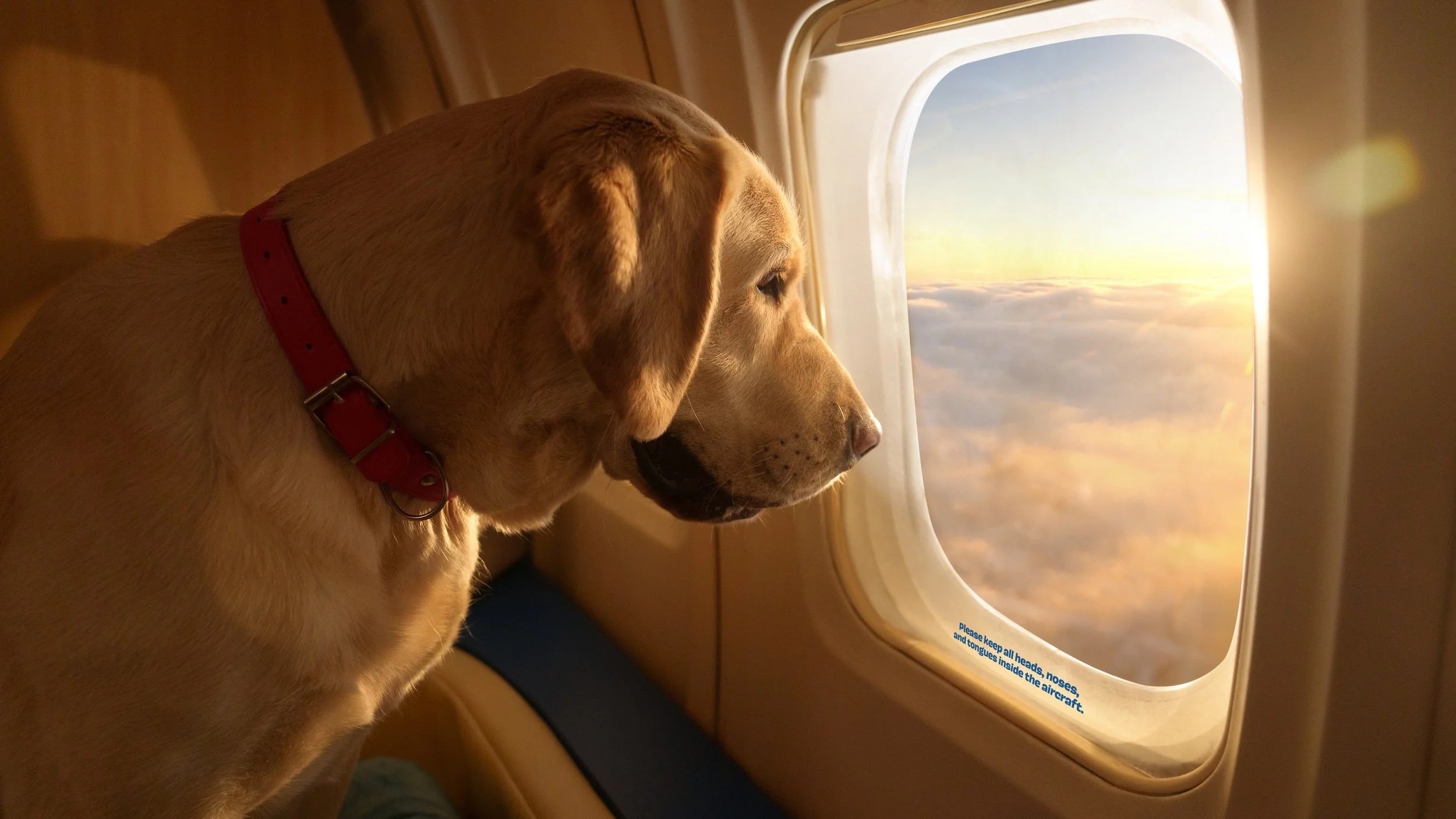
For BARK Air, Catamaran had a proposition a television producer could understand in three seconds: dogs fly first. Noise-canceling earmuffs, calming treats and crate-free cabins supplied the details. Good Morning America, The New Yorker, The Washington Post, CBS Mornings, CNBC and Jimmy Fallon supplied the distribution. The agency says it became BARK's biggest media spike.
Hipcamp had the opposite problem. It needed peak-season bookings on a tight budget and had no obvious announcement. The team turned Hipcamp's editors into authorities, producing state-by-state campsite rankings, awards and timely lists such as dark-sky destinations. Those packages gave local outlets something specific to claim and readers something useful to save. The campaign generated 166 online, print and broadcast stories across top-20 US media markets, with a reported potential audience above 2.3 billion.
For Amazon, the assignment has been scale rather than novelty. Since 2022, the team has helped stage Delivering the Future events in the United States, Europe and Asia, translating robotics, drones, AI and operations into an experience for journalists. Its role spans planning, media engagement, content and event branding. Rare Beauty required a different sequence again: introduce a mental-health mission before a celebrity cosmetics product arrived. More than 300 high-profile placements before and around launch established the purpose as part of the business story rather than decorative copy.
The new name is younger than the trust
Catamaran opened with clients including Amazon, Shake Shack, Chobani, La Colombe, Aura, BARK and Hipcamp. It also began work with Patreon, Nature's Garden and Edible Arrangements. In 2025, before the separation, 80 percent of the practice's revenue came from relationships at least five years old. This is the number that changes the story. The firm did not choose a narrow identity and hope demand would appear. It found a durable business hiding inside a broader one.
The market around it runs from global networks such as Edelman, Weber Shandwick and Burson to specialist independents and the client's own communications department. Catamaran occupies the space between boutique intimacy and big-agency experience. Its people have worked on major brands; its delivery unit stays small. When a job needs capabilities outside the hull, Confidant and Nostos provide a network without requiring Catamaran to rebuild a holding company.
It is also trying to make research a recurring product. The weekly Zeitgeist newsletter tracks campaigns, media shifts and cultural signals. Catamaran now produces tailored internal versions for multiple clients and added former Wall Street Journal and Adweek reporter Ann-Marie Alcántara as a contributing columnist. AI tools sit behind research, briefing, reporting and measurement, with a task force governing custom GPTs and guidance around generative search. The claim is modest: automate the clerical bits so experienced people have more time for judgment.
The part another services firm can copy
- Notice which capabilities clients already buy as distinct products.
- Make the delivery promise measurable - Catamaran uses experience level and team size.
- Keep shared infrastructure where customers cannot benefit from duplicating it.
- Build a partner network before claiming you can do everything yourself.
- Rename only after the specialized business has evidence of its own demand.
That last point is the quiet trick. Most rebrands ask the market to imagine a future. Catamaran points backward: a decade of client work, a team that moved intact, and awards earned under the previous name, including PRNEWS' 2025 medium-sized Agency of the Year. The new identity does not erase Confidant PR. It makes the old practice legible.
A catamaran gets stability from separation. Its hulls do not merge; they move together with a clear structure between them. Harwood's agency has turned that naval fact into an organizational one. Catamaran and its clients work in parallel. Catamaran and Confidant remain separate but cooperative. Specialization supplies the shape; collaboration supplies the momentum. For a communications company, the metaphor is suspiciously well behaved.