The revealing number at Antidote Health is zero. A member with the right plan can open an app, speak to an Antidote clinician, and pay no copay for that virtual visit. In a business famous for making people calculate before they ask for help, the company has made the first question inexpensive. The wager is that a health plan becomes more useful when its members actually use it.
- Antidote combines virtual clinical care with ACA health insurance in selected Arizona and Ohio counties.
- It also sells separate telehealth visits and subscriptions, with their own prices and visit limits.
- Its distinctive move is connecting the first conversation to coverage, prescriptions, and local care.
That sounds modest beside the usual promises about artificial intelligence. It is also more interesting. A video connection can remove a journey to a waiting room. It cannot, by itself, pay for a hospital stay. Antidote’s history is the story of a company trying to connect those two problems.
01 / A doctor call was the beginning
Founded in 2020, Antidote launched its service in January 2021. Its founders brought a mixture of insurance, medicine, and technology: Avihai Sodri, Carine Belle-Feder, Dr. David Zlotnick, and Ben Enosh. Sodri had worked at Israel’s Leumit Health Services and led Vectis Claims Services. Enosh had co-founded the security company Cyota. The team was looking at American access to care through experience accumulated elsewhere.
The early proposition borrowed from the Israeli healthcare system: a monthly membership, an AI-assisted intake process, and access to doctors over video. Memberships started at $29 a month in 2021. The intended audience included uninsured and underinsured Americans. The appeal was plain enough: knowing the price before the conversation is a small luxury in American medicine.

Today that original service lives alongside a different product. Antidote sells comprehensive ACA-compliant insurance through its Arizona and Ohio health plan entities. Its own timeline places the Ohio off-exchange launch in 2023 and Arizona expansion in 2024. Buying a conversation and buying coverage remain separate purchases.
02 / The insurer wants you to call
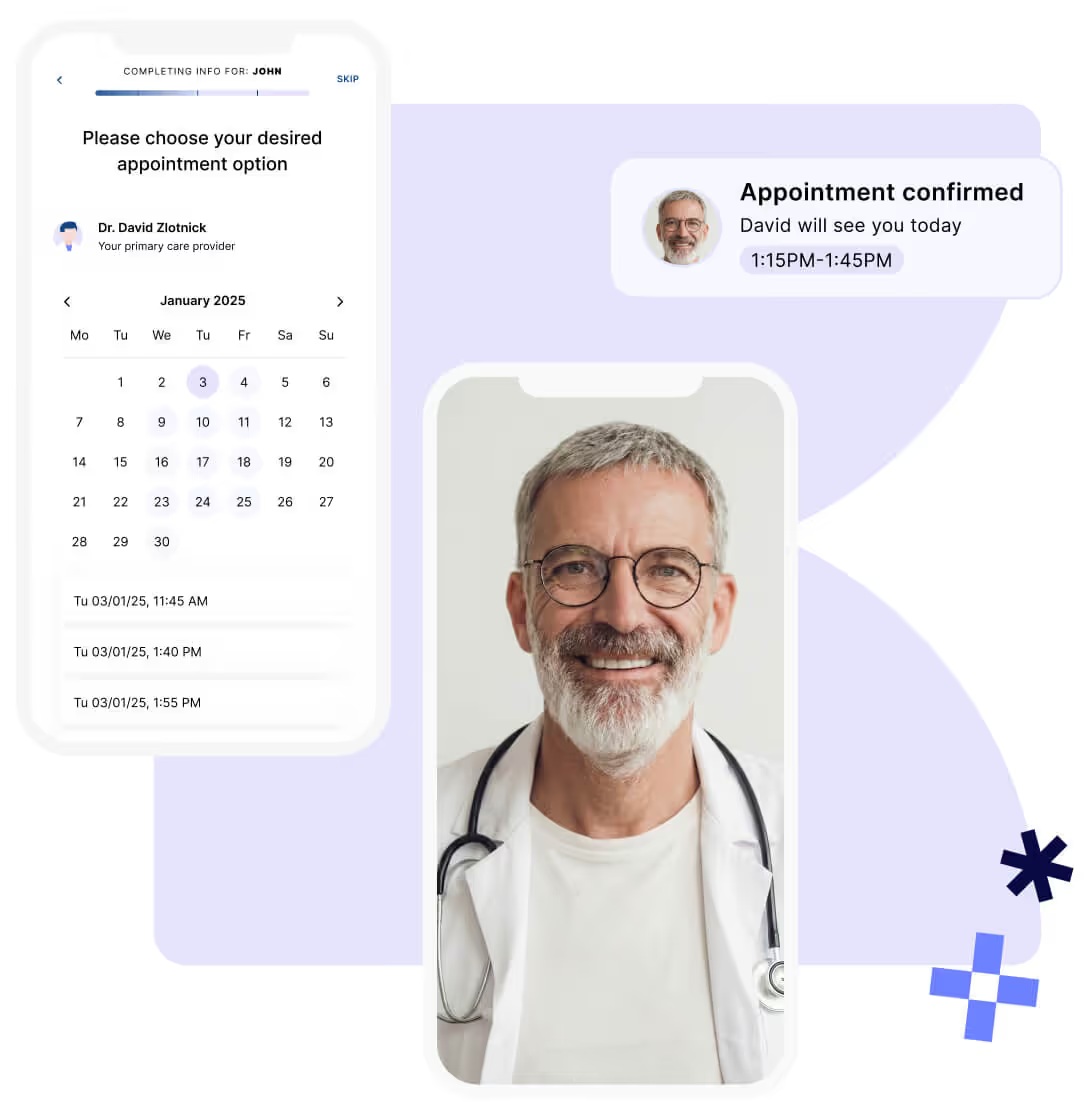
Antidote’s insurance proposition puts its virtual clinicians near the entrance to the system. Members are assigned a virtual primary care provider; local providers supply the physical care a screen cannot deliver. Complete and Elite plans include $0 Antidote virtual visits, subject to terms. Selected plans also offer an allowance of four in-person primary care visits at a $0 copay.
A virtual PCP can help with prescriptions, ongoing conditions, and referrals. Those referrals can bring lower specialist copays under applicable plan rules. The company’s FAQ says a referral is not required simply to see a specialist. The financial incentive is the distinction: a member may benefit from asking the virtual clinician first.
A care pathway, not a guarantee of a particular treatment or benefit.
The business logic is easy to follow, though it should not be mistaken for proven savings: make early contact affordable, coordinate the next step, and help people navigate care. Antidote earns insurance premiums while also delivering virtual clinical services. It therefore occupies a different position from an app selling only a consultation.
03 / Read the number after the dollar sign
For someone outside its insurance offering, the current menu is quite concrete. A standalone primary care visit costs $49. Complete Care costs $49 a month and includes 12 visits a year. Complete Family costs $75 a month for 20 annual visits. The $99 monthly mental health package includes a visit every three weeks plus six primary or chronic care visits annually.
These are the posted telehealth prices reviewed in October 2026. A monthly fee does not mean unlimited use, and these packages do not replace comprehensive insurance. Insurance premiums are a separate calculation. Antidote advertises some premiums starting at $0 with subsidies; eligibility depends on household circumstances and location. Hospital and specialist care can still involve other costs.
04 / A simple app needs complicated machinery
In March 2023, Antidote selected nirvanaHealth’s Aria platform for payer operations and pharmacy benefit management. The announced arrangement covered the unglamorous essentials behind insurance: enrollment, billing, claims, and other administrative functions. The lesson for another business is practical: a pleasant front door requires a working building behind it.
That building also needs people. Antidote’s careers page describes collaboration and curiosity, but one hiring brief offers a more useful glimpse. Its member experience role acknowledges fragmented portal, telehealth, messaging, and customer service experiences, with too many routine tasks requiring a phone call. This is a specific product problem, rather than a ceremonial declaration of culture.
05 / Capital, cuts, and a basketball connection
The company announced a $12 million seed round in August 2021 and a $22 million Series A in March 2022. Seven months later, it confirmed layoffs. Reporting put the reduction at about a third of the workforce, concentrated in research and development. Antidote attributed its staffing and expense adjustments to economic and market conditions. Funding had not removed the need to cut costs.
In December 2024, it announced an initial $22 million fundraising close. Coverage reported $57 million raised in total. This history does not establish a failed clinical model or a sudden change of conviction. Building an HMO was already an expressed ambition in 2022. The insurance launch looks like the execution of that ambition.
Giannis Antetokounmpo became an investor and ambassador in 2022. The following year, Antidote and the Charles Antetokounmpo Family Foundation committed $1 million to free mental health telehealth for Milwaukee residents. The connection gave the access mission a specific place and budget.
“Bringing affordable care to all takes a movement driven by passionate individuals and groups.”Giannis Antetokounmpo / Antidote mission page
06 / The screen ends. The network matters.
Antidote announced Full NCQA Health Plan Accreditation for Arizona and Ohio in March 2026. Accreditation addresses operational and quality standards; it is not a promise that every appointment will be effortless. Insurance availability remains confined to selected counties. A prospective member still needs to check local doctors, covered medicines, and the specific plan’s cost sharing.
The transferable idea is to make the first useful action affordable and connect it to what follows. It works poorly when that connection ends at the screen, when a needed doctor is outside the network, or when physical examination is essential. Antidote’s proposition will be judged in those ordinary moments: the prescription filled, the referral understood, the bill explained.