Anthony Wood had a television problem. He liked Star Trek: The Next Generation, and recording it meant accumulating videotapes. The collection grew; the pleasure of managing it did not. For most viewers, this would have remained a domestic nuisance. Wood began watching hard-drive prices in newspaper advertisements. Eventually, the arithmetic suggested he could replace the tapes with a machine.
The distance between those two responses tells you something about the founder of Roku. A missed episode becomes a storage problem. A storage problem becomes a company. Then the company reveals a larger question: why should a broadcaster's schedule have so much authority over an evening in somebody else's house?
Wood founded ReplayTV in 1997. Its digital video recorder reached the market alongside TiVo's in 1999, helping viewers store television on a hard drive and watch it later. The device made an everyday negotiation easier: television could wait for you. But being early with a useful product did not settle the contest. TiVo became the familiar name; ReplayTV was acquired by SONICblue in 2001.
That experience matters to the Roku story because it spoils the reassuring version in which a clever invention naturally becomes a successful business. Wood had already built something people could use. He still had to learn how a company survives when somebody else has a competing answer. He would return to television with a different way of delivering it.
- 1997Record itWood founds ReplayTV.
- 2008Stream itRoku’s Netflix player arrives.
- 2014Build it inThe first Roku TVs arrive.
A business before a bank account
Long before the remote control, there were golf balls. As a child in Georgia, Wood retrieved stray balls from a creek and sold them back to golfers for a quarter. He also built tree houses, selling one for $20. These were small transactions, but the combination was already there: make or recover something, find a customer, get paid.
At thirteen, after his family moved to the Netherlands, he taught himself programming on a school computer. Back in Houston, he shared the cost of a TRS-80 with his father. His first software business sold one copy. Years later, he said he still had the $10 check because he had no bank account in which to deposit it. Even the revenue had become an artifact.
Texas A&M brought a more substantial experiment. Wood built SunRize Industries around hardware and software for the Commodore Amiga, including digital audio tools. It also brought a conflict that a course catalog could not solve. The business took his attention; his classes suffered. He paused the company to complete his electrical engineering degree in 1990, then restarted the enterprise in California.
The restart was followed by another lesson in dependence: Commodore's collapse undermined the market for Amiga products. Wood moved into web-authoring software through iBand, which Macromedia acquired in 1996. Technology from that business contributed to what became Dreamweaver. He had moved from sound to websites before returning to the screen in his living room.
There is an education in that sequence beyond the degree. A product can work while its surrounding market disappears. A small company can make technology valuable enough for a larger one to buy. Wood's career kept placing engineering decisions beside business decisions, with neither offering a reliable escape from the other.
The Netflix job with an unusual condition
Roku began in 2002, six years before its familiar streaming player arrived. The name means six in Japanese, a nod to Wood's count of his companies. In his telling, the count was negotiable: SunRize's second incarnation helped make the arithmetic work. A dinner conversation with his wife, Susan, supplied a consumer-electronics name with a conveniently short spelling.
The early company tried products including the PhotoBridge, which brought digital photographs to a television. Streaming was the larger opportunity Wood wanted to pursue. Broadband could eventually remove the need to record a broadcast at all. Once a program could arrive when requested, maintaining a personal collection of recordings would become less necessary.
In 2007, Wood joined Netflix as vice president of internet television while continuing to run Roku. It was an unusual arrangement, made possible by Reed Hastings's willingness to let a founder keep his other company. Wood built a team and worked on a Netflix streaming player. Netflix then decided its own hardware could complicate relationships with other device makers.
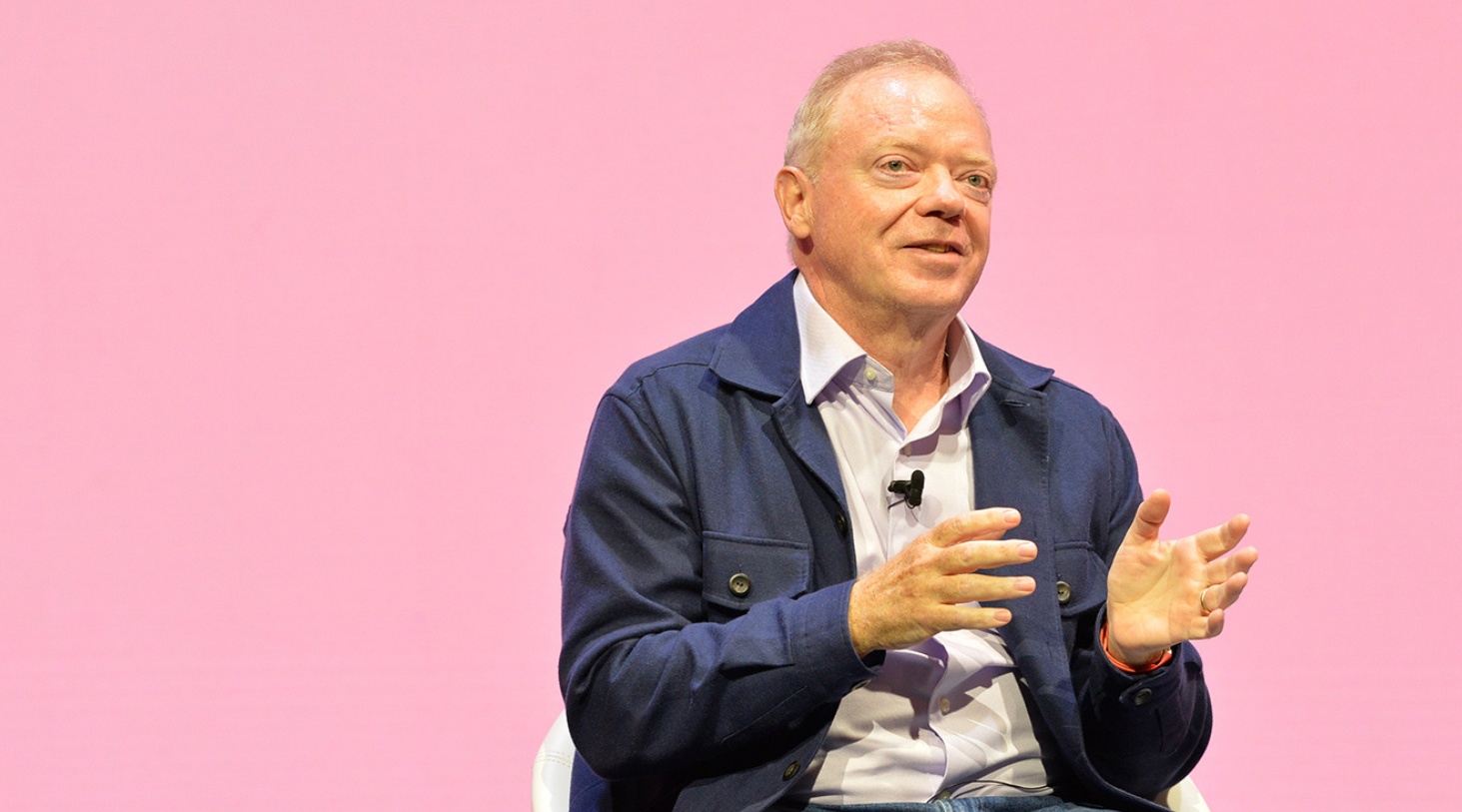
The team moved to Roku. The first Roku player for Netflix arrived in 2008. A decision to withdraw from hardware at one company gave another its opening. The arrangement also established a relationship Wood would spend years managing: services needed a route onto the television, and Roku needed services worth watching. Each side could help the other reach an audience.
In 2009, the Roku Channel Store widened that route beyond the original services. Its free developer tools allowed outside publishers to build channels for the device. The television was acquiring something familiar from the computer business: an operating system with applications supplied by other people. A box sold once could keep gaining uses after it reached a home.
The headphone jack theory of television
Ask a technology executive about a favorite feature and you might expect an answer involving an algorithm. In a 2015 interview, Wood chose the headphone jack on Roku's remote. He also named Galaga among his favorite channels, alongside Netflix, Hulu, Pandora and PBS. The answers put a person back into a business frequently described through accounts and advertising inventory.
A headphone socket is a modest pleasure: you can hear the television without requiring everyone nearby to hear it too. It is the same scale of problem as a pile of videotapes. Wood's products have repeatedly addressed these small interruptions between a person and something they want to watch. Their usefulness is easiest to understand from the sofa.
Meanwhile, the business was growing beyond an accessory plugged into a set. The first Roku TVs arrived from partners TCL and Hisense in 2014. Licensing the operating system meant the software could be present when somebody unpacked a new television. Wood was asking manufacturers to use a shared platform rather than each maintaining a separate software operation.
Apple, Amazon and Google made formidable competitors. Wood's answer was to keep arguing about television itself: ease of use, content availability and software made for the screen. That strategy still required agreements with publishers and manufacturers. A simple menu for viewers sat on top of a decidedly complicated collection of commercial relationships.
“My favorite Roku feature is the headphone jack on the remote.”
Anthony Wood · 2015
The box opens onto an advertising business
Roku went public in 2017, the year it launched The Roku Channel. Free, advertising-supported programming gave it another way to earn money from viewing. By the first quarter of 2018, its platform revenue had overtaken hardware revenue. The device that customers could hold in their hands was becoming the entrance to a larger business.
The economics introduce a useful complication to Wood's reputation as a hardware inventor. In his 2025 Royal Television Society conversation, he explained that Roku could lose money distributing devices while earning through advertising and subscriptions. Selling another box and serving another household are related achievements, but their financial consequences arrive differently.
Consider the distinction from the viewer's side. Buying a player is a transaction with an end. Using a home screen creates repeated occasions to discover a show, subscribe to a service or encounter an advertisement. Roku's interest in the living room continues after the packaging goes into the recycling. The operating system is where those repeated encounters happen.
Wood's ambition reaches into the advertising tools as well. At the same 2025 event, he described AI tools that could help a small business make a television advertisement. His example was a Cambridge fish-and-chip shop reaching nearby customers. It was a very local illustration for a platform operating across countries: television advertising made accessible to a shop around the corner.
Price remains part of the pitch to viewers. Roku introduced Howdy in August 2025 at $2.99 a month for advertising-free viewing. In May 2026, the company announced a redesigned home screen, with Wood emphasizing viewer conversations and testing. Even at this size, the practical question remained recognizable: how quickly can somebody find something they want to watch?
One hundred million households, and another turn
Streaming households using Roku’s platform.
Households, rather than individual viewers.
In April 2026, Roku announced that it had passed 100 million streaming households worldwide. The figure covered people using its players, Roku-made televisions and partner televisions running Roku software. It measured households, rather than individual viewers. Wood's original recording problem had become a route into living rooms on a scale no collection of VHS tapes could suggest.
Then the ownership story changed. On June 15, Fox announced an agreement to acquire Roku, valuing its equity at about $25 billion and its enterprise value at about $22 billion. The agreement offered $96 in cash and 0.9693 Fox Class A shares for each Roku share. Wood was to retain a role and join Fox's board upon closing.
Roku stockholders approved the merger agreement on October 14. As of October 20, 2026, that approval is a step toward a transaction expected to close in the first half of 2027, subject to the remaining conditions. Wood still leads Roku. The proposed combination puts his platform beside Fox's news, sports and streaming businesses, adding a new set of relationships to manage.
Wood has also described success in more personal terms. His advice to engineering students was: “Figure out what success means to you, first.” For him, starting companies supplied the answer. The sentence leaves room for someone else's answer to be a good job. After decades of founding businesses, he can still describe the choice without prescribing it to everyone.
The striking continuity is the work he keeps choosing. Sound tools, web-authoring software, a recorder, a streaming player, television software: each changes what somebody can do with a machine already in front of them. Wood began by trying to keep up with Captain Picard. He is still working on what happens when someone sits down to watch.
Keep the conversation going
Watch Wood talk through the decisions, then follow the next chapter.
Wood & Bill Gurley · SXSW 2024 ↗The RTS Cambridge conversation ↗Anthony Wood on LinkedIn ↗Roku’s company history ↗Roku blog · Wood at CES 2026 ↗The proposed Fox transaction ↗October 2026 stockholder vote ↗