A transformer has an awkward relationship with the future. Everyone wants what comes after it: the power plant switched on, the data center running, the new project finally earning its keep. First, somebody has to order the transformer. Then somebody has to build it. The future spends a surprising amount of time waiting for a component.
Anirudh Reddy has made that interval his business. The co-founder and CEO of Ayr Energy comes to the electricity grid by way of automotive engineering, electric-vehicle batteries and international manufacturing. His proposition has the appeal of a well-organized workshop: some of the time lost between an order and a delivery can be recovered by changing how the work is arranged.
Consider an idea he has described for grid equipment. Certain components are needed repeatedly, even when the finished machines differ. Order those components against anticipated demand; leave room for project-specific decisions later. Anyone who has bought a car will recognize the family resemblance. The wheels of industry sometimes need a little help turning in the right order.
Batteries before bushings
Reddy studied at the Indian Institute of Technology Madras from 2007 to 2012, earning a dual B.Tech and M.Tech in mechanical engineering with a specialization in energy technology. The pairing is a useful starting point for his career: the mechanics of making something, and the energy systems in which it will work.
He began at Eaton, joining its Leadership Development Program and working across automotive and solar businesses. His engineering work included grid inverters for international markets. He later moved to Ather Energy, where he led electric-vehicle battery development and industrialization. An engineering drawing, in other words, had to become something that could be made repeatedly.
By 2019, Reddy had joined Zetwerk. He built its North American business, taking on the commercial and operational problem of connecting customers with manufacturing capacity across borders. The work moved him from the design of individual systems toward the networks that get products built. It is a career that repeatedly crosses the line between knowing how something works and arranging for it to exist.
A story he told in 2023 gives that distinction some texture. A US customer's domestic aluminum-extrusion supplier stopped allocating production capacity. Zetwerk brought alternative factories into the job and, he said, restarted supplies within three months of winning the project. The customer also moved part of its spending overseas. The drama here was industrial: a production line needed material, and a manufacturing network had to answer.
There is an unglamorous satisfaction to that kind of problem. The missing part arrives; work can continue. No one has to persuade the production line to appreciate the elegance of the solution.
A factory need not start with an empty field
Ayr dates its founding to 2024. Reddy built it with Rahul Arora and Yashashvi Takallapalli, also known as Yash. All three studied at IIT Madras. Arora's background includes McKinsey and Schlumberger, along with an MBA from MIT Sloan; Takallapalli's includes McKinsey and Sportscafe, and an MBA from IIM Calcutta. Their routes converged on the business of supplying power equipment.
The company is headquartered in Mountain View, California, and lists manufacturing locations in Prayagraj, Mumbai, Chennai and Hyderabad. That geography matters to the idea. Ayr uses manufacturing partnerships in India to build equipment for US projects. It can work with established production capacity while its own team handles designs and the demands of its customers.
In Reddy's account of the manufacturing sequence, components such as high-voltage bushings and load tap changers are purchased ahead of the final customization. The company can then use them across projects. The approach requires choices about which specifications can be shared and which must remain particular to a customer. It also requires someone to take responsibility for the sequence.
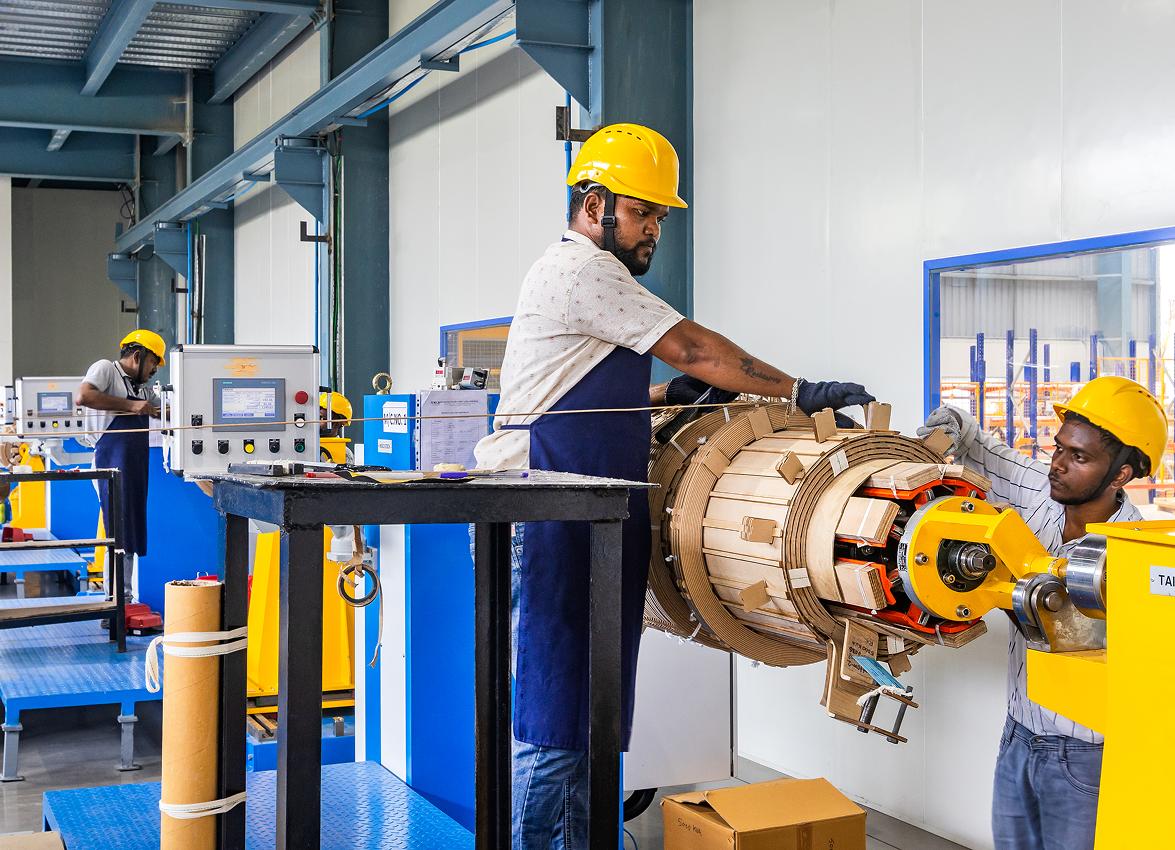
The founders' equipment range includes power transformers, distribution transformers, special-purpose transformers, high-voltage circuit breakers and medium-voltage switchgear. These are different pieces of the same practical undertaking: getting power where it needs to go, with the equipment needed to control and protect it along the way.
Reddy's earlier work gives this business an intelligible history. Batteries, inverters and grid equipment sit in different places in an electrical system, but all demand a conversation between engineering and manufacturing. His career has kept returning to that conversation, with an expanding cast of suppliers, customers and colleagues.
The order book gets a second chapter
When Ayr emerged from stealth in September 2025, it had more than $250 million in contracted orders associated with over 10 gigawatts of new power projects. General Catalyst was backing the company. For a newly public business, the announcement supplied something more concrete than an expression of interest: customers had signed.
By April 15, 2026, Ayr reported more than $500 million in contracts, representing over 20 gigawatts of new power capacity across the United States. New equity financing was led by Energy Impact Partners, with General Catalyst and 3one4 Capital participating. The funding was intended to support product development and expansion into data centers and utilities.
Reported contract values. Bars show the announced thresholds; neither figure is revenue.
The distinction between an order book and an operating project is essential to reading those numbers. A contract records work promised. A commissioned unit records a later stage. Ayr said in April that it had commissioned units across the US; the much larger project-capacity figure describes the projects associated with its contracts. The calendar still has work to do.
That is also why Reddy's job becomes more demanding as the numbers rise. More orders mean more obligations passing through engineering, production and delivery. The interesting measure of a manufacturing company eventually appears at the customer's site. A spreadsheet can accommodate a very large transformer rather more easily than a road can.
Delivery is a beginning, too
Ayr's description of its operating model reaches beyond the factory gate. It advertises power-transformer lead times of 40 to 72 weeks. Its manufacturing process includes documented components, coil winding, vacuum drying and testing. The promise of speed sits alongside a series of procedures that cannot simply be wished away.
Reddy's business therefore has to make room for two demands at once: developers want equipment sooner, and equipment has to meet its requirements when it arrives. The company's emphasis on traceability and testing is part of how it proposes to connect those demands. A short schedule is only useful if the machinery at the end of it can do its job.
Then comes the less photogenic chapter of ownership. Ayr's service offering includes installation and commissioning, maintenance, spares and documentation. It offers a 24-to-48-hour response across the continental United States, with maintenance partners operating from more than 15 locations. High-voltage transformer installation and commissioning are included in its standard scope; other equipment has different arrangements.
These details belong in a profile of its CEO because they describe the responsibility he is asking customers to hand over. The sale extends into the life of the equipment. Reddy is building a relationship in which somebody must remain available after the delivery truck leaves and the announcement has done its rounds.
When he announced Ayr's emergence from stealth, Reddy gave credit to the team and its investors. His description joined custom engineering, manufacturing and service in a single approach. That choice of boundaries matters: a founder can choose to sell the equipment alone, or take on more of the work around it. Reddy's account places Ayr across those stages. Each additional stage brings another handoff to manage, and another opportunity for a customer to lose time. Keeping them connected is the operating task beneath the public ambition.
Two clocks, one company
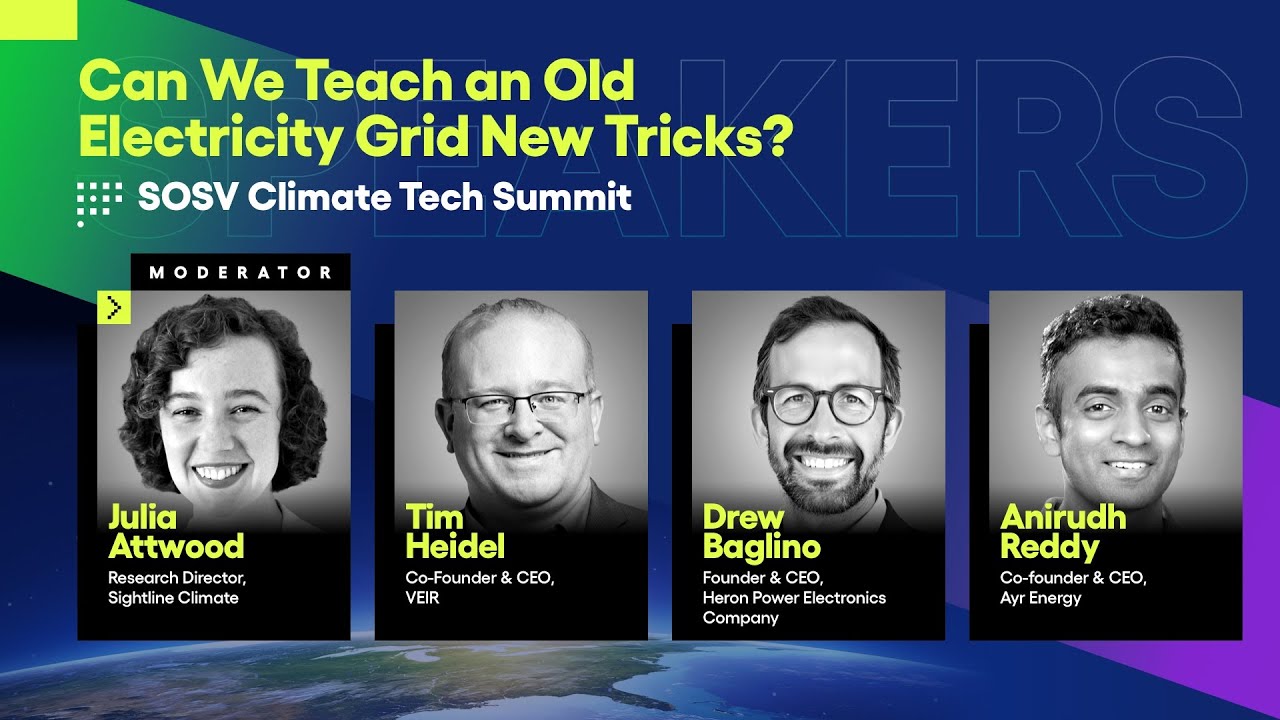
His public appearances put the same subject in a wider conversation. At the November 2025 SOSV Climate Tech Summit, Reddy joined VEIR's Tim Heidel and Heron Power's Drew Baglino on a panel about modernizing the grid, moderated by Sightline Climate's Julia Attwood. Superconducting lines, power electronics and equipment manufacturing shared the agenda.
His March 26 CERAWeek session was framed around a shift from rigid to responsive development. It is a revealing choice of subject. The manufacturer has to serve a project whose needs may keep changing while equipment moves toward production. Reddy's public argument keeps coming back to how the supplier can make that process easier to manage.
The company's early years also included a dispute with his former employer. Zetwerk accused Ayr and Reddy of misusing confidential information; Ayr denied the allegations and brought claims of its own, which Zetwerk disputed. In September 2026, the companies announced a global settlement, dismissed claims in Texas and Bengaluru, and jointly sought termination of a related US International Trade Commission investigation. Settlement terms were not disclosed.
Alongside the work of supplying today's equipment, Reddy has described an ambition to develop advanced technologies internally. Ayr's longer-term plans include solid-state transformers. The sequence is deliberate: build customer relationships through products people already need, while making room to develop what may follow.
“Ayr is delivering what customers need today, while building for tomorrow.”
Anirudh Reddy · April 2026
That leaves him working to two clocks. One belongs to the customer, who needs a project to move forward. The other belongs to product development, where a future design still has to earn its place. His experience, from batteries to manufacturing networks, sits between them.
The next chapter will be written in the familiar language of physical work: specifications agreed, components secured, equipment tested, a unit put into service. For Reddy, the future has an address. The business is getting the machinery there.