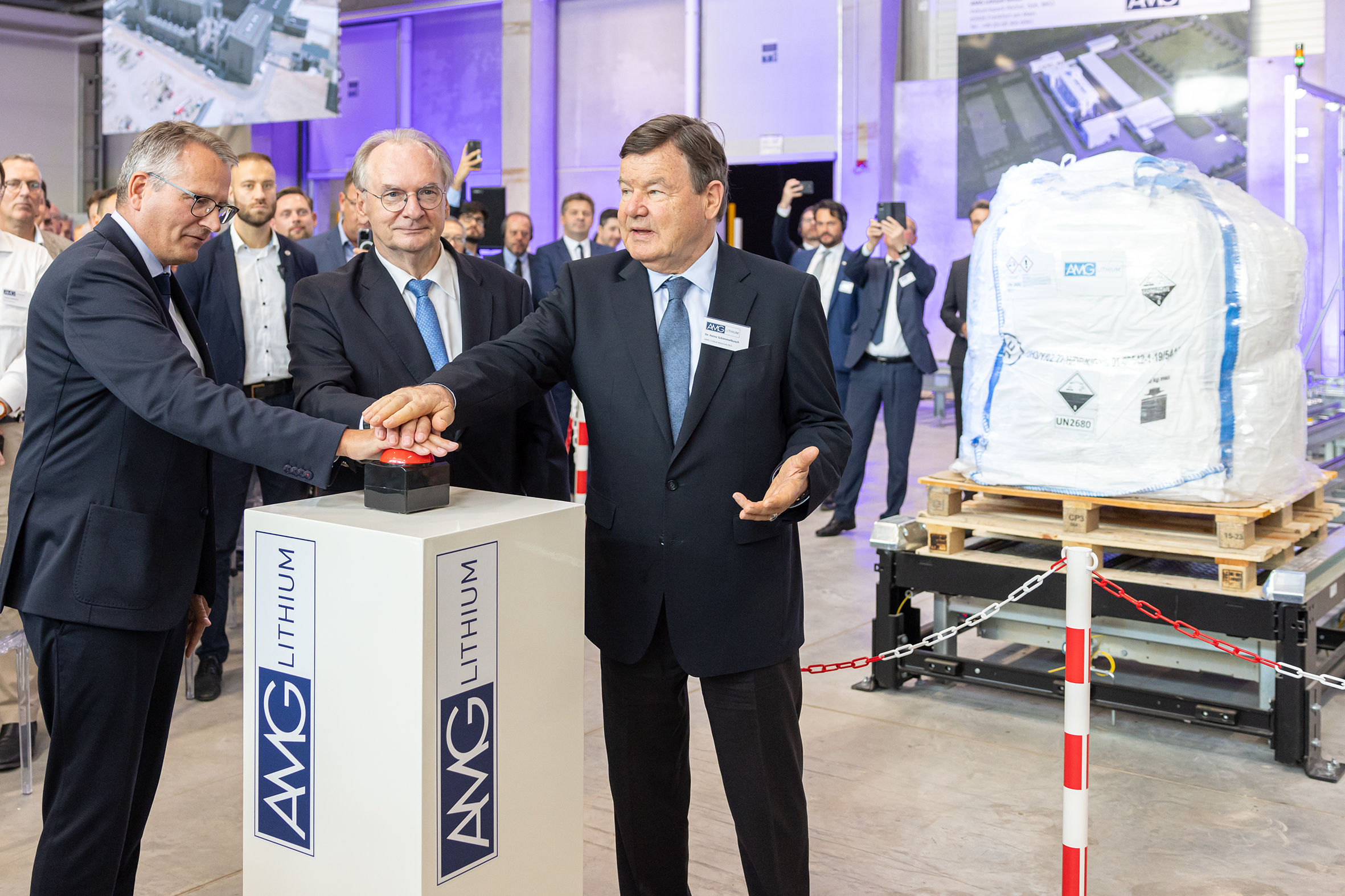
At the opening of AMG’s lithium refinery in Bitterfeld-Wolfen, three men pressed a red button beside a very large bag of product. There were suits, cameras and the familiar choreography of an industrial beginning. The photograph, taken in September 2024, offers a satisfying proposition: press here, and Europe gets another source of battery material.
The more revealing part happened afterward. By July 2026, AMG was reporting lithium hydroxide sales while customer qualifications continued. A factory can open, produce material that meets specification and still be working toward qualified sales. In critical materials, those distinctions are the business.
- AMG recycles refinery residues into alloys, develops lithium supply and sells metallurgical equipment.
- Its customers include refiners, steelmakers, battery-material producers and aerospace manufacturers.
- Its advantage depends on processing expertise. Its economics still depend on prices, reliable equipment and customer approval.
One factory’s leftovers, another’s ingredient
Consider the material AMG receives from oil refineries. Spent catalysts contain metals worth recovering, wrapped in a waste-management problem. The refinery needs a responsible destination. A steelmaker, elsewhere, needs alloying ingredients. AMG’s Ohio vanadium operations connect the two.
Its V-CYCLE process roasts and melts metal-bearing residues. Products include FEROVAN, a ferrovanadium alloy used to strengthen steel, and FeNiMoly, used in carbon and stainless-steel production. The process makes an industrial exchange possible: something troublesome to handle becomes something another manufacturer can buy.
The economics have two sides. Refiners need recycling services, while steelmakers need the recovered products. Metal credits also figure in what AMG offers refinery partners. This makes the operation different from a miner whose business begins with extracting fresh ore. Waste treatment is part of the commercial proposition.
catalystsRefinery residues
Melt.V-CYCLE recovery
for steelFEROVAN + FeNiMoly
Two needs meet in one process: residue treatment and material supply.
There is history behind the chemistry. The Ohio subsidiary dates to 1952; AMG’s Dutch holding company was established in 2006. Founder Heinz Schimmelbusch assembled a group with existing industrial capabilities, then took it public in Amsterdam in 2007. Its newer energy-transition projects sit on older metallurgical foundations.
The expensive distance to battery grade
Lithium presents a different problem. Having a resource is only one step toward supplying a battery manufacturer. AMG produces spodumene concentrate in Brazil and has built a German refinery to upgrade lithium material for battery applications. Its immediate target customers are cathode-active-material producers, an industrial step upstream from the battery cell.
Bitterfeld’s first module has annual design capacity of 20,000 metric tons of battery-grade lithium hydroxide. Opening coverage put investment at roughly €140 million. Five modules, totaling 100,000 tons, are a possible expansion concept dependent on market conditions. The larger number should stay in the future tense.
“The refinery is an omnivore.”
Stefan Scherer, AMG Lithium’s managing director
September 2024
Scherer’s description points to a practical advantage: the plant can upgrade material of relatively low quality into battery-suitable product. Purchasing flexibility matters when the finished chemical must satisfy exacting specifications. AMG’s proposition combines that refining ability with access to its own Brazilian resource. It is a strategy built around the relationship between feedstock and processing.
For a buyer, location offers another supply option in Europe. Quality approval remains essential. AMG’s October 2025 memorandum with Beijing Easpring, which is building cathode-material capacity in Finland, illustrates the sequence: cooperate on qualification while negotiating a binding supply agreement. Announcing a relationship and securing repeat purchases are separate achievements.
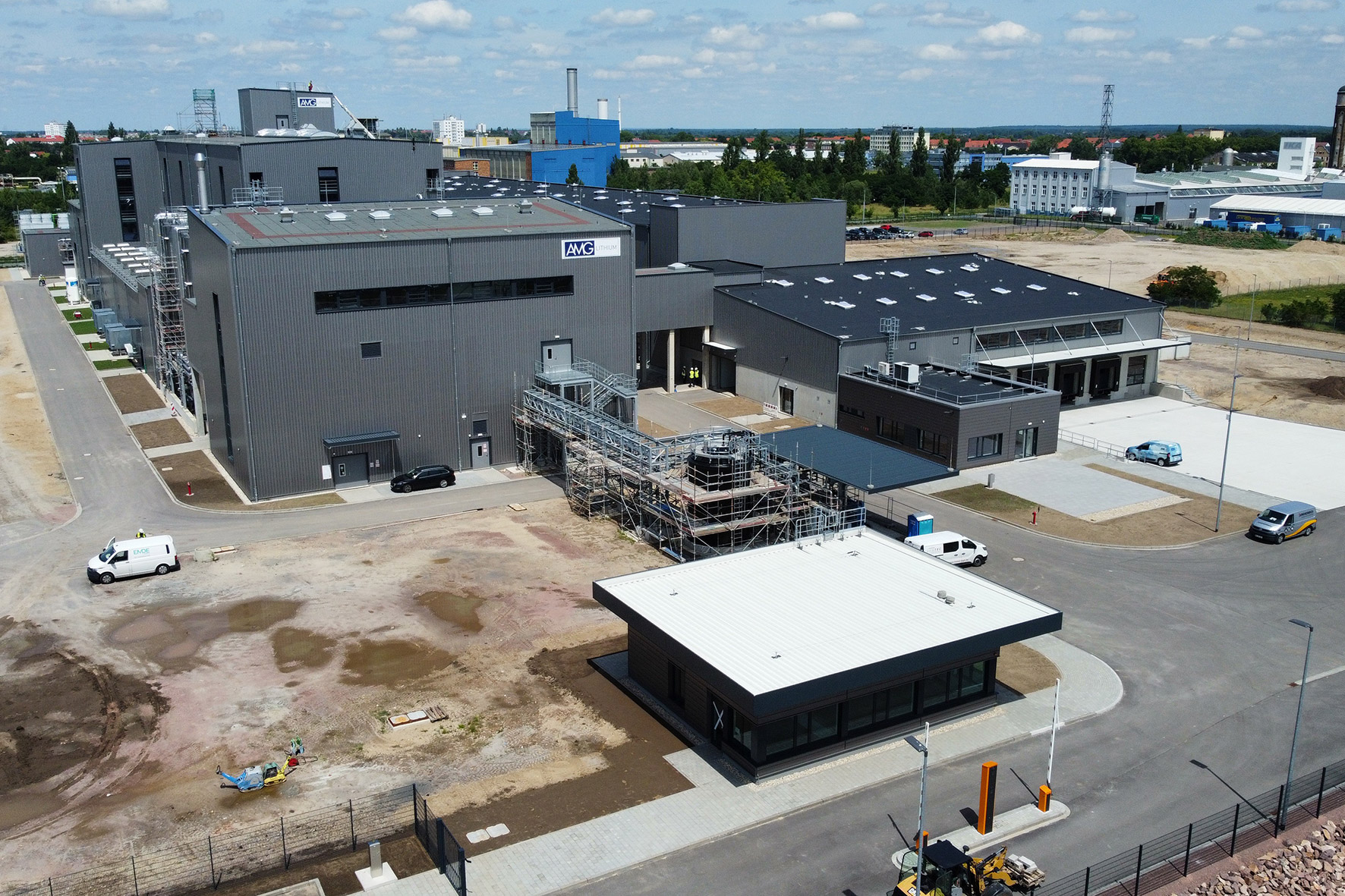
AMG is widening its options. It completed the acquisition of Zinnwald Lithium in July 2026, adding a European resource project. A planned $50 million conversion plant at Bitterfeld would accept recycled lithium carbonate. Neither development removes the need to build economically, run consistently and win customer acceptance.
The furnace in the family
Then there is the business that makes this company harder to place in a single investment bucket. AMG owns ALD Vacuum Technologies, which designs vacuum furnaces and related systems. Its equipment serves demanding metallurgy and heat-treatment applications, including coatings for aerospace turbine blades.
A turbine-blade coating helps protect the underlying material at high operating temperatures. ALD supplies equipment used to create those coatings. Here AMG sells industrial capability alongside its materials businesses. Customers buy a production tool and associated expertise, with equipment orders responding to different purchasing decisions from daily commodity sales.
AMG Engineering booked $380 million in new orders in 2024. The wider Technologies division also includes antimony processing and LIVA industrial energy storage. Against lithium suppliers such as Albemarle or aerospace-materials peers such as ATI, AMG offers an unusual combination. These companies overlap in particular markets; none is a tidy substitute for the whole group.
The machine still has to run
The portfolio does not cancel operating risk. During 2025, an equipment failure associated with the Brazilian lithium expansion reduced production. Poorer ore later hurt recoveries. Silicon operations closed at year-end after operational challenges and economic review. These were physical and economic problems, beyond the reach of a persuasive sustainability presentation.
Adjusted EBITDA excludes interest, tax, depreciation and specified adjustments. It is not net profit.
AMG’s 2025 results show the distinction. Revenue reached $1.708 billion and adjusted EBITDA rose to $235 million, yet shareholders’ attributable net loss was $18.6 million. A diversified order book and recycling fees can help; financing costs, taxes and closures still matter.
Management’s choices also reveal its priorities. AMG sold Graphit Kropfmühl in July 2026 and described a focus on projects requiring less capital and offering higher returns. The company is changing the portfolio as it expands. That is observable strategy, without needing to invent a private moment when executives changed their minds.
Copy the question
The transferable idea is to ask who has a difficult material, who needs the finished product and what processing stands between them. Then price the permits, equipment, energy and time before customers approve the output. The model needs dependable feedstock and buyers willing to pay. Without either, an ingenious process can become an expensive idle plant.
For an industrial buyer, the next step is concrete. A refiner can discuss its residue stream with AMG Vanadium. A cathode producer can explore lithium hydroxide specifications and qualification. An aerospace supplier can investigate ALD’s coating or melting equipment. Each conversation starts with a manufacturing requirement, rather than a general desire to buy something green.
AMG’s appeal lies in those practical connections. The red button is a fine photograph. The more consequential work is getting the next batch through the factory and into an approved customer’s hands.