A truck arrives at a car factory carrying coils of aluminum. The metal will become doors, hoods and other body parts. Then comes the interesting maneuver: the truck collects the scraps left by earlier deliveries. It returns with tomorrow’s raw material. In that second load sits a useful explanation of Novelis, a company whose business depends on getting valuable metal back.
- Novelis makes aluminum sheet and plate for manufacturers, including can makers and automakers.
- It recycles customers’ scrap and used products, keeping metal in circulation.
- Its new Alabama mill carries an approximately $5 billion price tag, with commercial shipments targeted for 2027.
The truck has a second job
Aluminum is an obliging material. It is light, strong and recyclable. Making it from ore, however, takes considerable energy. Recycling requires about 5% of the energy used for primary production. That difference gives an industrial supplier a reason to care about what happens after the first sale.
Novelis organizes that concern into a system. It delivers sheet to manufacturers, retrieves segregated production scrap, remelts it, casts it and rolls it again. Its white paper describes trucks delivering coils to Ford’s F-150 production facilities, then collecting scrap from the other end of the line. The return journey becomes part of the production plan.
“The same truck that brings the coil takes back the scrap.”
Marco Palmieri · Novelis North America · 2019
The distinction between collecting aluminum and keeping its value matters. Automotive stamping turns roughly 30%-40% of a coil into scrap, according to Novelis’s 2024 sustainability report. Keep the alloys separate and that material can return to demanding applications. Mix everything together and recovering the right chemistry becomes harder.
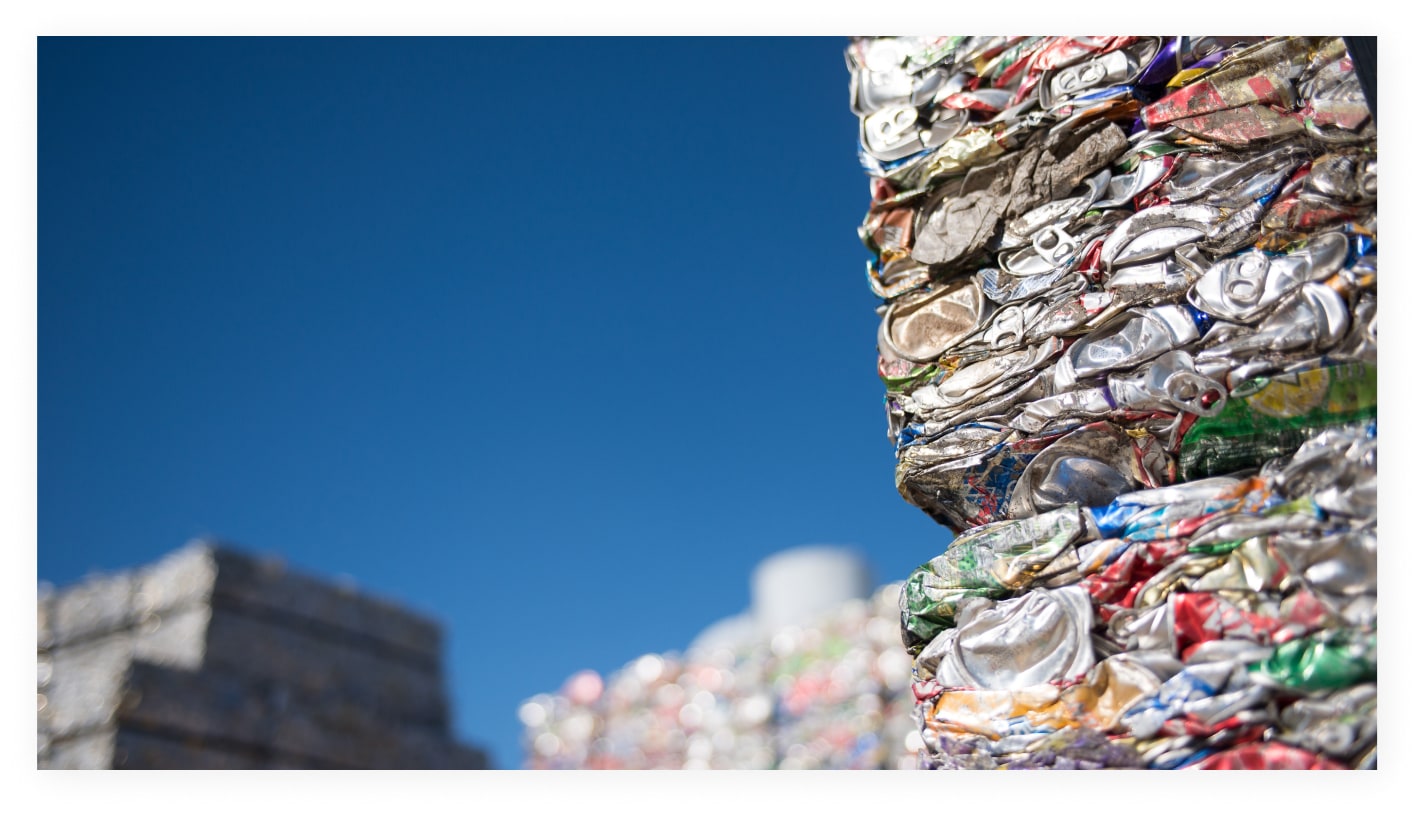
↳ Back into sheet. Alloy separation keeps the route useful.
The margin is in the making
Novelis occupies the space between metal production and the finished object. Ball buys sheet to make beverage packaging. Automakers need materials with particular strength, formability and surface qualities. Airbus buys aerospace products. Novelis supplies the material and the expertise required to make it behave.
Its portfolio spans beverage-can sheet, automotive body materials, aircraft sheet and plate, and specialty applications such as buildings and industrial products. In September 2026, it expanded coated aluminum offerings for batteries and energy storage. Coatings applied before forming can provide corrosion protection and, where specified, electrical insulation while simplifying later manufacturing steps.
The pricing explains why a metal supplier is more than a bet on metal prices. Nearly all Novelis flat-rolled products carry three components: an aluminum benchmark, a local market premium and a conversion premium. The last covers processing costs and margin. Scrap purchasing, efficiency and the timing of metal-price movements still influence results.
Constellium, Arconic, UACJ and Kaiser Aluminum are among the alternatives, depending on the application and region. Novelis competes through its combination of recycling, rolling, alloy development and customer relationships. In fiscal 2026, it shipped 3.557 million tonnes of rolled products. A buyer needs both the right chemistry and a dependable delivery.
There is a human system behind that delivery promise. Novelis reported approximately 12,750 employees across nine countries at March 31, 2026. It describes an operating culture built around safety, training and continuous improvement. In October, its Zhenjiang plant received Airbus’s Quality Champion award. For an aerospace customer, repeatable quality is part of what is being purchased, alongside the metal.
A $5 billion return trip
The company’s origins are industrial rather than entrepreneurial. Incorporated in Canada in 2004, Novelis separated from Alcan in January 2005. Hindalco acquired it in 2007. The 2020 purchase of Aleris added aerospace capabilities. Its expansion now includes a new rolling and recycling plant in Bay Minette, Alabama.
Financing comes from more than operating cash. The company received approximately $950 million in shareholder equity contributions during fiscal 2026 to help fund capital projects. This is a manufacturing expansion supported by its owner, with the returns still dependent on future production.
The original 2022 announcement put that project at approximately $2.5 billion. By 2026, the estimate was about $5 billion. Planned annual rolled-aluminum capacity remains 600,000 tonnes. The comparison is a reminder that selling an industrial expansion and delivering one are different achievements, separated by years of construction and capital spending.
Customer commitments came earlier. In September 2023, Novelis said a Ball agreement and other commitments had secured all Bay Minette’s beverage-can capacity. That is a practical sequence worth copying: establish demand before building the equipment needed to serve it.
On October 7, 2026, Novelis announced the first cold-mill coil. Commercial shipments were targeted for the second quarter of 2027, following commissioning and customer qualification. The recycling center is designed to process more than 15 billion used beverage cans annually. Each milestone earns its own verb: planned, produced, qualified, shipped.
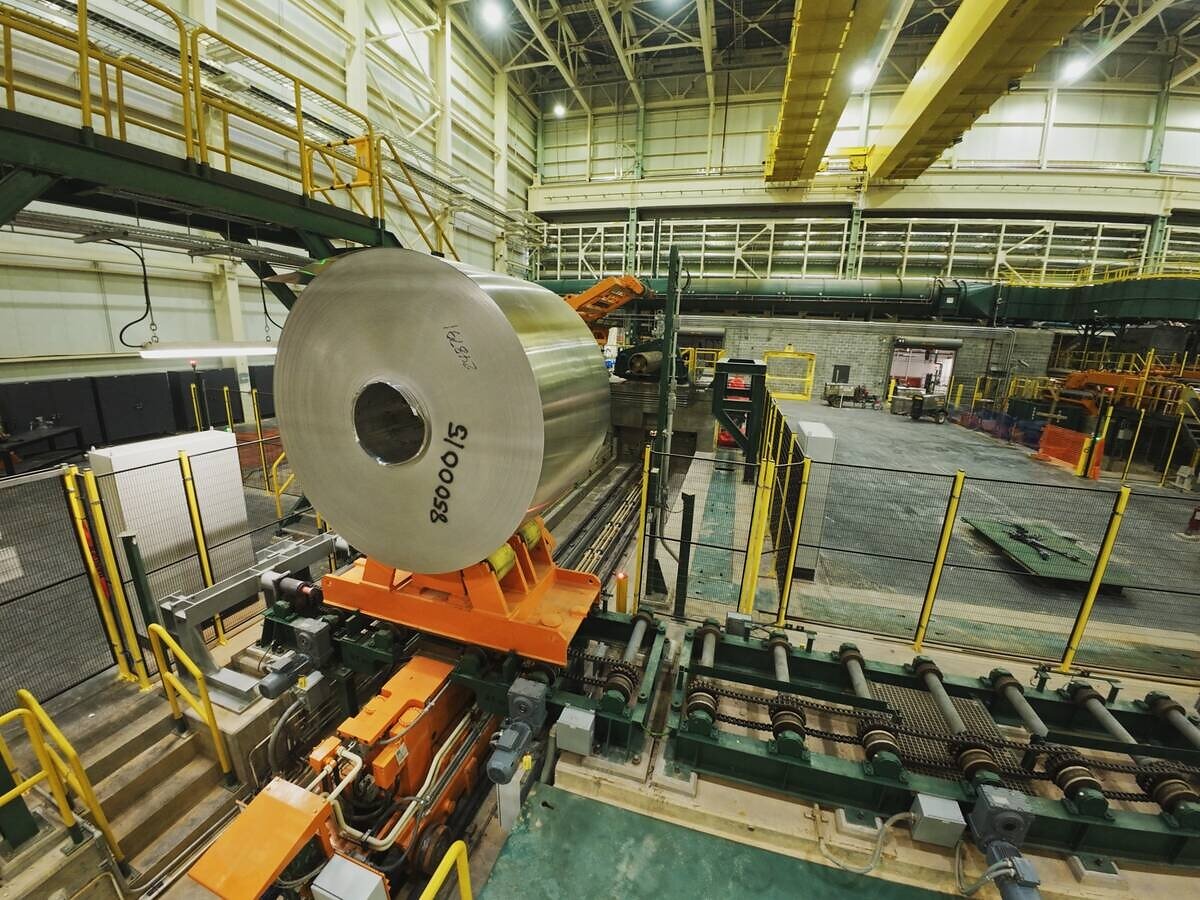
The hot mill stops
The return loop also depends on machinery that must keep running. Fires in September and November 2025 damaged the hot-mill area at Oswego, New York. Everyone evacuated safely. The second fire struck where repairs from the first were underway. Production interruptions reduced expected shipments and forced the company to manage a prolonged recovery.
For fiscal 2026, Novelis recorded $925 million in fire-related pre-tax losses, net of insurance recoveries. That accounting figure should not be mistaken for the final cash cost. Company net sales reached $18.4 billion, while net income fell to $15 million. Oswego’s hot mill restarted in early June 2026.
Keep the alloy. Keep the value.
The recycling numbers resist a tidy victory lap. Novelis reported 61% recycled content in fiscal 2026, compared with 63% in 2025 and 33% in 2011. Its 2030 target is 75%. Progress over fifteen years and a backward step over one year can occupy the same chart.
2030 ambition: 75%. A target, not an achieved result.
For manufacturers, the transferable idea is concrete: preserve useful scrap, agree who takes it back and make the return economical. It works best with consistent alloys, reliable volumes and customers willing to sort. Contamination, expensive energy, unfavorable scrap prices or an idle mill can spoil the arithmetic. Novelis makes that proposition tangible: a return trip designed into the sale.