At the Bay Minette groundbreaking in October 2022, guests were encouraged to bring aluminum cans, bottles and cups. It was an unusually useful admission accessory. Most corporate ceremonies send people home with something they will eventually throw away. This one asked them to arrive with something they already had.
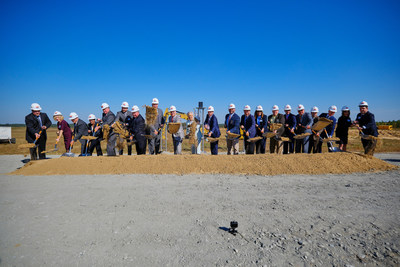
Steve Fisher, president and chief executive of Novelis, was there to put a much larger version of that idea into the Alabama dirt. The company was beginning a recycling and rolling plant, then announced at $2.5 billion, with capacity planned for 600,000 tonnes of finished aluminum a year. The photograph has the familiar choreography: hard hats, shovels, officials, a line of freshly disturbed earth. Behind it sat a question that has occupied much of Fisher’s working life. How do you turn a good financial argument into a working industrial system?
His answer has taken years, acquisitions, financing and considerable construction. It has also required learning how to run an organization whose technical knowledge could never fit inside one executive’s head.
The accountant arrives before the aluminum
Fisher’s route into this business ran through finance and energy. He earned a B.B.A. in finance and accounting at the University of Iowa in 1993 and became a certified public accountant. At Aquila, he held senior finance responsibilities between 2001 and 2005. He then served as vice president and controller at TXU Energy in Dallas before joining Novelis in 2006.
He entered through strategic planning and corporate development. In May 2007, he became chief financial officer, as Novelis came under Hindalco ownership. He had helped lead the discussions behind that acquisition. The work placed him close to the decisions that determine what a manufacturer can attempt: ownership, borrowing, investment and the patience to wait for expensive equipment to earn its keep.
By 2010, Novelis had completed a $4.8 billion capital refinancing and paid a $1.7 billion dividend to its parent. In 2012, Fisher received the Atlanta Business Chronicle’s CFO of the Year award in the large private company category. Recognition went to his work on risk, costs and financial performance. The spreadsheet, in this career, had a fairly substantial supporting cast of furnaces and mills.
A promotion with unfinished business
Fisher became interim chief executive in April 2015. The appointment became permanent on August 10. He initially retained the finance job while the company sought a successor. For a time, he had both the responsibility for the argument and responsibility for the arithmetic.
Chairman Kumar Mangalam Birla described the immediate task as improving performance after rapid expansion. During Fisher’s CFO tenure, Novelis had invested roughly $2 billion in its transformation and growth. New capacity was already a fact. Making the organization use it well was the next problem.
Fisher turned to Joanne McInnerney, a human resources leader, to help lead a culture program. The company established shared behavioral expectations, introduced accountability tools and trained its 11,000 employees. That is a revealing choice for someone with his financial background. Better machinery and a sound strategy still needed people who could talk to one another and execute.
By 2018, McInnerney described an organization achieving record earnings, cash flow and shipments. Her account put senior management’s continued attention at the center of the effort. Culture here involved the rather unglamorous work of staying with something after the launch meeting ended.
The useful red mark
Years later, in a conversation with author Jacob Morgan, Fisher offered a smaller, more personal version of that management approach. He was comfortable acknowledging that he did not have an answer. His phrase was plain: “I need some help.”
He paired that admission with an obligation to decide once the right people had contributed. Asking for assistance could start the work; a leader still had to act on what came back. He also recalled advice to concentrate on his strengths and put capable people in charge of areas where he needed support.
One detail from the conversation sticks. A red mark on a scorecard, Fisher suggested, identifies an opportunity to improve. Anyone who has sat through a meeting devoted to explaining away a disappointing number can appreciate the distinction. Red can be useful if people are willing to look at it. His stated version of openness came with an expectation of improvement, rather than an endless discussion of how everyone felt about the scorecard.
“I need some help.”
Steve Fisher, in conversation with Jacob Morgan, 2023
The extraordinary economy of an empty can
In 2023, Fisher explained the appeal of recycling in terms an accountant could enjoy. Producing aluminum from recycled material can use 95 percent less energy than producing primary metal. At the time, he said Novelis recycled 82 billion used beverage cans annually and also took back manufacturing scrap from customers.
The automotive example makes the business easier to picture. He described a closed loop with Ford that helped support production of 30,000 F-150 trucks a month. Metal left over from making a vehicle becomes material for another production run. The humble offcut has somewhere better to go.
Fisher also acknowledged the difficulty of reducing the company’s footprint while expanding its business. More recycling capacity, renewable energy and cooperation across the supply chain all had a part. “It’s going to be a journey,” he said. That phrasing suits a business in which the route requires actual buildings.
Energy use, indexed. Recycling can save 95% compared with primary production. This comparison describes the process, not Novelis’ total energy use.
Buying reach, building capacity
Under Fisher, Novelis completed its $2.8 billion acquisition of Aleris in 2020, extending the company’s capabilities and international footprint. He leads a business supplying aluminum to aerospace, automotive, beverage packaging and specialty markets across four continents. The material travels through very different customer requirements before anyone sees a finished product.
Bay Minette gave that expansion a new physical address. In 2024, Fisher’s green bond letter described a plant design covering 2.66 million square feet under one roof on a 3,000-acre site. The financing program itself reached beyond Alabama: a €500 million green bond issued in 2021 supported projects on four continents. By the 2024 report, Novelis had fulfilled the bond’s spending commitment.
There is a recognizable continuity between those decisions and his earlier career. The former CFO’s tools are still visible. Capital must be assembled, assigned and put to use. The difference is that the intended return includes material coming back around for another turn.
Four years between the shovel and the coil
On October 7, 2026, Novelis announced that Bay Minette had produced its first coil on the cold mill. Four years after the groundbreaking, the project had reached a tangible commissioning milestone. Its announced investment had risen to $5 billion.
The planned annual rolling capacity remained 600,000 tonnes. A recycling center was designed to handle more than 15 billion used beverage cans a year. Those are operating ambitions for a fully functioning plant. At the October announcement, customer qualification and commercial shipments were still ahead, with shipments expected to begin in the second quarter of 2027.
For Fisher, this is where the long wager becomes demanding in a different way. Equipment must progress through commissioning; customers must qualify the product. A first coil is something to celebrate, and there is still work between that coil and dependable supply.
Next announced step: customer qualification and commercial shipments, expected in Q2 2027.
The difficult year belongs in the story
Fisher’s expansion plans have unfolded alongside operating setbacks. Fires at the Oswego plant in September and November 2025 interrupted production. For fiscal 2026, Novelis estimated that the disruption reduced shipments by 145,000 tonnes and adjusted EBITDA by $104 million. Tariffs contributed another estimated $143 million impact on adjusted EBITDA.
Net income attributable to the common shareholder fell to $15 million, down 98 percent. Annual adjusted EBITDA was $1.6 billion, down 9 percent. The measures describe different aspects of the same difficult year; the gap also shows why a single headline number cannot do all the explaining.
This is the less photogenic side of Fisher’s job. A new plant creates future capacity while an existing operation can suddenly stop supplying it. His financial training matters in both circumstances. The time required to build something and the urgency of keeping customers served have to coexist on the same management agenda.
What comes back next
Fisher has made the next phase measurable. Novelis’ 3×30 program sets a 2030 objective of 75 percent average recycled content, alongside an emissions intensity below three tonnes of carbon dioxide equivalent per tonne of flat-rolled product shipped. In fiscal 2025, average recycled content was 63 percent and emissions intensity was 3.6 tonnes, down from 4.0.
Getting further involves more than collecting extra cans. The company’s priorities include better scrap sorting, alloys that can accommodate different scrap inputs, expanded customer recycling partnerships and lower-carbon energy. Fisher has also said most scrap is sourced locally to regional recycling facilities, even though the global network allows material to move between regions. Geography still gets a vote.
His own life is anchored in Atlanta, where he lives with his family and participates in business and civic organizations. His work runs on a longer circuit: finance, factories, customers, discarded metal, and back again. At the groundbreaking, bringing an empty can was a small gesture. For Fisher, making a business capable of accepting it, processing it and selling it again remains the much larger assignment.