Consider the tire. Most of us judge it by what we can see: the tread, the sidewall, perhaps the price. Yet about 30% of a typical tire’s weight is carbon black. That dark ingredient helps rubber resist tearing and abrasion. A tire’s ordinary appearance conceals a rather particular materials problem. Change the ingredient, and you must preserve the performance.
- Orion engineers carbon black for tires, pigments and electrical conductivity.
- Its circular grades use oil from old tires to help make material for new ones.
- Reliable feedstock and paying customers determine how quickly the idea scales.
Orion S.A. lives inside that problem. Its customers make things other people recognize: tires, paint, printing ink, plastic parts, batteries and cables. Orion supplies the powder or pellets that make those things work differently. The interesting question is how much you can change the origin of that powder while leaving its useful behavior intact.
Thirty percent of the tire
This is an industrial supplier with a long memory. Its ancestry reaches back to A. Wegelin in Germany in 1862. The standalone Orion business emerged in 2011, when Rhône and Triton bought Evonik’s carbon black operations in a transaction valued above €900 million, including assumed obligations. It reached the New York Stock Exchange in 2014. The shorter Orion S.A. name arrived in 2023.
Today, the company describes a network of 15 production facilities and four technical centers, serving more than 1,000 customers across roughly 80 countries. Its principal executive office is in Spring, Texas; its legal home is Luxembourg. That geography suits a business whose customers need a material delivered consistently, close enough to keep their own factories running.
Four recipes for one color
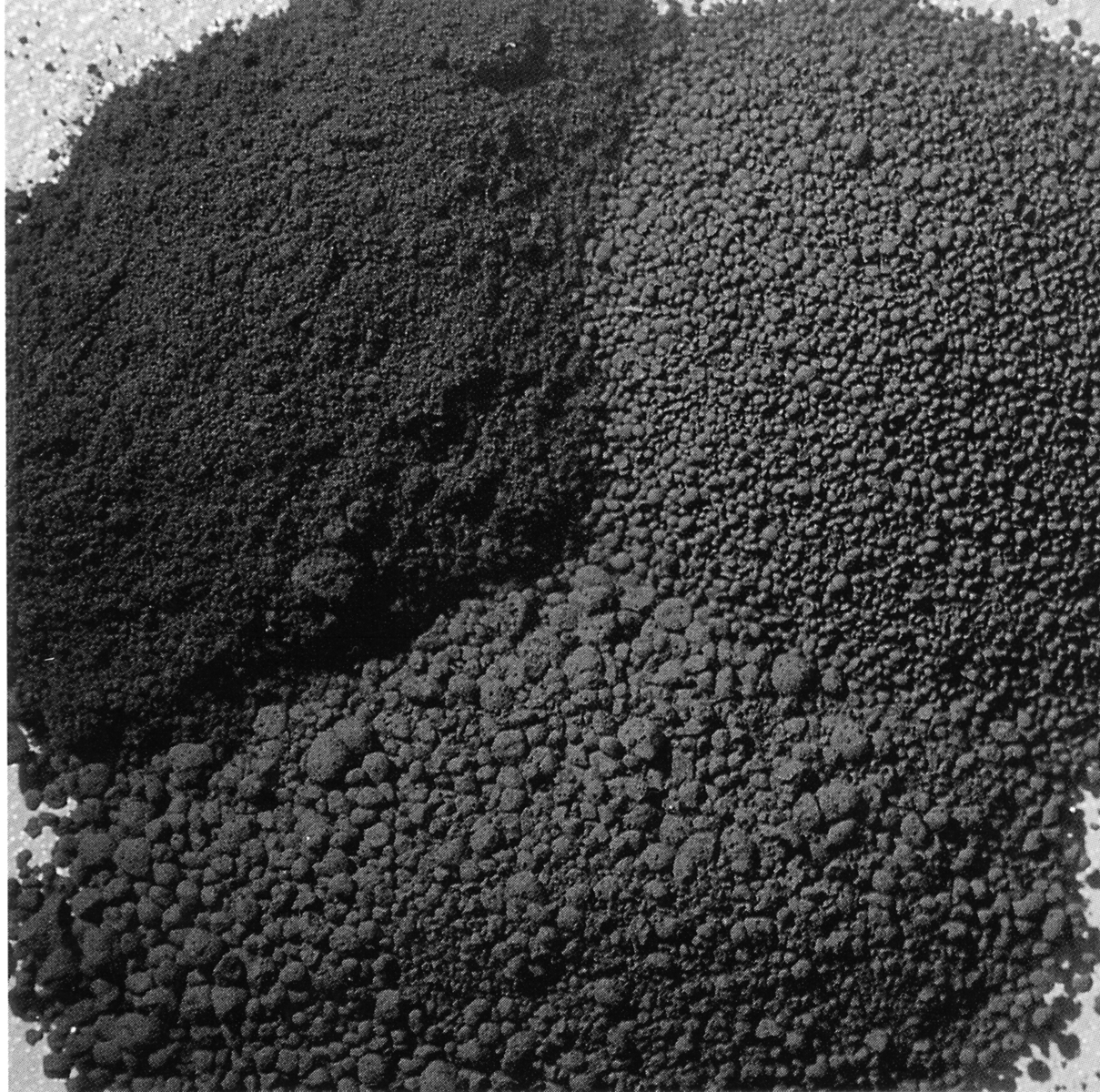
Black sounds like a simple specification. It becomes less simple when a coating must disperse evenly, a plastic part needs a smooth surface, or a battery additive must conduct electricity without introducing troublesome impurities. Orion uses four production routes: furnace, gas, lamp and acetylene. Those processes give its engineers different ways to tune the material.
Orion says it alone retains gas-black production capability, a method involving thousands of small flames. Acetylene black serves another demanding corner of the market: conductivity. At Berre-l’Étang in France, Orion takes acetylene byproduct gas from a neighboring plant and converts it into conductive material. That facility earned automotive quality certification in September 2026.
The catalog reflects these distinctions. PRINTEX kappa 100 targets lithium-ion batteries with low metal content and low moisture uptake. PRINTEX chroma 450 BEADS, introduced in October 2026, targets engineered plastics, balancing deep black color, dispersion and surface smoothness. The buyer is purchasing a particular result in a formulation. Competing suppliers include Cabot, Birla Carbon and Tokai Carbon; the relevant contest happens grade by grade.
The oil had a flashpoint problem
Now return to the tire, after its useful life. Heat it under pyrolysis conditions and it can yield gas, recovered carbon black and oil. Orion’s circular route takes that oil and uses it to manufacture carbon black again. It differs from simply collecting the recovered solid and putting it back into a new tire.
The early obstacle was wonderfully concrete. BlackCycle, the European tire-circularity project launched in 2020, reported that crude tire tar had a very low flashpoint. It was highly flammable, a barrier to its use in carbon black production. Distillation separated lighter and heavier fractions; the heavier oils had more suitable flashpoints. Early Orion trials produced samples that went to Michelin for further testing.
- 01Used tiresPyrolysis yields oil, gas and recovered solids
- 02Oil preparationQuality control, storage and measured dosing
- 03Carbon blackReactor production for new rubber formulations
BlackCycle had a total budget of €16 million, mostly EU-funded. Orion’s part was developing carbon black grades; other partners tackled the surrounding chain. The implication is useful: changing an industrial ingredient may require coordinated changes well beyond the factory that sells it.
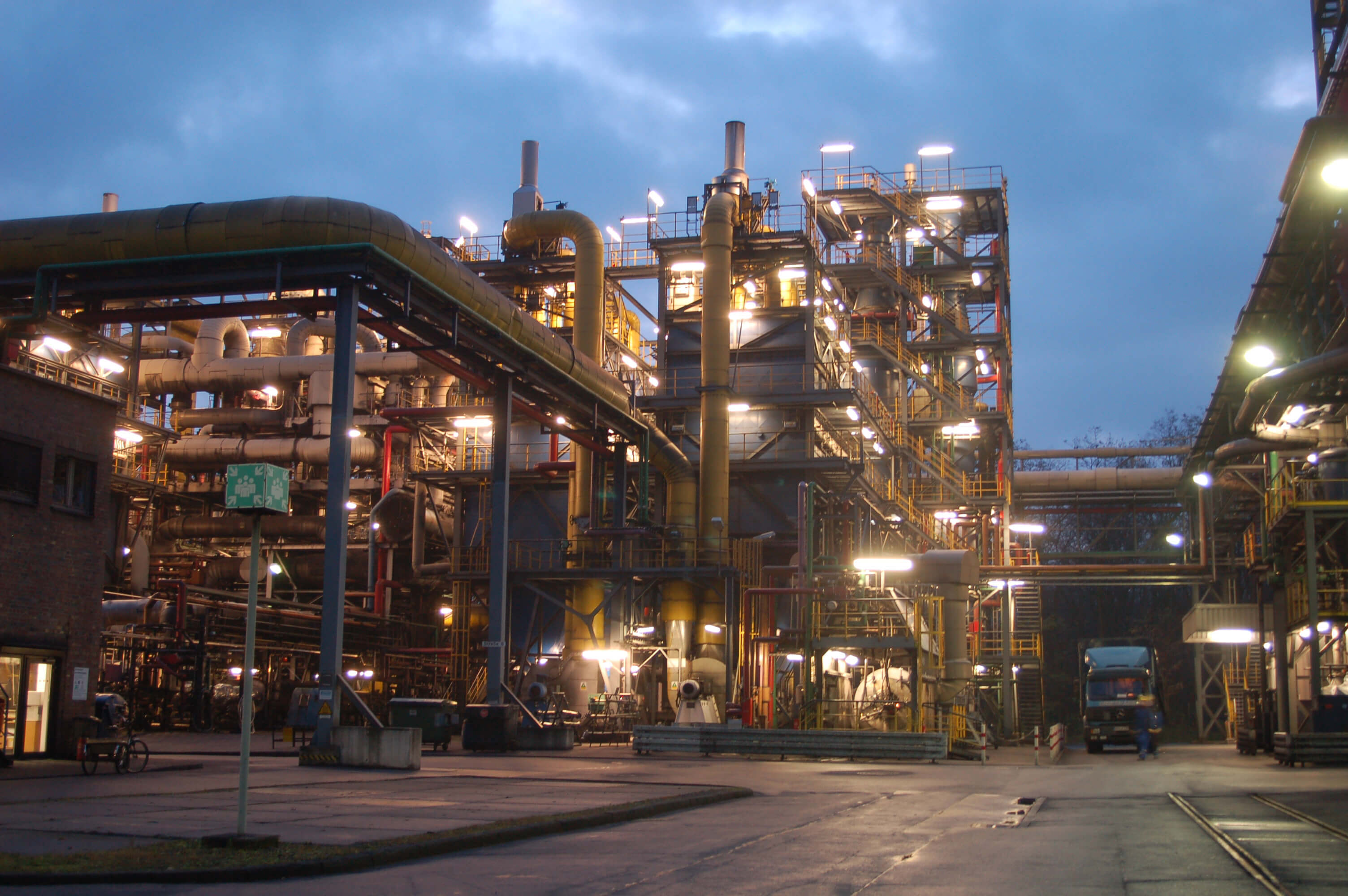
Commercial infrastructure followed. Jasło, Poland, began large-scale circular production in early 2025. Qingdao, China, followed with an announcement in June 2026. Dedicated tanks and separately controlled feed streams let operators manage tire-derived oil alongside conventional carbon black oil. Circular does not automatically mean that every commercial batch uses only recycled feedstock.
“We now have the complete infrastructure to receive, store and dose TPO in our production in a completely controlled way.”
Pedro Riveros · Global Rubber Carbon Black · June 2026
That control supports a practical sales proposition. ECORAX Circular 200 and 210 are designed to replace familiar ASTM grades N326 and N330. For a tire maker, the attraction is a different feedstock origin with a recognizable performance target. Orion also invested in French recycler Alpha Carbone in 2024, securing an exclusive long-term purchasing arrangement for its pyrolysis oil.
A reactor meets a balance sheet
None of this abolishes industrial economics. Orion’s supply agreements can pass through changes in feedstock and regulatory costs, but demand still matters. Its 2025 sales were $1.807 billion, with a $70 million net loss that included an $81 million noncash goodwill impairment. Tire imports and soft industrial markets weighed on the business.
The battery opportunity has its own timetable. By December 2025, Orion had capitalized $175 million of construction in progress for its La Porte, Texas, project. It adjusted the schedule as end-market conditions changed, including slower U.S. electric-vehicle adoption. That figure describes capitalized project spending at that date, not the eventual total cost. A compelling application can still arrive later than a construction plan assumed.
The part worth copying
For manufacturers, Orion offers material selection, application testing and a route toward circular content in qualified products. The transferable lesson is procedural: define the performance customers already need, test the substitute, secure its inputs and build the controls that make batches repeatable. Feedstock shortages, inconsistent quality, expensive equipment or weak demand can interrupt that sequence. A successful laboratory sample settles only part of the argument. The next tire still has to perform.