In 2023, Allie K. Miller stood in an empty New York apartment and wondered whether she had made an enormous mistake. She had left Amazon Web Services to build her own AI advisory business. After three years on the road, she had arrived with a suitcase and a room that offered very little reassurance. Within days, she was using the room for a life-planning session and a workout class with friends. A bare floor had become useful space. It is an unusually good image for the way Miller works: when the old arrangement stops making sense, she tries a new one in public.
The company she founded, Open Machine, advises organizations on AI. Its work reaches large enterprises, including Novartis, ServiceNow and Warner Bros. Discovery. Miller also teaches through courses, workshops and social platforms, turning technical change into questions a manager or employee can act on. By 2025, TIME had put her on its TIME100 AI list. Yet the polished title, CEO, hides a career made of several deliberate detours.
She has been a math student, a cognitive science major, a startup product leader, an MBA organizer, an IBM Watson product manager and the head of a machine learning business for startups at AWS. The titles have changed. The recurring move has been to enter a system, notice what it does not yet know how to do, and build a way forward.
The math major who followed language
Miller has described an early appetite for math and computer games. She took extra math classes before college and entered Dartmouth as a math major, in the footsteps of her mother. An adviser urged her to explore beyond the department. Linguistics caught her attention; symbolic systems gave her another way to think about how information becomes meaning. She switched to cognitive science, took computer science and psychology, and coded an independent study in natural language processing.
That route matters because it refused the neat split between people and machines. Cognitive science studies how minds work; natural language processing asks what a computer can make of human speech and text. Miller later built a career in business, but the question underneath remained recognizably the same: what happens when a technical system meets the untidy way people actually think and work?
After Dartmouth, she consulted on natural language processing. She has been frank about taking a post-graduation job she disliked, with long hours and low pay, while making friends she still valued. She eventually freelanced at night and on weekends for a technology startup, then joined it as head of product. Her own account gives the move little gloss. It took a year of extra work to find the opening.
“Progress is a process and ‘success’ is non-linear.”Allie K. Miller, reflecting on her career
At Wharton, she built the room
Miller wanted to lead a technology company and decided she needed stronger finance skills. She enrolled at Wharton for an MBA. There, courses in emerging technology reconnected her childhood interest in math with the AI work she had studied earlier. She felt the business world was overlooking the field, so she founded the Penn Artificial Intelligence Initiative and gathered students from across schools. The group eventually became part of a broader curriculum.
This was an early version of a tactic she has repeated: make an audience before waiting for one to appear. She posted online, gave talks and advised venture firms while still in school. She was not simply explaining algorithms. She was asking where those algorithms might land inside a company, how teams would have to change, and who would be left outside the conversation if nobody translated it.
Her Wharton record offers a lighter clue to her manner. In a first-year MBA reflection, she recalled volunteering to choreograph a cluster dance-off and delivering mock motivational speeches for a Beyoncé-themed performance. Her line about it was direct: “Anytime a little bit of absurdity is needed to bring people together, count me in.” Business school can produce a great deal of solemnity. Miller, apparently, arrived prepared with choreography.
From a model to a business
At IBM Watson, Miller worked as a lead product manager across computer vision, conversation and related AI products. She helped launch the company’s first multimodal AI team. Multimodal means combining different kinds of input, such as images and text. For a business customer, the technical feat was only the beginning. The product still had to serve a task, fit into a workflow and survive the questions that appear when a demonstration becomes a tool.
In early 2019, she announced that she was leaving IBM. She planned a month studying quantum computing before starting a new AI role in March. The next stop was AWS, where she joined as the first machine learning hire focused on startups. She became Global Head of Machine Learning for Startups and Venture Capital, advising founders, investors and researchers as they tried to turn models into companies.
On her own site, Miller says she grew the AWS effort into an organization of nearly 100 people and a multibillion-dollar business. That description is hers; the more revealing detail may be what the job demanded. A startup’s model is one problem. Finding customers, compute, people and a repeatable way to deliver the product is another. She had moved from building AI inside an established product organization to helping a wide field of young companies make it work in the market.
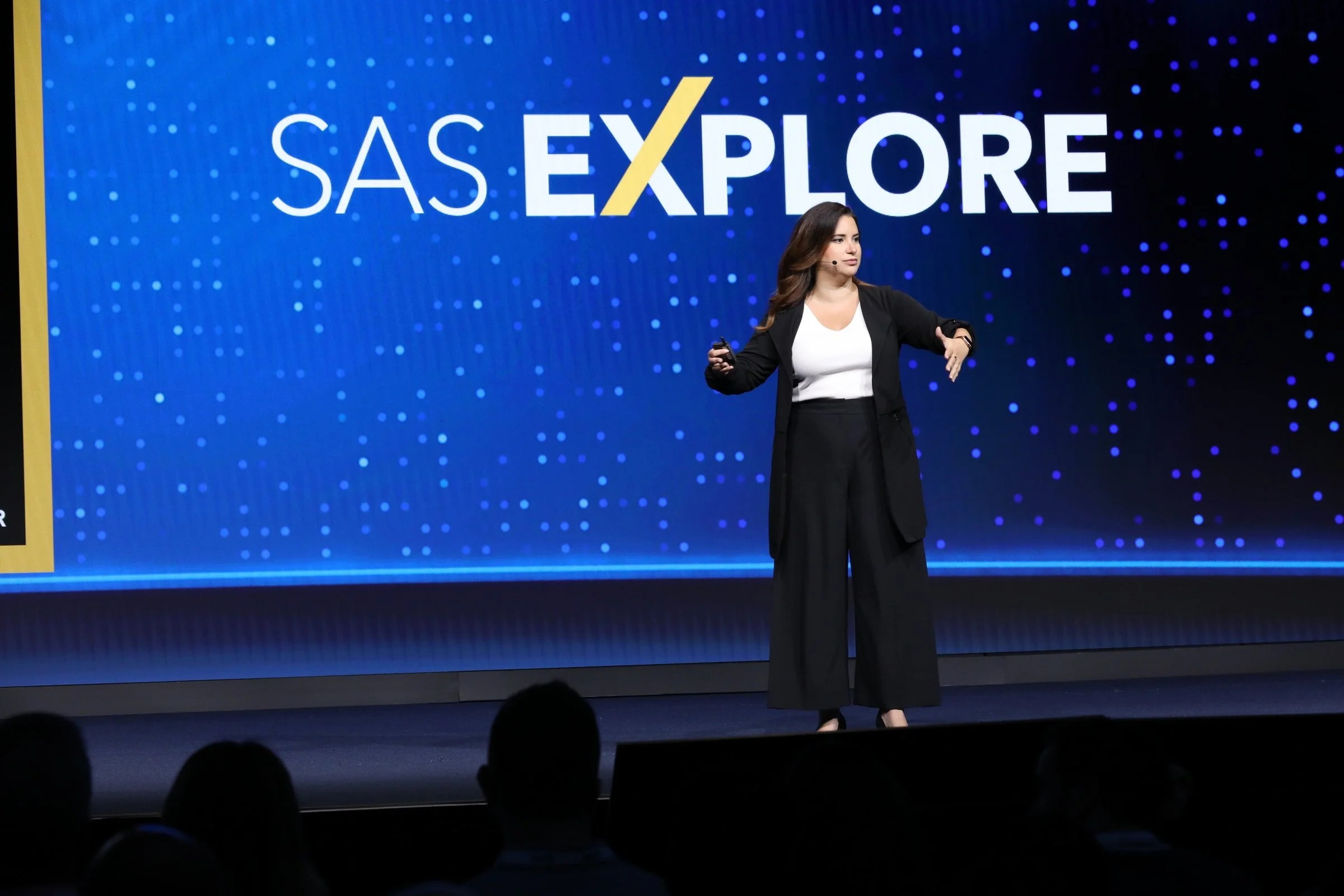
There was also an odd symmetry. At Wharton she had organized people around a technology before it had a settled place in business education. At AWS she helped startups navigate a market still inventing its own rules. The job was large, but the field was moving faster. She recalled seeing the next model after GPT-3 as a likely turning point. The impulse to leave, she said, went “from a poke to a push to a full-on punch.”
An empty floor, then Open Machine
Miller left AWS in 2022 and founded Open Machine. Its premise is that buying AI tools is a smaller task than changing the organization that uses them. Her argument is that companies may need to rethink identity, workflows and even existing business lines. That is an uncomfortable assignment for any firm with customers to serve today. It is also familiar territory for someone who has repeatedly made a new role before the old one stopped paying.
Open Machine has worked with companies in technology, media and other industries. Miller’s public role extends beyond client work. She invests in AI startups, speaks at conferences and teaches through MasterClass, LinkedIn Learning, Maven and her own AI-First Academy. Her website lists guidebooks, courses and practical tools. The formats vary because the audiences vary: an executive deciding what to fund, a founder deciding what to build, or a worker trying an AI tool for the first time.
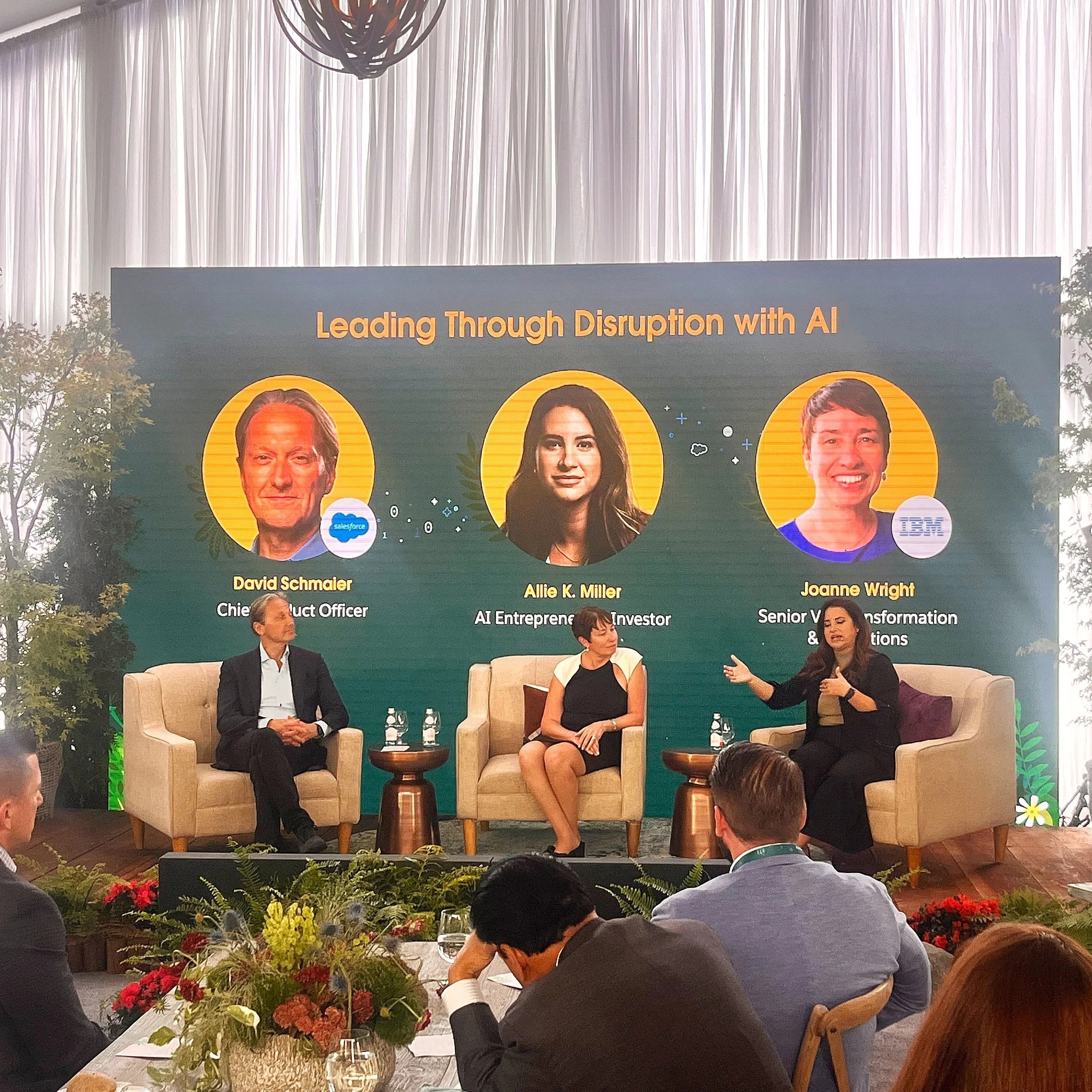
That range has made her a visible interpreter of the field. Her public channels have drawn a large following, and TIME recognized her in 2025. Recognition can flatten a person into a credential. Miller’s teaching is more concrete than that. She often begins with a task someone already has and asks what might be built around it. She has predicted a move toward personal software: bring a problem to AI, and it may code a specific solution in front of you.
The classroom keeps changing
In 2026, Miller made a workshop specifically for Gen X women. The idea began with an Instagram story; she said the response was the strongest she had received. Before designing the session, she interviewed women about their work and what they wanted from AI. The resulting workshop focused on everyday tasks, prompts, automation and examples of people building small applications. It is an instructive detail. The speaker with a global audience still began by asking prospective students what they needed.
Miller has stated a much larger ambition: she wants one billion people to experience AI as a source of agency. A billion is an abstract number, almost too large to picture. The workshop gives it a human scale. So does a student trying a first prompt, a founder turning a prototype into a company, or a manager admitting that a familiar process may need rewriting. Each is a different version of the first step.
There are famous names around her work: Reid Hoffman, Melinda French Gates’s Pivotal Ventures and Arianna Huffington’s advisory circle appear in accounts of her professional connections. There are also the less famous people in her classes and online replies. Miller’s career makes sense only with both in view. She has operated close to the organizations shaping AI and spent much of her public work lowering the threshold for everyone else to try it.
The empty apartment is a tempting metaphor, but it was also an actual room that needed furnishing. Miller filled it with people before she had filled it with furniture. That small decision sits alongside the bigger ones: the Wharton initiative, the multimodal team, the AWS business, Open Machine. She has a taste for the moment when a space is still undefined. Her answer is rarely to wait until someone else supplies a floor plan.