The awkward thing about a cheap cloud server is that it remembers your promise. You bought a discount because you expected to need the machine for years. Then your engineers changed the architecture. The work moved; the obligation stayed. A bargain can be remarkably sentimental.
For Brave, the privacy-focused browser company, the problem was both money and time. Its engineers were doing cloud-cost work themselves, then trying competing tools. According to North’s customer account, a proof of concept persuaded them to switch. Brave now reports a 52% compute effective savings rate, full savings utilization and ten fewer hours of FinOps tasks each week. Those are customer-story figures, not a promise about anybody else’s bill.
- North combines cloud-spend analysis with tools that act on it.
- Flexbot puts commitments on North’s books; Autobot buys them on yours.
- Fees depend on the plan and the savings method. Ownership still matters.
The discount has a memory
North, founded in 2023 by Matt Biringer and Yassine Açoine, works in FinOps: the practical business of getting finance and engineering to agree about cloud spending. Biringer came from twelve years in datacenter technology, including Pure Storage, CDI and SHI. His public biography places North’s beginnings in his garage. There is something pleasing about a cloud-finance company beginning somewhere with an actual floor.

Its customers include engineering, DevOps and finance teams at Brave, SumUp and hotel-software company Stayntouch. Their shared difficulty is change. A reservation priced for yesterday’s infrastructure can become tomorrow’s unused discount. Manual cleanup consumes engineering attention; spreadsheets and fragmented billing views make it difficult to decide what to buy next.
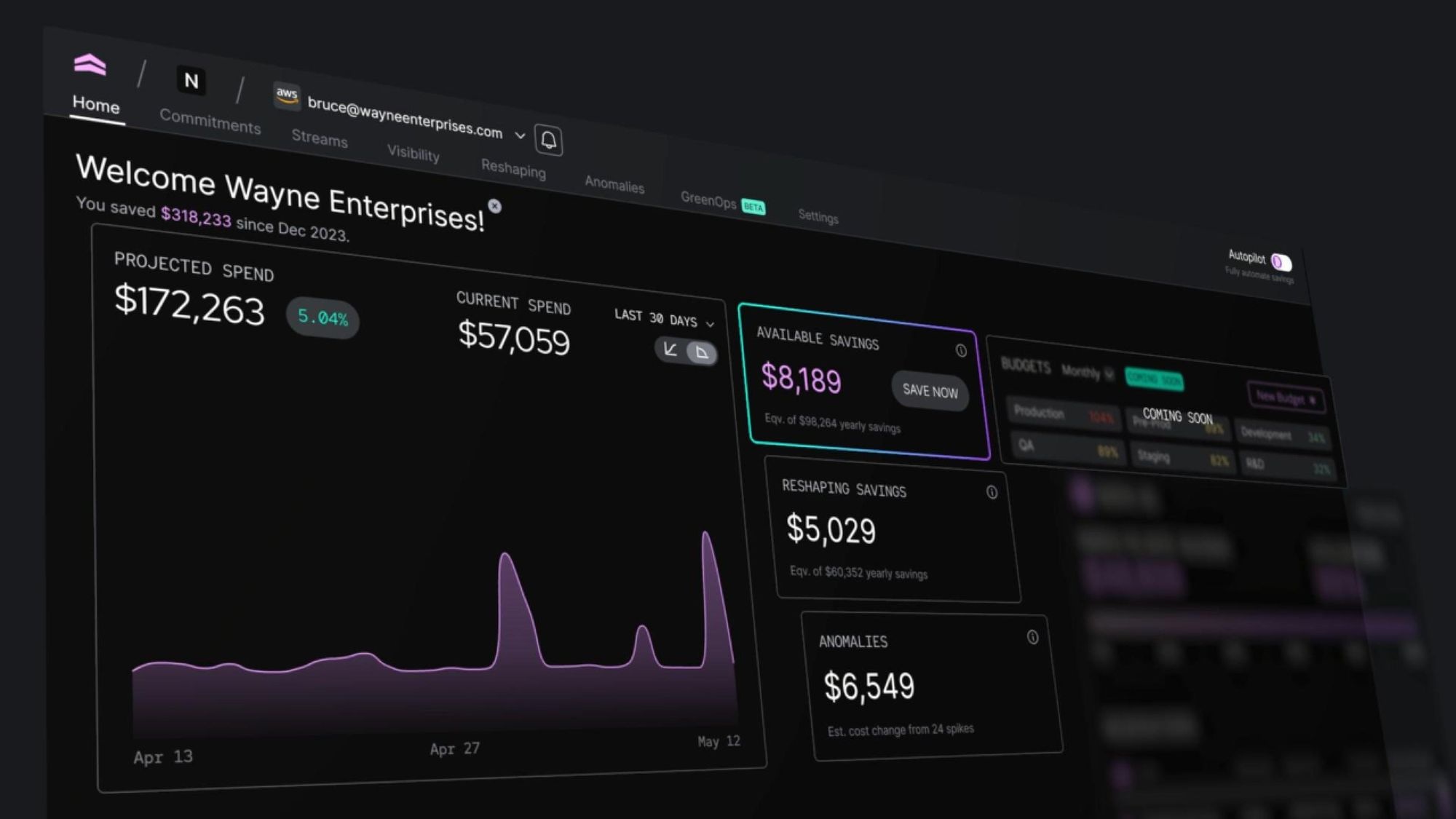
SumUp makes the tension concrete. While modernizing infrastructure, the payments company wanted savings without tying itself to the systems it was replacing. North’s case study reports more than $900,000 saved and less than an hour of monthly oversight. The savings period is unspecified. The useful detail is the workflow: accounts connected, optimization delegated to the SRE team, leadership freed from repeatedly judging reservations.
Someone still signs the contract
North’s Coverage product offers two arrangements. With Flexbot, North holds commitments through North-owned member accounts. Customers receive discounted coverage that can adjust as usage changes. The long-term purchasing obligation has a different owner. North says commitments can typically be retrieved within seven days on average; flexibility should be read alongside those mechanics and the agreement.
With Autobot, the customer owns the commitments. North models usage daily and buys in monthly increments, rather than making one large purchase against a distant forecast. Customers select their appetite for savings and flexibility, preview simulations and can require purchase approvals. The method is called commitment laddering: overlapping terms create rolling renewal windows.
Managed commitments.
Fee on savings achieved.
Automated purchasing.
Fee on commitments automated.
The distinction becomes decisive when usage falls. Autobot pauses future purchases and lets renewals lapse. It does not shrink an obligation already purchased. Teams can combine both systems, but a clever purchasing schedule cannot make an existing contract disappear. That is where the enthusiastic demo needs a sober question.
The invoice needs a translator
Discounts answer one question: what rate should we pay? North also addresses who should pay and whether the resource should exist. Coststreams groups expenses through rules, without requiring a finished tagging project. Teams can allocate costs to services, environments or business units and put budgets around them. July 2026 additions introduced bulk actions, redistribution of committed savings and margins for reseller workflows.
Rightsize examines usage and recommends changes with performance headroom in mind. Brave’s account describes recommendations informed by memory, historical consumption and traffic, plus controls for CPU and memory thresholds. Suggestions can travel into Slack or Jira. A cheaper rate and a smaller resource are different interventions; engineers still need to judge what their application can tolerate.
“It used to be a meeting. Now it’s a yes or no. That’s a win.”
Yossi Maslaton / Stayntouch customer story
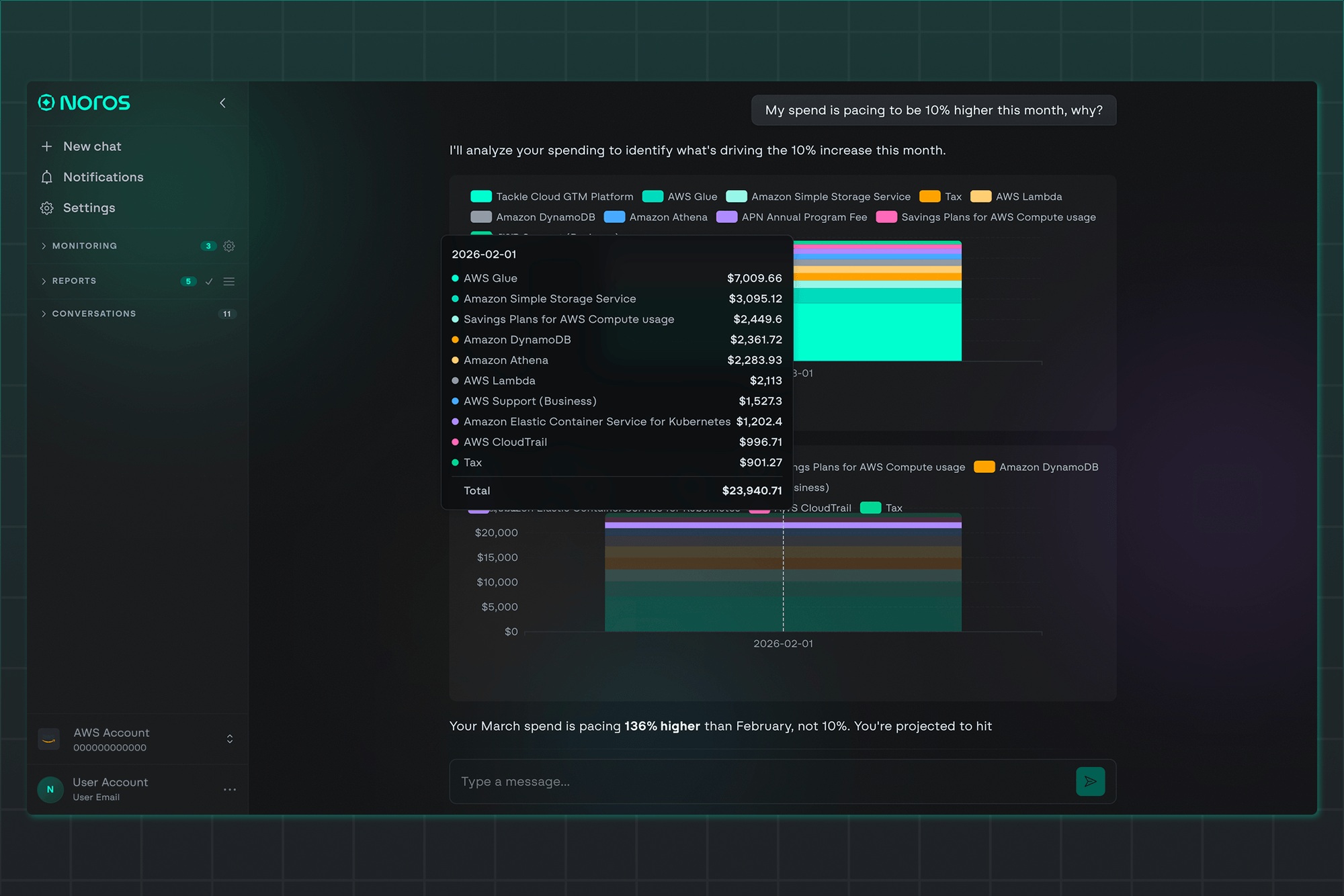
Noros, launched as a cloud-finance companion in April 2026, supplies another entrance to the same data: ordinary-language questions about spending, forecasts and anomalies. Its attraction is organizational. Finance can ask what changed without first translating the question into infrastructure vocabulary. GreenOps adds carbon tracking, giving teams an environmental view alongside costs. Neither an AI answer nor a carbon estimate excuses checking the underlying assumptions.
A bargain with a denominator
North charges for the platform and separately for its commitment services. At publication, Startup costs $199 a month for teams spending up to $75,000 monthly on cloud. Autobot charges 3.5% of commitments automated; Flexbot takes 25% of savings achieved. Premier costs $1,399 monthly, with respective fees of 1.5% and 20%. Free visibility is available. Premier Plus has custom pricing and a one-year term.
Hypothetical monthly savings minus the 25% Flexbot fee and platform fee. Simplified illustration; excludes taxes and other charges.
That arithmetic explains who should look closely: teams with meaningful discountable spending and enough operational complexity to value the time saved. Someone already buying efficiently may have less incremental benefit. A small bill may struggle to justify a paid tier. North competes with native cloud tools and platforms such as Vantage and CloudZero. Its combination of managed commitment ownership and customer-owned automation deserves comparison against the actual workload, rather than a headline savings percentage.
The bill has left the basement
A $5 million Series A, announced in June 2025 and led by Companyon Ventures, financed expansion. North v3 arrived in August 2026, adding Azure and native integrations for OpenAI, Anthropic and Snowflake. It also introduced early-beta TokenFlow and beta generative dashboards. The bill now includes model calls and data platforms as well as servers.
The habit readers can copy is modest: measure usage separately from rates, assign costs to owners, and decide who carries commitment risk before buying a discount. Stayntouch measures cloud cost per hotel room served. That is a better management question than whether the invoice looks smaller. North’s wager is that answering it should consume less of the week.