An Olympic broadcast has an awkward relationship with time. A shop can ask you to refresh a page. A recording can buffer. A finish line offers no such courtesy. When the runners arrive, the pictures must arrive too. At Paris 2024, Alibaba Cloud and Olympic Broadcasting Services put that unforgiving problem on rented computing infrastructure. It is a useful place to begin understanding a company whose products usually disappear behind somebody else’s screen.
- It rents computing, storage, databases and AI services.
- Its experience connects Chinese commerce with international workloads.
- The buying decision turns on geography, total cost and recovery design.
A shopping problem becomes a computing business
Alibaba Cloud began in 2009, inside a company already occupied with getting people to buy things online. Founder Wang Jian led work on Apsara, a distributed computing system. By August 2013, the project had reached a 5,000-server cluster milestone. The engineering problem was to make many ordinary machines behave like a dependable pool of computing power. Once that pool existed, other organizations could rent access to it.
The family resemblance to Amazon Web Services is obvious. Commerce generates demanding infrastructure problems; solving them creates something other businesses need. Alibaba’s particular starting point was China’s online economy. Its international business subsequently chose Singapore as its overseas headquarters in 2015. For a retailer entering China or an application expanding across Southeast Asia, that history provides a reason to investigate the service.
Consider Shiseido. The cosmetics company describes using Alibaba Cloud for its China digital strategy, including servers, load balancing and web application protection. There is no glamorous new consumer gadget here. The value is in keeping a retailer’s digital operations available and protected in a market where it wants to grow. Customers buy the conditions under which their own products can work.
Rent the machine, keep the problem
The catalogue divides a business’s work into rentable pieces. Elastic Compute Service supplies virtual servers. Object Storage Service holds files and data. PolarDB handles relational databases. Security and networking products protect applications and route traffic. A developer can assemble these components into a website, a transaction system or a data pipeline without first buying a roomful of hardware.
AI adds another layer. Qwen is Alibaba’s language and multimodal model family; its first open-weight releases appeared in August 2023. Model Studio provides managed model access and development tools. Downloadable weights let developers inspect and run particular models themselves, subject to their licenses. Managed services offer a different bargain: pay someone else to operate the machinery.
This is the commercial logic behind openness. A model can be available to download while the computing needed to serve it remains a billable service. Alibaba can attract developers through Qwen and compete for their production workloads afterward. Adoption alone does not guarantee revenue, but it puts the company near a decision developers eventually have to make: who will run this thing?
The price of staying in the race
For customers, the price is a collection of meters. Alibaba offers pay-as-you-go billing, subscriptions and commitment plans. Compute, storage and traffic can each contribute. A cheap server quote tells you little about a busy application’s complete bill. The sensible comparison includes data movement, support, migration work and the people needed to operate the system.
For Alibaba, the costs have a different number of zeros. In July 2015, its parent announced an additional $1 billion investment in the cloud business. In February 2025, Alibaba committed at least RMB380 billion, then approximately $53 billion, to cloud and AI infrastructure over three years. That was a spending commitment across cloud and AI, rather than a completed expenditure or an outside funding round.
“Customers first, employees second, shareholders third”
Alibaba Group’s published values
The ownership story also changed. In November 2023, Alibaba abandoned plans for a full cloud spin-off, citing uncertainty created by expanded U.S. restrictions on advanced computing chips. Infrastructure supply had altered the calculation. By August 2026, Alibaba was reporting $7.1 billion in quarterly AI Cloud and Compute Services segment revenue, up 45% year over year. Those figures describe the group segment, including more than its international business.
The cloud still needs cold water
Then there is the less photogenic side of infrastructure. On December 18, 2022, temperatures rose inside Alibaba Cloud’s Hong Kong Zone C data center. Cooling failed. Standby chillers could not rescue the system because they shared the affected water circulation. Servers went offline; recovery stretched through the day. Alibaba’s subsequent incident review committed to infrastructure checks, better monitoring and more effective failover.
The lesson travels well beyond one provider. Redundancy depends on independence. Eight chillers sharing a vulnerable system can leave you with one large point of failure. For a customer, the practical response is to examine common dependencies and test recovery across availability zones. A cloud contract does not perform that architectural work for you.
Separate equipment can still share one failure.
Start with the workload
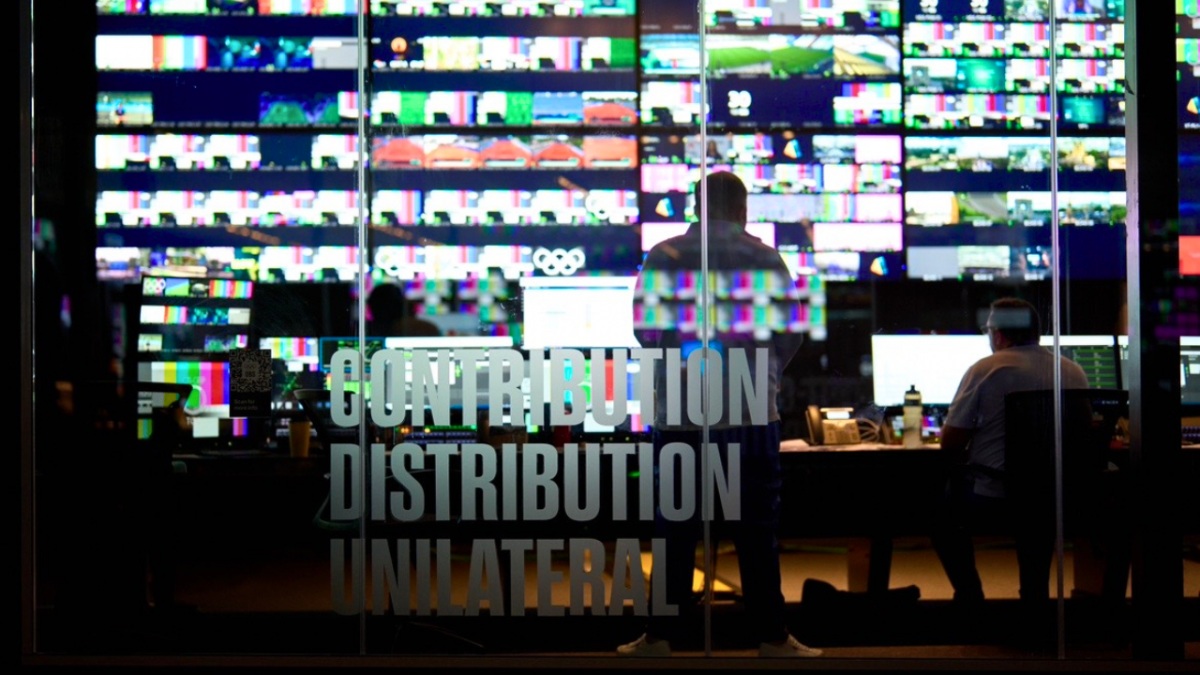
Paris offers the constructive counterpart. OBS Live Cloud served 54 broadcasters in 2024 and became the main method of remote distribution. The attraction was practical: transmitting content through the cloud reduced reliance on dedicated transmission arrangements and equipment preparation. The work changed location, and broadcasters gained another way to receive it.
A smaller company can copy the discipline without copying the Olympics. Choose one workload, measure its traffic, test latency where customers actually sit and model the full bill. Compare Alibaba Cloud with AWS, Azure, Google Cloud and relevant regional providers. Existing software dependencies or unavailable local services may settle the choice. In September 2026, Alibaba announced additional regions, but a planned location cannot host today’s application. The useful cloud is the one that can do your work, in the right place, when the crowd arrives.