In March 2017, Vultr announced a cloud server that cost $2.50 a month. It had 512 megabytes of memory and enough storage to try an idea before committing to something bigger. In September 2026, HPE announced a $1.2 billion hardware order from the same company. Between those two price tags sits the interesting question about Vultr: how does a business built around making infrastructure approachable learn to make bets that large?
- Rent the building blocks: servers, GPUs, storage and managed services.
- Start with a workload, then choose the hardware and location.
- Watch the economics: a free control plane still needs paid machines.
A small server is an invitation
David Aninowsky founded Vultr in 2014. He had worked in managed infrastructure since 1996, including as an early employee at Datapipe. His new company addressed a familiar developer problem: getting a machine should not become a project before the actual project begins. Vultr’s mission centered on simpler cloud deployment, with infrastructure available near the people who would use it.
The underlying transaction remains straightforward. A customer rents computing resources rather than buying a server and arranging its power, networking and maintenance. A developer can host a website, test software or run a database. An enterprise can provision dedicated hardware. An AI team can rent GPUs for training models or serving predictions. Vultr supplies the infrastructure; the customer supplies the application and its purpose.

That puts Vultr between several familiar choices. AWS, Microsoft Azure and Google Cloud offer broad service ecosystems. DigitalOcean, Akamai Cloud and OVHcloud compete for developers and infrastructure buyers. GPU specialists such as CoreWeave compete for accelerated workloads. Vultr’s pitch combines conventional cloud resources with AI infrastructure, so a customer can consider both within one provider.
The free part has a meter beside it
Consider Kubernetes, the software used to coordinate applications running in containers. In May 2022, Vultr made its managed Kubernetes service generally available. Its control plane, the machinery coordinating the cluster, carried no separate management fee. Customers still paid for worker nodes, storage, load balancers and network usage. It removed one line from the bill while leaving the physical economics intact.
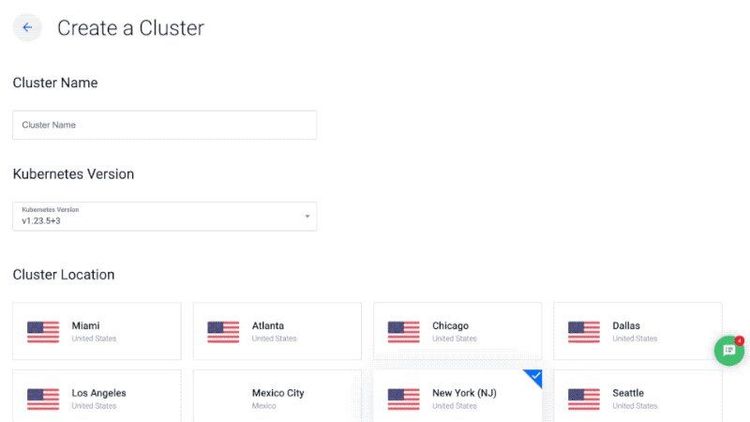
The rest of the catalog follows the same building-block logic. Virtual machines provide shared or dedicated CPU resources. Bare Metal provides a physical server for one tenant. Block, object and file storage serve different data needs. Managed databases reduce some administrative work. APIs, a command-line tool and a Terraform provider let teams describe and repeat deployments instead of clicking through every setup.
VKE pricing principle: free management does not mean free capacity.
For a buyer, the useful comparison is the complete operating bill. Vultr publishes hourly and monthly resource rates; location and extras can change the total. Backups, data transfer and software licenses deserve attention alongside CPU and memory. A cheaper machine may be an expensive migration if an application depends heavily on another provider’s proprietary services. The sensible first purchase is a small, measurable experiment.
Predictability is a product, too
Vultr’s published BBT.live case study describes a connectivity business struggling with fluctuating cloud costs while expanding internationally. The response combined geographic reach, clearer pricing and infrastructure deployed through code. That example suggests a useful interpretation of Vultr’s appeal: the customer wanted a repeatable way to enter another market without turning every deployment into a fresh negotiation with the bill.
Clarifai provides another example. Vultr’s case study describes distributed AI inference using managed Kubernetes and autoscaling, and reports savings exceeding 50% against hyperscalers. That is a customer-specific vendor report, not a universal discount. Model size, utilization, hardware and traffic all affect the outcome. Readers can copy the evaluation method: choose a representative workload, measure performance and compare the full cost of delivering the same result.
Then the machines got expensive
Vultr operated without outside equity for more than a decade. In December 2024, it announced growth financing led by LuminArx Capital Management and AMD Ventures. Transaction counsel put the investment at $333 million and the valuation at $3.5 billion. The stated purpose was expansion of AI infrastructure and cloud computing. The financing marks a visible change in how Vultr funded growth; it does not tell us anyone’s private deliberations.
Different measures, different obligations. Do not add them together.
In June 2025 came an announced $329 million financing package. Its composition matters: a $255 million syndicated facility included a $35 million uncommitted accordion, alongside $74 million in lease financing. The headline therefore should not be read as cash already spent. By September 2026, HPE’s announcement of the Helios order showed the scale of Vultr’s hardware ambitions. An order still differs from installed, customer-ready capacity.
AMD is both an investor and a technology partner, but Vultr also offers NVIDIA infrastructure. HPE announced NVIDIA-based deployment plans in June 2026. The practical advantage is choice, provided the customer’s software runs well on the selected hardware. In October, Vultr announced Chennai as its 34th cloud region, with an initial 20-megawatt AMD supercluster planned and further expansion scheduled for 2027.
The contract is part of the interface
One earlier episode complicates the simplicity pitch. In March 2024, customers objected to broad content-rights language in Vultr’s terms. Vultr said it concerned public community material rather than private hosted content, and removed the disputed sentence. The observable failure was clarity: customers read a contract differently from the company’s stated intent. Their objections prompted an actual wording change.
“Our customers own 100% of their content.”
Vultr’s public clarification / March 29, 2024
Today, simplicity extends to inspecting infrastructure. An October 2026 MCP Server preview lets compatible AI clients query account resources and billing through a hosted, read-only connection. It cannot create machines or spend money. That boundary is telling. Vultr’s opportunity is to make complicated infrastructure easier to operate while preserving the customer’s control. Whether renting a modest server or a GPU cluster, the useful promise is understandable machinery.