The first useful object in Alex Kevork's marketing career was not a brand brief. It was plywood. Near the end of college, he took a production job at a music festival and spent two days carrying sheets of it around a field. Then he noticed the electrical crew. How, exactly, did a temporary city of stages, lights and speakers come alive in the middle of nowhere? He asked. The answer changed his working life. Soon he was running heavy cable and learning mobile generators, part of the invisible system that lets everybody else enjoy the show.
Kevork joined the electrical company full time and worked on major festivals, live events, television and film along the East Coast. Winter downtime widened the apprenticeship. His department handled the building, which meant engines, carpentry, central air, welding and plumbing. The list has the comic excess of a hardware-store receipt, but it offers a clean introduction to the executive he would become. He likes knowing what is behind the wall. He prefers the real mechanism to the decorative panel covering it.
Today he is the chief marketing officer of Magnit Global, a company that manages the similarly hidden machinery of contingent work. Magnit combines services and technology for sourcing, paying, classifying and understanding workers who sit outside a conventional permanent payroll. Kevork leads its corporate and product marketing. The nouns have changed. The instinct has not: trace the connections, understand the load and make a complicated system perform for people.
The route was a circuit, not a ladder
- Live events and electrical work
- Boston-area handyman
- Software and digital marketing
- Product and global marketing
- CMO at Magnit Global
The month that opened a door
After the events business, Kevork worked for himself doing light carpentry and handyman jobs around Boston. One family in Andover hired him for more than a month. The homeowner worked at a software company; over the course of the job, the two got to know each other. Kevork was ready to use the entertainment-marketing education he had pursued at the University of Massachusetts Amherst and try corporate life. The homeowner knew of a contract opening on a marketing team. It was entry level and lightly paid. It was also a doorway.
There is a temptation to tidy such a story after the fact, turning a lucky conversation into destiny. Kevork does not. In his telling, it is a meandering route involving curiosity, appetite and the ordinary social chemistry of doing competent work in somebody's house. He took the contract, entered technology, and in 2006 began collecting the vocabulary of a young digital-marketing field. Demand generation was still commonly called lead generation. Product marketing kept appearing in his roles until he realized it was the combination he wanted: product and marketing, joined at the seam.
A useful accident. One month of handyman work led to one conversation, which led to a software-marketing contract. The career hinge was small enough to miss while it happened.
A translator who checks the wiring
Product marketing suits people who enjoy standing between tribes. The product team knows what the thing can do. Engineers know what it took to make it work. Sales knows the objections arriving in real time. Executives have targets, customers have problems, and everybody uses a slightly different dialect. Kevork describes the role as mediator and diplomat. He urges marketers to join product sprints and learn the language of engineering rather than waiting politely for a finished list of features.
He has an unusually concrete test for storytelling. A strong marketer does not simply describe functions. The job is to help a buyer picture a better working life with the technology. That requires research and creativity, but it also requires humility. The same pitch will not work for every audience. “You need to know your audience as well as you know your tech,” he has said. The line is simple. Living up to it means resisting the seduction of knowing only one's own product.
You need to know your audience as well as you know your tech.Alex Kevork on product marketing
His career became a long exercise in that translation. Early software roles at Kalido, Imaginatik and Engageware gave him experience in digital and product marketing. At Crowdly, where he led marketing, the subject was customer advocacy and word of mouth. At audience-intelligence company Affinio, he worked with technology built to find interest-based groups inside large bodies of data. At Monster, he eventually led global marketing across product, consumer and B2B audiences. Each move added another room to the house and another group whose language he needed to learn.
Listen beneath the request
Kevork's most revealing piece of sales-enablement advice begins with a familiar sentence: “I need a case study.” Many marketing teams hear an assignment. He hears a symptom. Perhaps the customer needs evidence of return on investment. Perhaps training left the salesperson unable to explain the offer. Perhaps the right material exists but lives in a folder no one can find. A case study may help, but fulfilling the literal request can leave the actual problem untouched.
The alternative is close listening followed by pattern recognition. Find out what the salesperson is trying to accomplish, then build a resource that helps close that particular gap. Track whether people use it. Make it easy to find, including when the salesperson is offline. The advice is almost aggressively unglamorous. Gold bullion hidden in a maze is still inaccessible. Marketing operations, in this view, is the courtesy of putting the useful thing where a busy colleague can reach it.
The same realism governs his launch advice. Poke holes in the plan, even on the final night. Check pricing. Check the competitive picture. Check whether sales understands the product. Invite enough people to expose blind spots, then lead through the conflicting opinions. Collaboration does not dissolve ownership. The person running the launch should be prepared to own both the wins and the failures. A stage electrician would recognize the mood: the audience may see spectacle; backstage, somebody is checking each connection.
Before the launch lights come on
- Challenge the plan
- Train the sales team
- Check pricing
- Map competitors
- Own the outcome
Marketing the world of work
Kevork's return to the employment business came in 2018, when he rejoined Monster and took responsibility for product-marketing strategy and the employer side of its marketplace. His title at the time was so long that he mocked it himself. The remit was clearer: help candidates find fitting jobs, help employers find fitting candidates, and guide teams marketing products to both groups. Over the next seven years, his responsibilities expanded across integrated marketing, product, consumer and B2B work.
In 2025 he moved to Magnit. The scale is different from a job board but the human question is adjacent. Modern companies rely on sprawling networks of contractors, staffing partners, service providers and project workers. Magnit says its platform and services touch more than 900,000 contingent workers, 14,000 staffing partners and 600 clients across more than 130 countries. Its menu includes managed services, vendor-management software, direct sourcing, employer-of-record services, pay intelligence and strategic advice. Acronyms gather quickly. Kevork's assignment is to give them consequence.
That work places corporate storytelling beside product storytelling. One establishes why the company matters; the other explains how a particular system changes a customer's day. Magnit's description of Kevork's role emphasizes brand, value proposition and customer-centered narrative. It also emphasizes collaborative teams and measurable impact. His older interviews make those phrases feel less varnished. He has spent years arguing that product marketers must understand internal colleagues as carefully as external buyers.
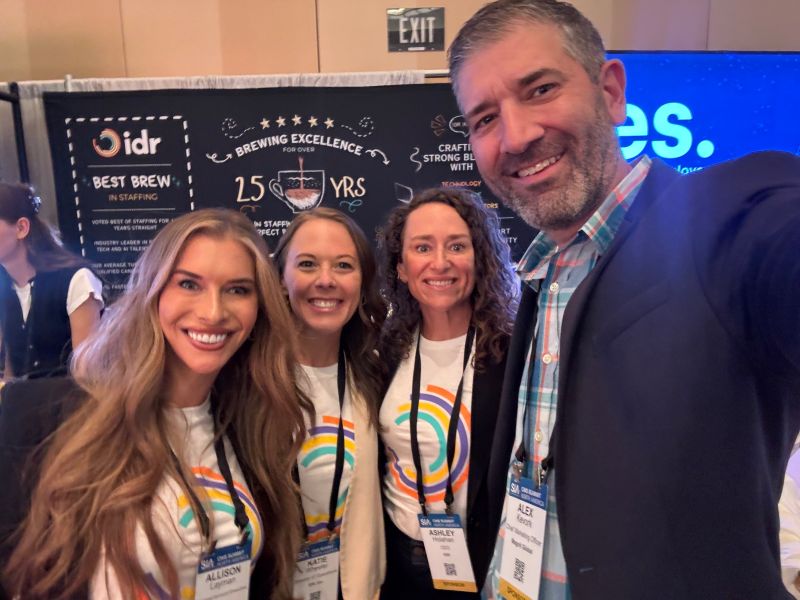
At the 2025 CWS Summit, shortly after joining Magnit, he shared his enthusiasm for meeting partners and pointed attendees toward a session with Cox Communications and Toyota Motor North America. Its subject was turning contingent-workforce data into boardroom impact. That title captures the bridge he now occupies. Data must travel upward without losing its meaning; workforce systems must become decisions executives can understand. The marketer is responsible for the journey.
The leader leaves room
Kevork speaks about management with more verbs than doctrines: listen, rehearse, learn, empower. He advises people to practice important presentations and to acquire enough visual and coding skill to collaborate intelligently when designers or developers are involved. He also treats management as a craft that remains unfinished. People will surprise you because personalities differ. A manager needs enough confidence to guide the work and enough openness to receive criticism without turning it into a personal siege.
Former colleagues have publicly described him as kind, considered, creative and supportive of autonomy. His own preferred lesson came from an earlier manager: “care less about who gets credit.” Kevork readily acknowledged that ego makes the idea difficult to practice. Its appeal is practical rather than saintly. Teams accomplish more when contribution matters more than possession. The philosophy also fits a career that began backstage, where the best electrical work is noticed mainly when it fails.
Outside the office, the details resist the polished executive biography. He is a musician, a former theater kid and a self-professed dad-joker. His volunteer record includes Habitat for Humanity, Big Brothers Big Sisters and a long association with an Armenian church organization, including a trip to Armenia to build homes. He has also served as a youth-hockey assistant coach. These are not proof of a brand. They are simply the other jobs, formal and informal, by which a life acquires texture.
The neat version of Kevork's career would begin with a marketing degree and proceed through increasingly senior marketing titles. The true version has better timing. A field needs power. A curious young worker asks how it arrives. A house needs repair. Its owner happens to know about an opening. A technical career grows because the new marketer wants to understand not only the message but also the machine. By the time the title reaches chief marketing officer, the old lessons remain visible: carry what needs carrying, check the connections, listen before choosing the tool, and let the show belong to the people in front of the stage.