A civil engineer who watched MIT classmates get paid $300,000 in Silicon Valley while their peers back home earned a tenth of that for identical work. He built the machine that closes the gap.
MIT's computer science building, circa 2015. A Google recruiter is handing out $300,000 offers to the room. Everyone in the room is doing the same coursework, solving the same problem sets. But some of those students will go back to their home countries and find that identical skills are priced at $30,000. Same brain. Different passport.
Alex Bouaziz, then a civil engineering master's student, watched that gap from the other side. Born in Paris on April 29, 1993, raised between the arrondissements and Tel Aviv's startup scene, he had spent his early life moving between worlds where value and compensation were priced wildly differently. The observation stuck.
It turned into a company in 2019, when Bouaziz and MIT classmate Shuo Wang started Deel. The pitch was boringly precise: paying international contractors is a disaster. Bank transfers take weeks. Tax forms require legal expertise. Compliance rules differ by country. Nobody had made it seamless. Bouaziz and Wang decided to.
Their first version ran on PayPal and TransferWise. It was unglamorous infrastructure for a problem that nobody found exciting enough to solve. Four years later, Deel was processing $22 billion in global payroll annually and valued at $17.3 billion.
Bouaziz got into Technion - Israel Institute of Technology for civil engineering, then MIT for his master's. He accepted a PhD offer from Imperial College London and turned it down at 23 to pursue entrepreneurship. That decision, mundane on paper, required a very specific kind of confidence - the willingness to exit a system already tilted in your favor.
Before Deel, there was Lifeslice, a collaborative video app, and Sarona Ventures, an early-stage investment fund co-founded around 2016. Neither became a household name, but both sharpened a sensibility: Bouaziz learned what friction looked like from the inside of a company trying to pay international workers.
His father Philippe Bouaziz had founded Prodware, a software company, in 1989 - so the DNA was already there. When Deel scaled, Philippe joined as Chairman and CFO. Family businesses usually involve awkward holiday dinners. This one generated a $17 billion valuation.
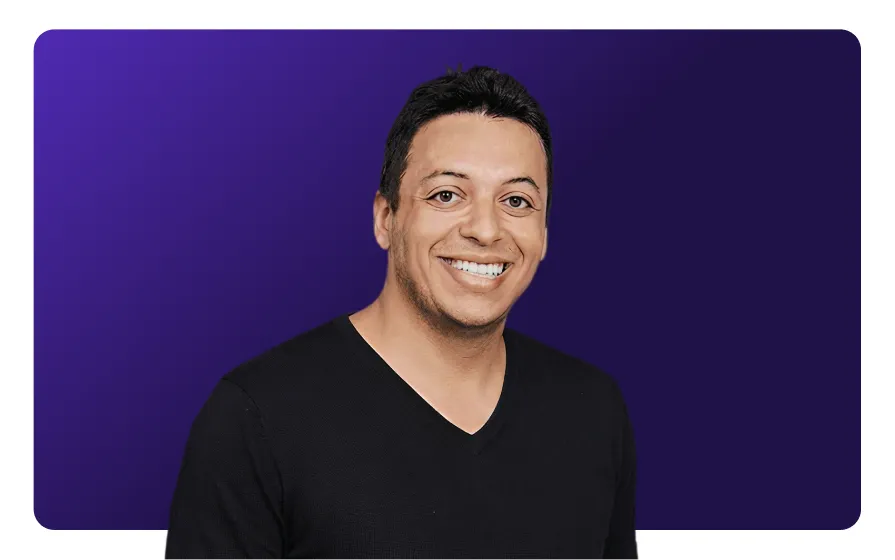
"Based on who you are, what you can do, you should have the best opportunities. Not being born in the right country should not be the reason why you don't get to work for the best companies in the world."Alex Bouaziz — Co-founder & CEO, Deel
Deel's first 100 customers came from the Y Combinator community. Bouaziz and Wang did what early-stage founders are supposed to do: talked to everyone, iterated fast, asked what was broken. The answer was always the same - hiring and paying people in other countries is legal torture with currency conversion on top.
By 2021, Deel hit unicorn status at $1.25 billion. In the same year, Bouaziz appeared on Forbes' 30 Under 30 Finance list. He was 28. It would have been easy to declare victory, do a press tour, and hand the operational reins to a seasoned executive. Bouaziz did none of that.
When advisors told him to replace his entire original leadership team - a standard piece of venture-stage advice that essentially says your founding crew aren't good enough to run the thing you built - he ignored it. He kept the original team. That bet compounded. The "original crew" became the leadership of an 8,400-person organization.
The acquisition strategy is worth examining on its own terms. Thirteen deals, all integrated into a single codebase. This is not how most acqui-hires work. Most companies buy a startup, let it run independently for 18 months, try to merge the tech stacks in year two, and produce a legacy spaghetti system by year three. Bouaziz decided early that every acquisition would speak the same technical language. It made integration slower initially and dramatically faster in practice.
Notable buys: Zavvy (performance management), Assemble (compensation analytics), PayGroup (Asia-Pacific payroll operations). Not flashy names. Functional infrastructure that widened Deel's coverage by geography and product surface area.
Deel operates remotely across 100+ countries. Bouaziz didn't build a remote company to prove a point. He built it because the talent he needed was distributed. The side effect: every challenge Deel's own team faces with global payroll, compliance, and onboarding is a live product-testing environment. When something breaks in your own HR stack, you fix it faster if you're also your own customer.
"You can build a $10B+ company fully remotely," he told a reporter. He has the receipts. Monthly EBITDA ran at $15-17 million while the company was still growing at venture-speed multiples - a combination that most investors stopped believing was possible somewhere around 2022.
Every venture-stage advisor told Bouaziz to replace his founding leadership team. Standard advice. He ignored all of it. The crew he kept ran an 8,400-person company to a $17.3 billion valuation. The advisors who told him to fire everyone were correct by every playbook except his.
"You can build a $10B+ company fully remotely."
"My default mindset is we trust people by default. When you trust people in a remote work environment, you can't really be thinking 'are my teammates working?'"
"If you really, really care about your job, you'll always have a leg up on everybody else."
"It's my job as a leader to surround myself with the best people. If you have to carry your whole team because you're the best person in your department, then you're never going to make it."
"If you can stay quite hands-on and decide when to go in and when not to go in, rather than listen to people who will tell you to just step back, you will have significantly better outcomes."
"You can know whether or not someone is a good fit within five to seven minutes."
"If you're growing really fast, everybody's willing to roll up their sleeves and work hard to make things happen."Alex Bouaziz
Born Paris. Schooled Tel Aviv and MIT. Accepted London. Lives Israel. Built a company in San Francisco that operates everywhere.
His father Philippe founded Prodware IT in 1989 and eventually joined Deel as Chairman and CFO. One of the stranger outcomes of keeping your founding instincts intact.
Claims he can tell if a candidate is a good fit within five to seven minutes. His hiring track record at Deel suggests he might not be exaggerating.
Civil engineer by training. His MIT thesis had nothing to do with HR or payments. The pivot is so complete it barely qualifies as a pivot.
One of very few venture-backed unicorn founders to maintain profitability for 3+ years while scaling — a combination most of the industry stopped believing was possible after 2022.
Active angel investor: Kalshi, ClickHouse, Ramp, Sorare, Isembard. He bets on infrastructure and markets-adjacent software. Not coincidentally, everything Deel eventually has to integrate with.
Runs ~10K Instagram followers despite leading an $17B company. Posts occasionally from @alexbouaziz. Keeps the personal footprint intentionally small.
Every Deel acquisition runs on one codebase. 13 companies acquired. Zero fragmented tech stacks. This discipline is rare and incredibly difficult to maintain past acquisition number three.