The airplane was doing its job. The paperwork was making itself indispensable. Over dinner, a friend told Alek Vernitsky about the less agreeable side of owning a private jet: paper records, the occasional spreadsheet, and telephone calls to clear up expenses or retrieve an invoice. Freedom of movement came with a surprisingly stationary administrative life. Somewhere between the aircraft and its owner, information kept getting stuck.
Vernitsky would describe that conversation as an aha moment
. He had already helped build one travel technology company, GetGoing. Now a different kind of traveler had presented a problem. The owner could afford the aircraft, but getting a useful account of its operations and finances remained an undertaking. The machinery in the sky was easier to admire than the machinery on the ground.
In 2017, Vernitsky and his GetGoing co-founder Alek Strygin started Portside. By March 2026, Vernitsky was handing its chief executive role to Brandon Holden while remaining a strategic advisor and board member. His new brief kept him close to demanding customers. For a founder whose second company began with a complaint, that was a recognizable place to end up.
First, let the computer choose the holiday
Before the aircraft owners came the vacationers. Vernitsky co-founded GetGoing with Strygin and Ilya Gluhovsky; the company joined Y Combinator’s Summer 2012 batch. Its early consumer proposition was wonderfully awkward to explain at a party. Choose two destinations you would be happy to visit, commit to the purchase, and let the service book one. A holiday with a small plot twist.
The arrangement had an economic purpose. A person who absolutely had to reach a particular city was a different customer from somebody willing to holiday in either of two places. Flexibility helped distinguish the leisure buyer. GetGoing’s pitch was that airlines could offer those travelers lower fares while preserving their ability to charge other passengers more. The computer’s choice made that flexibility tangible.
Vernitsky’s defense of the idea rested on an observation about how people plan. People naturally think in terms of options
, he said. Someone considering a vacation might already be weighing several places. The service turned a familiar indecision into part of the transaction. You were still choosing a trip, though you surrendered the last little piece of the decision.
By July 2013, GetGoing was adding conventional hotel booking and refining smaller details of the experience. Historical weather appeared alongside search results. Social features distinguished between friends who lived in a destination and friends who had visited it. That distinction sounds modest until you are planning dinner in an unfamiliar city. A person who lives there is a rather more useful prospect than a photograph of somebody’s previous holiday.
A customer becomes the destination
The consumer idea did not become GetGoing’s lasting business. In 2014, the company shifted toward corporate travel technology and left its consumer businesses behind. BCD Travel became an early customer. The technology moved from serving someone choosing a holiday to serving people arranging business travel under company policies, with negotiated rates and administrative requirements attached.
A July 2014 agreement put GetGoing behind BCD’s hotel booking platform, then called RoomSource. BCD wanted agents and travelers to find inventory from several sources through a more approachable interface. Its rationale paired product development with a consumer-style experience. The challenge was to preserve the convenience people expected online while fitting the rules of managed corporate travel.
In January 2016, BCD announced an agreement to purchase GetGoing’s assets. Its product and engineering management team in San Francisco and engineering team in Ukraine joined the buyer. Vernitsky became senior vice president of product strategy; Strygin became senior vice president of product management. The technology was powering TripSource Hotels. A business launched around a memorable booking experiment had found a place inside an established travel operation.
Vernitsky’s wider résumé includes management roles at Gap, consulting at Bain & Company in New York, and a stint as senior vice president and head of product at thredUP. He holds a Berkeley B.A. in Legal Studies and a Harvard MBA. Those jobs span clothing, consulting and travel. Read together, they suggest a career spent around the practical work of organizing products and businesses, rather than a straight apprenticeship in aviation.
- 2012GetGoing joins Y Combinator
- 2016BCD announces GetGoing asset deal
- 2017Portside begins
- 2026Advisor and board member
The question behind the invoice
Portside’s opening came through relationships the founders already had. Former GetGoing investors who owned aircraft approached Vernitsky and Strygin because they wanted a deeper understanding of their aircraft’s financial and operational information. They believed the planes were well managed. Their frustration concerned the difficulty of examining the data themselves and doing more sophisticated analysis with it.
That is a specific sort of dissatisfaction. An owner can trust a manager and still want to inspect the numbers. Portside’s early reporting platform brought financial and operational information together and made communication with flight departments and management companies more timely. Connecting existing systems formed part of the work. Different participants needed access to the same underlying activity without assembling the picture afresh.
One early feature, the mission analyser, shows what Vernitsky meant by useful visibility. It took an owner’s flight history and modeled the cost of performing those missions with a different aircraft. Expense data from other Portside users informed the calculations. The question became concrete: what would these actual journeys cost in another model? An invoice could help inform the next aircraft decision.
In discussing ownership, Vernitsky compared an aircraft to a complex business asset. The team and systems around it mattered. That framing helps explain his interest in the less photogenic parts of aviation. A jet’s appeal is evident from the apron. Its financial administration requires a different sort of attention, and the cost of neglecting it is unlikely to appear in the brochure.
“The list of things that people have asked us to include is endless.”
Alek Vernitsky, 2018
The requests keep arriving
The first audience was private owners. The possible audience widened as the product developed: aircraft managers and commercial operators had related needs. In 2018, customer requests included more sophisticated tax reporting and additional maintenance information. Vernitsky’s description of the list as endless captures an ordinary product problem with unusual assets attached. Give people a clearer view, and they begin asking what else they might see.
Portside’s subsequent expansion brought specialist teams and products into the company. Scheduling and dispatch systems included PFM, BART and Avianis. Takeflite added expertise serving commercial and cargo airlines. Baldwin brought safety management software, while LeaseWorks extended the business into aircraft leasing. The original problem had concerned information reaching an owner. The portfolio now touched far more of the work surrounding an aircraft.
In February 2023, Portside announced a $50 million Series B led by Insight Partners, with existing investors including I2BF Global Ventures participating. The announced spending priorities included product development, sales, customer success and further acquisitions. At the time, the company described a platform serving more than 700 business aircraft operators across over 30 countries. The business had moved well beyond its first reporting tool.
Led by Insight Partners, with participation from existing investors including I2BF Global Ventures.
Horizon, launched in February 2025, addressed larger flight departments, fractional ownership programs and jet card operators. Its configurable cloud platform combined operational, financial and compliance information, with reporting and connections to other systems. These were buyers whose complexity had become a product requirement. Vernitsky’s explanation of the launch emphasized the need for flexibility, automation and timely information.
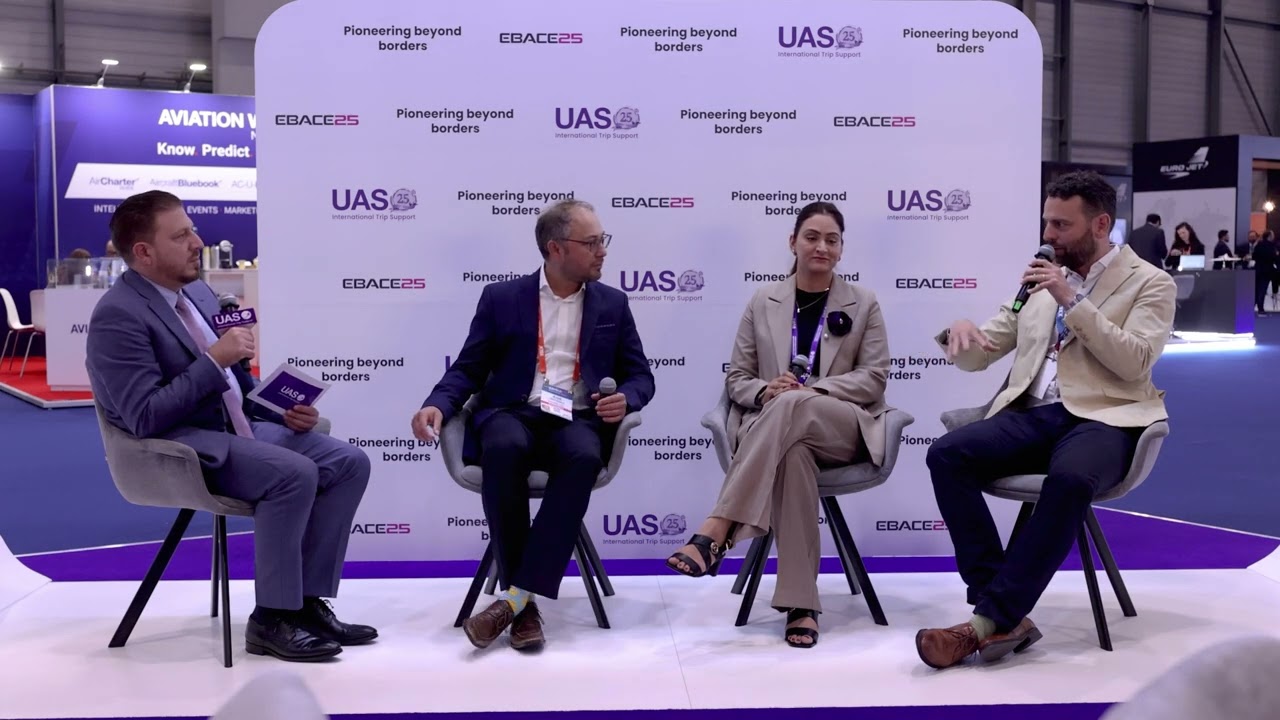
At EBACE 2025, he joined a UAS discussion with FL3XX co-founder Stefan Oberender and UAS product manager Shumaila Batool. Integration was a central subject. For this founder, it was familiar territory: booking information had needed to cross boundaries at GetGoing, and aircraft information had needed to cross them at Portside. The systems changed; the handoffs continued to demand attention.
A different seat at the same table
The March 2026 announcement paired further Vista Equity Partners investment with Holden’s appointment as CEO. Vista had first invested in 2024; Insight remained a significant shareholder. Holden arrived with experience running enterprise software businesses, including Eptura. The stated priorities included connecting Portside’s platform more closely, developing AI capabilities and expanding its commercial reach.
Vernitsky called building Portside the privilege of my career
. In his own reflection on the transition, he thanked early customers including Airshare, Wing Aviation and Jet Aviation, alongside colleagues and investors. His account gave the operators an active role: they had trusted the company early and pressed it to improve. The thank-you list returned the story to the people bringing him problems.
In April, he described an advisory focus on larger customers needing several software solutions and complex implementations. He would remain on the board. The distinction matters in understanding the transition: responsibility for running the organization had changed hands, while his customer knowledge still had a defined use. His role now concentrated on some of the cases least likely to fit neatly into a standard demonstration.
By September 2026, Portside’s announced direction included investment in four core scheduling products and AI tools for operational tasks. Roger AI’s scheduling assistance was in beta. That is the company context around Vernitsky’s advisory work, rather than a promise that every new capability was already finished. His stated interests in customers and product vision sat inside a business still making decisions about how its pieces should connect.
The distance from GetGoing’s digital coin toss to Portside’s aircraft reporting is considerable. Yet both businesses asked people to reconsider how they obtained and used travel information. Vernitsky’s latest role keeps him near that question. The owner at the dinner table wanted an explanation of an expense. Years of software development later, the useful starting point is still somebody asking for a clearer answer.