The dating app had users. It also needed another idea. Before it was called Lolly, it was Skippit, a video dating product with early traction and a search for the next turn. Adventure Fund’s response was to join the work: help assemble the team, launch the product, and pursue its first funding round.
- Small startup checks, with a preference for familiar founders and industries.
- Incubation can include an interim product leadership role.
- A separate “meta fund” invests through other investment firms.
In its account of Lolly, the firm describes becoming interim chief product officer, leading product, design, and engineering toward a feature that could establish product-market fit. That is a revealing assignment for an investor. The immediate question concerns what people will use, and why they will return. Writing a check leaves that question unanswered.
01 / The investor in the product meeting
Adventure Fund operates across three activities: backing young companies, incubating ideas, and investing in other funds. The connecting thread is judgment about products and the people building them. Its website favors industries the team knows and products its members would want to use themselves, especially where design can make a difference.
The founders bring operating histories to that judgment. Marty Ringlein built the design business nclud and later the event platform nvite; his professional history records acquisitions by Twitter and Eventbrite. Co-founder and general partner Will Hubbard built ChemiSense, an air-quality technology company acquired by Kaiterra. Their experience spans making products, selling them, and negotiating an exit.
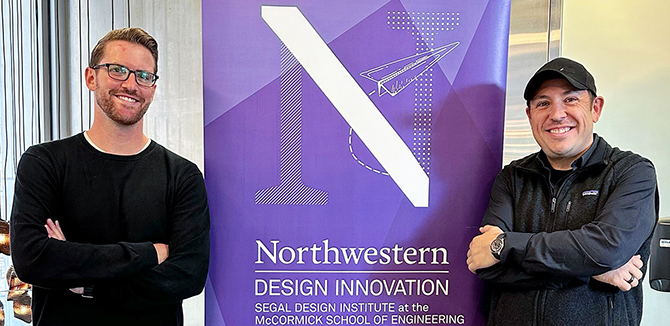
Both also teach product design and development at Northwestern. The classroom and the investment work share an interest in turning an idea into something a customer values.
“At our core, we’re entrepreneurs, and we take that with us in everything we do.”
MARTY RINGLEIN / NORTHWESTERN, FEB 2024
02 / Put a number on the check
For a founder considering an approach, the useful detail is the published ticket size. Adventure Fund typically invests $25,000 to $50,000 at pre-seed and $50,000 to $100,000 at seed. It rarely leads a round. It will sometimes write the first check, usually for someone already in its network.
Those amounts place it naturally alongside other investors. A startup seeking a larger round would need additional capital. The fit improves when a founder can identify a specific operating problem the team understands: product direction, a sales conversation, fundraising, or a potential acquisition. Its incubation offer explicitly includes help in those areas.
There are two constituencies here. Founders receive investment and support; limited partners supply the fund’s capital. An April 2024 interview described a $10 million vehicle with 150 LPs, including experienced technology operators and angel investors. Those are historical figures. The operator community was part of the proposition: people with experience inside businesses could bring more than their subscriptions.
For the founder, capital and operating help need separate conversations. A check has an amount; a product assignment needs an owner, a scope, and an end point. The useful comparison with an angel, accelerator, or another seed fund is which of those needs each can meet. A recognizable portfolio offers less guidance than a relevant example of work.
03 / The newlyweds had a different problem
Gather’s origin provides another view of the work. Co-founders Michael Dick and Evan Dudla were getting married or had recently married. Their observation was that younger couples could want more visibility into each other’s finances without necessarily wanting a joint bank account. That suggested a product built around communication and shared spending.
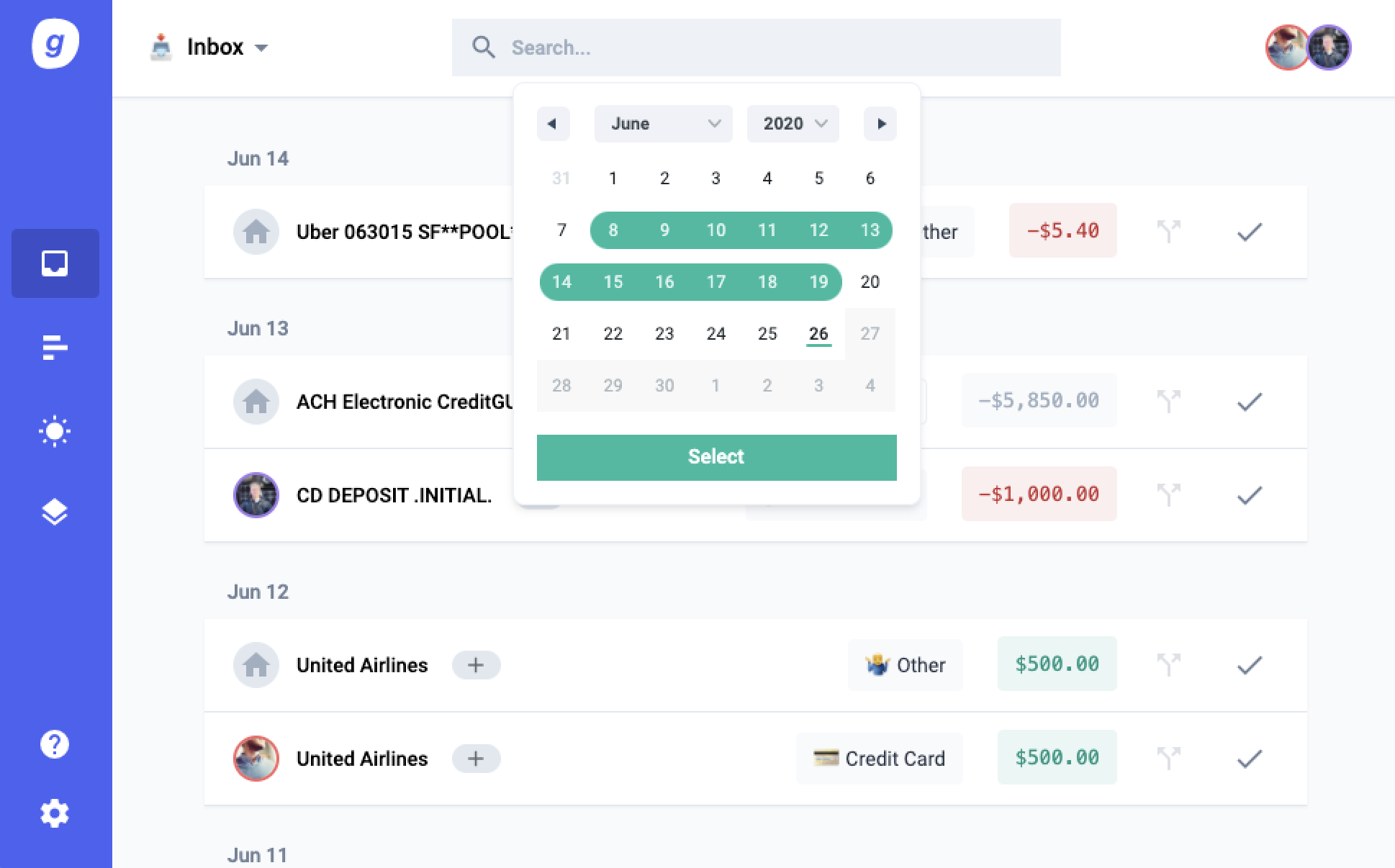
Adventure Fund says it joined Gather as interim chief product officer to help with product growth strategy and fundraising. The product offered shared budgeting, spending trends, and automation. It is an example of the distinction between identifying an audience and understanding its circumstances. “Couples” describes a market. Deciding how much financial life to combine describes a problem.
Lolly illustrates a different difficulty. Initial interest had not removed the need for a stronger product direction. Its case study frames the next job as finding a defining feature and proving fit. The practical lesson is to specify the uncertainty before hiring help or raising money. More distribution cannot, by itself, settle what the product ought to become.
The firm also builds internally. It says it assembled the executive team for niche, a platform connecting creators, teams, and sponsors, and guided its acquisition by OperaEvent in 2019. Across these examples, involvement ranges from supporting an existing founder to putting a company together. The operating assignment changes with the problem.
04 / Another route to the big names
Adventure Fund’s portfolio includes companies such as beehiiv, Liveblocks, Stripe, and SpaceX. Reading that list requires attention to the investment route. The firm says late-stage deal flow comes primarily through investments in other funds. Its growth page names Andreessen Horowitz, Founders Fund, Tiger Global, NextGen Venture Partners, and Singh Capital Partners among its relationships.
Direct investment
Adventure Fund → young company
Meta fund
Adventure Fund → other funds → companies
This “meta fund” broadens access beyond the companies a small team could source and support directly. It also means a portfolio name alone does not establish a direct investment or a hands-on relationship. The business combines equity investing, incubation, and fund commitments; each involves a different distance from the company doing the building.
The distinction also matters when evaluating results. Access to a company through another manager and responsibility for an incubated product are different achievements. A founder looking for product assistance should examine the operating cases; an LP examining the investment strategy should understand how the capital reaches each holding.
05 / Ask what happens on Monday
In January 2025, Ringlein announced Adventure Fund’s investment in Open Ledger, an embedded-accounting startup whose $3 million pre-seed round was led by Kindred Ventures and Blank Ventures. The announcement shows the early-stage work continuing alongside the firm’s broader portfolio.
For founders, the copyable idea is simple: shop for a defined contribution. Ask who will do the work, which milestone it serves, and what equity it costs. A team needing a large lead check or expertise outside the investor’s experience may find a better fit elsewhere. Adventure Fund’s case studies make the more interesting possibility concrete: an investor with a useful job to do.