The trouble at New Hope was a filing problem. Client documentation had landed under the wrong program. Rebuilding it would have reset signature dates that the behavioral health organization needed to preserve. Advanced Data Systems, its software partner, reports that its team moved the records by hand. For a company now selling artificial intelligence, this is a revealing demonstration: sometimes the valuable feature is a person who understands why a date cannot change.
- Clinical records, scheduling, radiology and billing, sold together or separately.
- A specialty focus, from imaging centers to addiction treatment.
- A continuity pitch: ADS says it has never discontinued a product.
- Outsourced billing generally priced at 3%-6% of collections.
01 A very small beginning
David Barzillai was an electrical engineer who came to the United States with his wife, Sara, in the early 1970s. His employer had radiology practices as customers. One wanted a patient-demographics database. He built it during nights and weekends. More practices asked. In 1977, that specific request became Advanced Data Systems.
Notice the starting point. A customer needed to organize information. The business grew around that job, then around the adjacent jobs: scheduling, billing, claims, clinical records. Its history includes an almost tactile detail. In 1979, billing data traveled on tapes physically delivered to Blue Cross Blue Shield of New York. The cloud was some distance away.
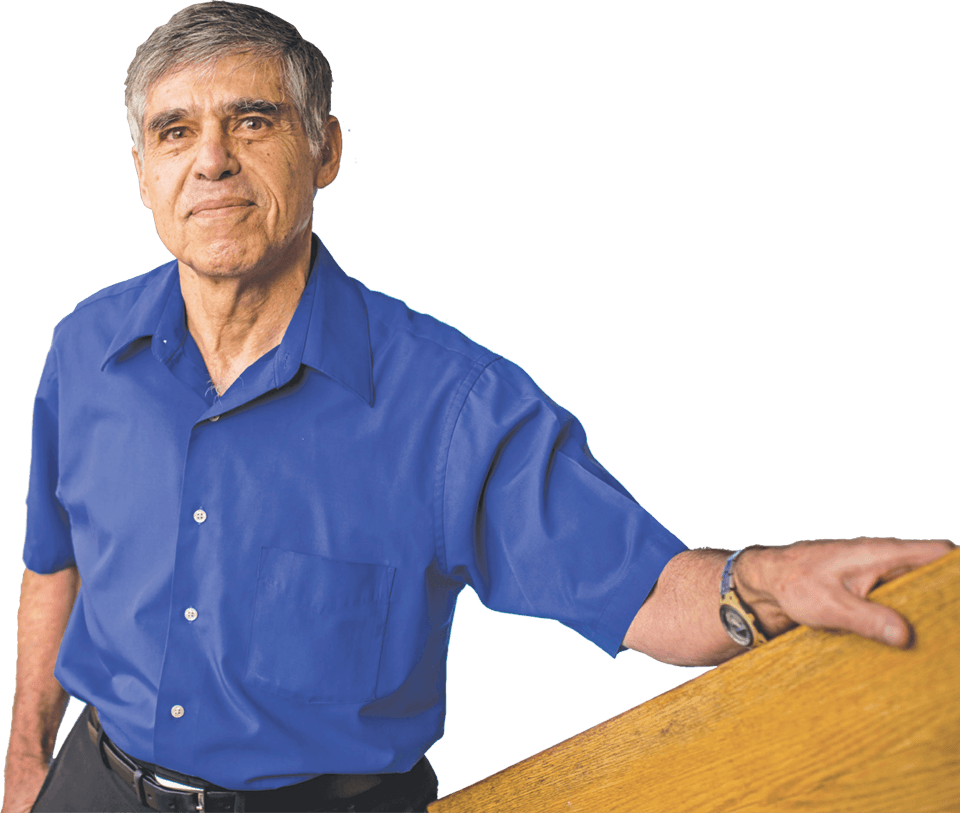
ADS now serves healthcare organizations nationwide, reporting tens of thousands of providers and system operators. It remains privately owned and describes itself as debt-free. The surprising promise is that it keeps supporting earlier product generations. An old system, in this telling, is a continuing obligation.
02 Follow the visit. Follow the money.
To understand the product family, follow a patient visit. Someone schedules the appointment, checks coverage, documents care, assigns codes, submits a claim and follows up when payment stalls. ADS sells software along that chain. A practice can also hire its billing operation to handle the financial work.
MedicsCloud EHR handles clinical records, documentation, prescribing and reporting. MedicsPremier covers practice management and finances. MedicsRIS addresses imaging-center scheduling, orders, reporting and billing, with connections to EHRs and picture archiving systems. MedicsRCM supplies outsourced billing services. The names are similar; the responsibilities are usefully distinct.

The suite can work together, but ADS also offers components separately. That matters to a practice with a satisfactory EHR and troublesome billing. Replacing one part can spare it a larger conversion project. Interfaces, data conversion, training and support sit beside the software in the commercial offering.
This places ADS among specialist healthcare technology vendors serving practices, groups, laboratories and treatment organizations. Buyers may also consider AdvancedMD, RXNT or athenaOne; behavioral health buyers have additional specialty options. The meaningful comparison is the work each system must perform, the interfaces required and the people responsible after launch.
03 The record has to travel
New Hope’s patients move between levels of care, across residential and outpatient services. The record must follow them. In its August 2026 account of the collaboration, ADS describes developers meeting clinicians and compliance staff to map which information could carry across records. Admissions, clinical teams, psychiatry and billing would work from the same client record.
The misplaced documentation exposed how much those details matter. A file could be in the system and still be in the wrong place. Preserving its signature dates required repair rather than recreation. This is a vendor-published account, but the problem is specific enough to explain what the relationship was buying.
“Continuity of people who know an account, over years, is the whole company.”
David Barzillai / August 2026
Another customer, Heiden Orthopedics, describes a different difficulty: assorted systems for billing, records, portals, analytics and scheduling. A professional acquaintance introduced ADSRCM. After a presentation and due diligence, the group chose it, converted data and consolidated routines. The attraction was fewer organizational seams between the jobs.
04 Price the work, then measure it
MedicsRCM publishes a general charge of 3%-6% of collections. At $1 million collected, that implies $30,000-$60,000 in fees, before considering the contract’s scope or changes in internal costs. Software purchases have their own configuration and deployment choices. A service percentage is a starting point for a budget.
Of collections.
$30k-$60k per $1m collected.
Illustrative arithmetic, not a quote.
Precision Diagnostics offers a useful measurement example. Its case study describes inconsistent claim edits, reactive denial work and aging receivables. ADSRCM introduced pre-submission checks, denial prevention and more structured appeals. The laboratory reports collecting over 8% more on the same charges. Those customer-supplied results describe one engagement, with its particular payer mix and billing infrastructure.
A practice can copy the discipline: inspect denials by cause, check claims before submission and compare collections against a stable baseline. Ask who owns each exception. ADS says its transition process tests claims for roughly five to seven days before full submission. That is a concrete implementation question for any vendor.
The distinction between software and service is worth keeping visible. A practice running MedicsPremier internally still needs people to work its billing queues. Hiring MedicsRCM changes who does that work. The dashboard may look reassuring in either arrangement; responsibility for following an unpaid claim is what makes the operational difference.
05 AI enters a very particular office
Interoperability is another part of that office work. In January 2023, ADS announced Cures Act certification for MedicsCloud EHR version 11.0, including a standardized API. Its EHR materials describe HL7 and FHIR compatibility. For a buyer, those standards create the basis for asking precise questions about which information can move between systems and how.
The newer tools follow the same operational map. MedicsScribeAI captures conversation and drafts documentation. AI Derive builds follow-up notes for provider review. A 2025 update connects ASAM assessment narratives to problem lists and treatment plans in behavioral health. Each targets a recognizable piece of work.
The New Hope collaboration makes that emphasis concrete: the relationship predates the latest AI tools. Developers first mapped the organization’s records and daily routines. Documentation assistance came into an existing workflow. That sequence is something another organization can copy when evaluating automation.
The fit still depends on the practice. ADS’s switching terms say older data, attachments and custom templates may require manual review or may not transfer fully. AI output needs clinical or billing review, and availability varies by configuration. Buyers should test their actual records and exceptions before committing. The enduring lesson from that first radiology database is wonderfully practical: understand the particular job before buying the machinery.