Imagine an advertiser looking at a neat report. A customer saw a display ad on Monday, searched for the brand on Thursday and booked on Friday. The report awards Thursday the entire sale. Monday gets a splendidly precise zero. It is a tidy answer to a question the advertiser never meant to ask. Adometry built a business in the space between that tidy answer and the messier truth.
- Click Forensics began in 2006 by auditing paid clicks for fraud.
- In 2011 it bought a display verification business called Adometry, took its name and widened its work.
- Its software verified ad events and divided conversion credit across channels.
- Google acquired Adometry in 2014 and introduced a rebuilt Attribution 360 in 2016.
This was enterprise software for advertisers and their agencies, not a tool for the person seeing the ad. It pulled together campaign events, checked whether impressions were worth counting and used data-driven attribution to show how search, display and other channels contributed to a conversion. The practical promise was a better budget meeting: fewer channels condemned by an accounting convention, and fewer expensive channels protected by one.
First, find the fake click
The company behind Adometry began as Click Forensics. Co-founder Tom Cuthbert's premise was admirably blunt: advertisers should get what they pay for. In pay-per-click advertising, that meant asking whether traffic was genuine before accepting the invoice. The company built tools to identify suspect clicks, gathered data from advertisers and worked with ad providers on reconciliation. It also helped bring click quality into industry discussions at a time when the platforms selling the clicks had strong reasons to say the problem was under control.
Cuthbert later recalled an early product called Click Tracy. Lawyers objected to the resemblance to Dick Tracy, and the name went. It is an apt small story about the company's larger one: names were negotiable; the measurement question was the durable asset. As display advertising expanded, the team followed the same instinct from questionable clicks to questionable impressions. Was the ad on screen? Was it shown where the buyer expected? Could the result be traced beyond the last action?
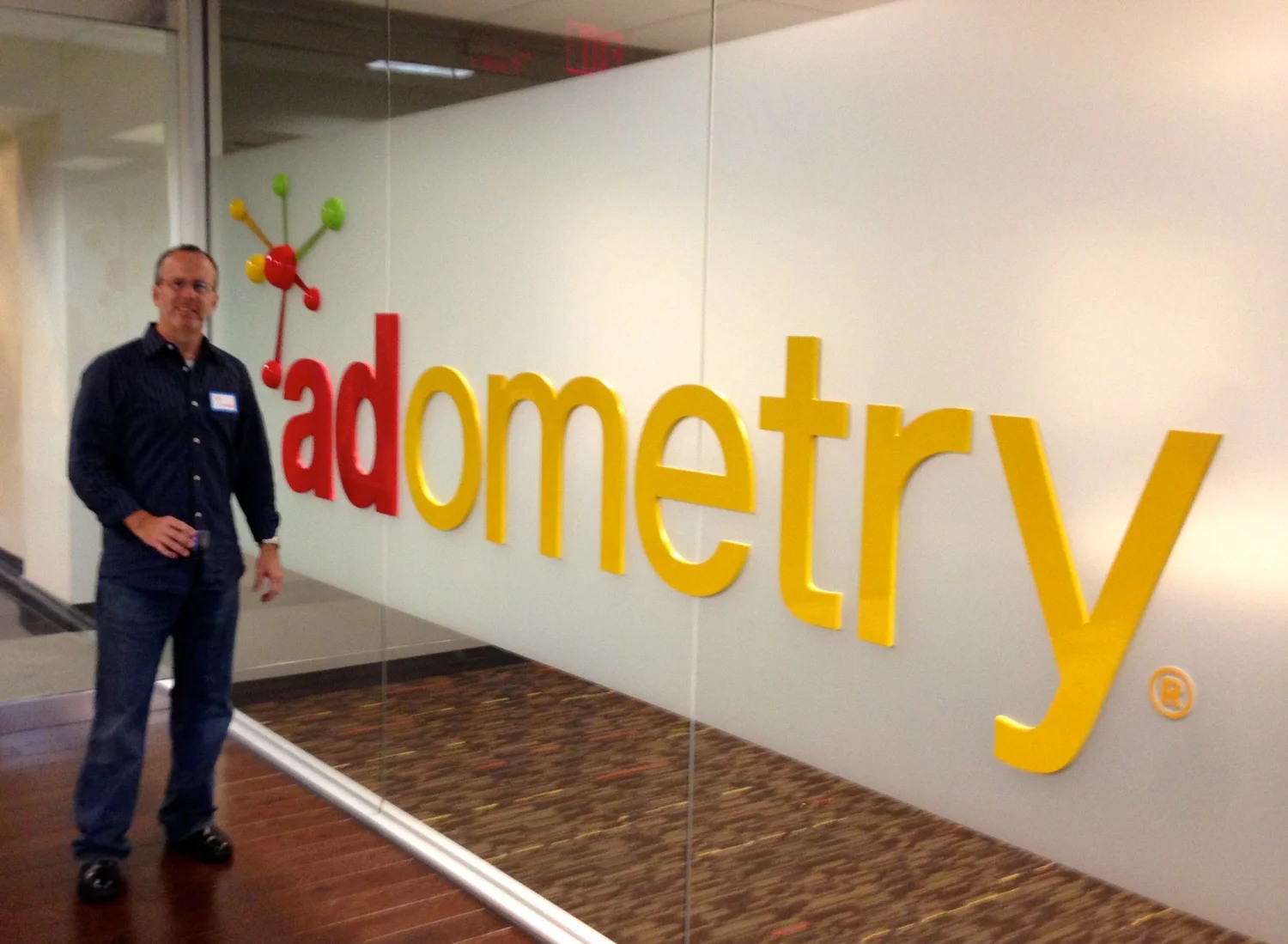
In 2011, Click Forensics bought a display ad verification company called Adometry and adopted its name. A simple rebrand would have been cosmetic. This one marked a wider brief: verify, measure and optimize campaigns across ad networks, publishers and media. Paul Pellman, who led the combined company, described it at the time as an expansion of product lines. The click fraud tools still mattered, but the customer's spending decisions now sat in a larger picture.
“We began with a mission to ensure advertisers ‘get what they pay for’.”Tom Cuthbert, on the founding premise
A zero with a price tag
The LasikPlus case shows why this mattered. The eye surgery chain wanted to move more budget from traditional to digital advertising, but its last-event model credited search with every conversion and display with none. On paper, display looked expendable. That was awkward for the marketers who believed it was introducing people to LasikPlus before they searched for it.
LasikPlus and its agency, Empower MediaMarketing, implemented Adometry's verification and tag-based attribution tools. The team combined organic search, paid search and display data, defined the conversions that mattered, and checked placement-level quality. The result was a different map of the same journey. More than half of display conversions involved paths crossing channels. Paid-search campaigns combined with display showed an 80% lift in conversion rate against paid search alone in the company's case study. The analysis also found that more than half of display ads on one network appeared below the fold or off screen.
These are findings from one advertiser's campaigns, not a universal law about display ads. Their force lies in the sequence. First verify that an impression was visible. Then connect the subsequent events. Then decide how to assign credit. Skip the first step and the attribution model may honor ads nobody saw. Skip the second and search wins by arriving last. The company's older verification expertise and newer attribution work made an unusually coherent pair.
One sale, two stories
Illustrative path, not measured campaign data. The model changes credit; it does not change the purchase.Software for the awkward budget meeting
Adometry Attribute was the flagship platform. It ingested events from multiple media sources and outside data providers, modeled how channels influenced outcomes, and turned those results into optimization recommendations. The broader Marketing Performance Management Suite also described marketing mix modeling across online and offline channels. Its clients were large brands and agencies capable of supplying enough campaign data to make such analysis useful. Public accounts named customers including LasikPlus, eBay, Facebook and Microsoft, while Adometry said in 2013 that it processed tens of billions of impressions and advertising transactions monthly.
The business model was familiar enterprise software: a SaaS platform paired with client services and research support. Public pricing was not disclosed. The cost visible in the record is the capital required to build and sell the system. Adometry announced an $8 million Series D in January 2013, led by Shasta Ventures with Austin Ventures and Sierra Ventures participating. It planned to spend the money on product development, hiring and expansion into new territories. The check bought capacity to analyze a flood of events; it did not settle the philosophical argument over what any one ad deserves.
Competitors such as Convertro, Visual IQ and C3 Metrics chased the same advertiser anxiety. Forrester placed Adometry among the leaders of its 2012 interactive attribution evaluation. What distinguished Adometry in this story was its route into the category. It had started by asking whether a billable event should be believed at all. Attribution was a second question built atop the first.
The buyer becomes the measurement company
Google acquired Adometry in May 2014. The price was not disclosed. On the same day, AOL announced its purchase of rival Convertro, a neat indication that attribution had become strategic infrastructure for companies selling advertising. For Google, Adometry promised a broader account of marketing impact than simple last-click reporting. For advertisers, the transaction raised an obvious concern: could a seller of media also supply the neutral scoreboard? Industry observers asked it immediately, and Forrester later flagged the question of unbiased insights even while placing Google among attribution leaders.
The initial message to Adometry clients was continuity. Two years later, Google introduced Attribution 360 in its Analytics 360 suite, calling it a product rebuilt from the ground up from Adometry. That phrase matters. The acquisition did not merely bolt a startup dashboard onto a giant dashboard. Google needed the idea and the expertise, then rebuilt the machinery for its own scale and ecosystem. It also changed the company’s independent fate: Adometry ceased to be a standalone brand.
2006 Click Forensics starts with paid-click quality.
2011 The company buys Adometry and takes its name.
2013 An $8 million financing backs Attribute's expansion.
2014 Google acquires the business.
2016 Google presents the rebuilt Attribution 360.
The portable lesson is smaller than a platform and more useful. When a channel's performance looks absurdly good or catastrophically bad, inspect the rule that awards credit and the quality of the events entering it. Compare paths, check whether ads were actually seen, and test budget changes against outcomes rather than treating a model's percentages as the outcome itself. This work asks for clean event data, enough conversions to see a pattern and a business with several channels that genuinely interact. In a tiny campaign with few recorded events, Adometry's elaborate machinery would have had little to work with.
Adometry's central question remains pleasantly rude. The last ad may collect the applause because it happened to be standing nearest the cash register. Who helped the customer get there?