Adam Miller set out to put education on the internet. His prospective customers had a longer shopping list. Online courses sounded useful, they told him, but most of their training still happened in classrooms. Could his software handle that, too? And while he was at it, could it help them work out which employees needed training, which might become executives, and what everyone knew that never made it into a course?
It was an inconveniently thorough response to a simple sales pitch. It also became the business. Miller and his colleagues kept returning from meetings with more requirements, then building them. They had approached large companies for advice, assuming those companies would never buy from a startup so small. Eventually, the advisers became customers. An education directory was becoming a system for managing people at work.
The pattern is a useful introduction to Miller. His career includes law, finance, a restaurant, an enterprise software company, nonprofit leadership and a run for mayor of Los Angeles. The job titles can make the itinerary look restless. Look at the work itself and a more consistent preoccupation appears: how to get an institution to do something useful for the person trying to use it.
A restaurant supplied the first exam
Born in New York and raised in New Jersey, Miller traced his interest in technology to having an early personal computer and outgrowing the computer classes available at school. His uncle and grandfather gave him examples of entrepreneurship closer to home. At the University of Pennsylvania, he combined European history with systems analysis at Wharton, graduating in 1991. The combination allowed for both the long view and the spreadsheet.
Then came UCLA Law and an education with a rather different timetable. Miller became a part owner of a restaurant near campus. Money he had meant to spend on a car went into the deal, along with his labor. He was 21. The arrangement meant attending classes while helping run a place where other students went to avoid thinking about classes.
His classmate Pat Walravens later recalled wondering where Miller had disappeared to, then spotting him outside the restaurant, working the velvet rope. Miller concluded that running a business required more business education and added an MBA. He finished UCLA’s joint degree program in 1994. The restaurant eventually closed. It was an early encounter with an awkward fact: accumulating credentials does not make partners, customers or operating costs behave.
Two book advances and a ticket out
Before the software company, Miller worked with attorney and writer Emily Card. They co-wrote Managing Your Inheritance and Business Capital for Women. He passed the New York bar and the CPA exam, then used a period with few commitments to travel. The trip lasted two years and took him across six continents. It gave his interest in education a much larger geographical frame.
He came back wanting to understand another kind of machinery. Investment banking offered a close look at raising money, acquisitions and public offerings. Miller spent two years in the job, through the summer of 1999. Colleagues helped fund his next move. He had been waiting for internet access to improve enough to support an education business; eventually he decided the company and the connections could develop together.
CyberU began operating in November 1999. Miller’s original plan connected buyers and sellers of education, reaching individuals as well as businesses. He started in New York and soon moved the company to Santa Monica, weighing cost and the life he wanted to live. The destination was deliberate. The timing was less obliging: the internet boom was approaching its collapse.
The classroom followed them online
The bursting bubble pushed CyberU toward large enterprises. Miller and co-founder Steven Seymour flew east to meet contacts in financial services, returned to Los Angeles and built the features those contacts requested. Two-week development cycles emerged from the rhythm of the journeys. Their modest assumption was that learning from large companies might help them sell to smaller ones. The large companies, however, wanted the resulting software themselves.
The requests expanded logically. If an employer was paying for training, it needed to know who should take it. That required assessing skills and performance. If it wanted to prepare future leaders, it needed to identify candidates. What later became familiar product categories arrived as practical questions from people trying to organize a workforce. The product grew through those questions rather than through a single finished blueprint.
By 2015, Miller was describing the original mission as distributing education rather than producing all the content himself. That distinction matters. A useful course still needs a route to the person who needs it, and employers need a way to keep track. Cornerstone occupied that space between material, organization and learner. The early change in customers reshaped the route while leaving the educational purpose recognizable.
Learning to sell the lesson
Growth did not arrive simply because the software worked. In 2005, Miller brought in help to improve the company’s sales habits. The business changed its name and began to accelerate. In 2007, with demand for software delivered as a service rising, it raised venture financing led by Bessemer with Bay Partners. Miller said the company had about 300,000 subscribers at that point, reaching roughly three million three years later.
Survival had involved uglier arithmetic. In his account of an early payroll crisis, Miller described borrowing $100,000 from a lender introduced through a friend, personally guaranteeing it at 100 percent interest. It is the sort of financing detail that tends to disappear from the attractive version of a startup history. Here it belongs beside the bell-ringing photograph. The later institution depended on getting through much smaller deadlines.
He also had to explain the delivery model itself. Some corporate buyers expected software to be sent to them; the service lived on the internet. “It was just ‘stuff over the internet,’” he recalled. The phrase catches an era when a familiar business category still required a demonstration and a patient explanation. Selling the product included teaching people what they were buying.
“It was just ‘stuff over the internet,’”Adam Miller, recalling early software sales
The bell was a milestone, not a finish line
Cornerstone went public in March 2011. Miller stayed in charge as it expanded internationally and grew beyond its original learning offering. Awards followed, including the Greater Los Angeles technology category of Ernst & Young’s Entrepreneur of the Year in 2011 and HR Tech World’s Unleash Award in 2017. Those honors describe recognition at particular moments. The longer task was continuing to run the organization after the celebrations.
That required changes in Miller himself. As Cornerstone grew, he described moving away from micromanagement toward coaching and trusting colleagues. “My mentors were the people I worked with,” he said. It is a useful admission from someone whose product helped other companies develop their employees. A founder can build a business around learning and still need to learn how to let someone else do the job.
In May 2020, Cornerstone announced that Phil Saunders would become CEO on June 15 and Miller would become board co-chair. The distinction is worth keeping straight: Miller had handed over the chief executive role before the company’s sale. Clearlake completed its acquisition in October 2021, taking Cornerstone private in a transaction valued at approximately $5.2 billion. That was the company’s transaction value, not a statement of Miller’s personal wealth.

An internship is access with an address
Miller’s public-service work overlapped with his business career. He chaired Team Rubicon from 2013 to 2020, helping an organization built around veterans’ skills develop its disaster-response operations. He also chaired the Cornerstone OnDemand Foundation, whose projects included DisasterReady and WorkforceReady. Education was being applied to people preparing for humanitarian work and entry into employment, beyond the usual corporate training department.
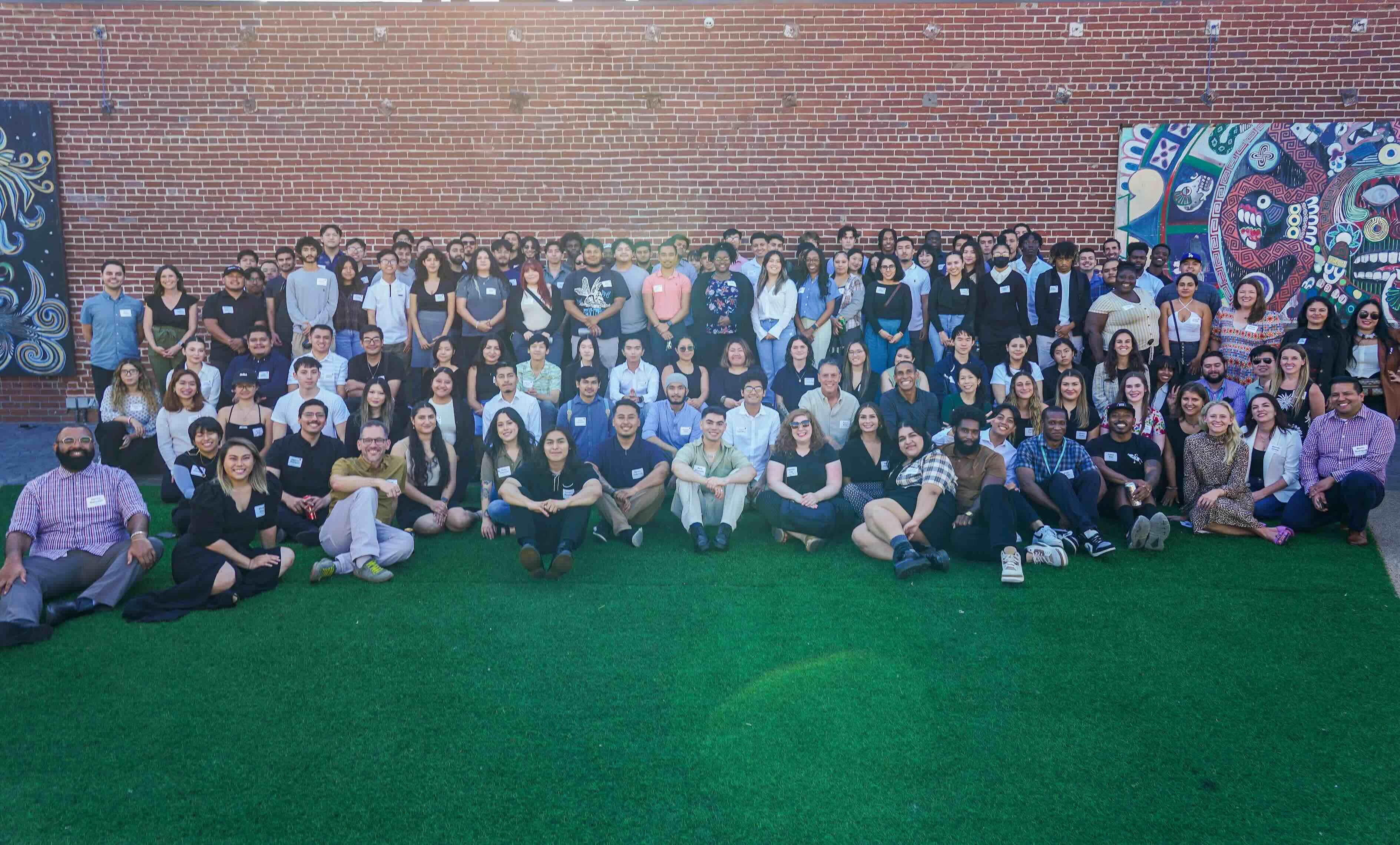
In Los Angeles, he founded LA-Tech.org and helped launch the 1,000 Interns Initiative, connecting students of color with the local technology sector. The idea brought the access question close to home. A city can contain technology companies and young people who would like to work in them without providing an easy route between the two. An internship makes that route tangible: a workplace, colleagues, an assignment, a first entry on a résumé.
He continued building and backing companies, too, including Instil, Groundswell, Profi and Clovers, alongside investing and advising through 1P Ventures. The mix moved him across nonprofit software, workplace giving, professional services and interviewing. Rather than treating the Cornerstone sale as a formal retirement ceremony, Miller distributed his attention among several organizations. His professional calendar became less easy to summarize on a business card.
Los Angeles sets a different test
Adam and his wife, Staci, established Better Angels to address homelessness in Los Angeles. Its approach spans prevention, services, shelter, housing and technology. That range reflects a practical difficulty: helping someone find a bed and helping someone keep a home are related tasks with different requirements. A single successful intervention cannot stand in for all the others.
Software remained part of the work. Better Angels developed tools for outreach and shelter information, applying Miller’s interest in coordination to organizations working across the city. The ambition was familiar from Cornerstone: useful information should reach the people who can act on it. The setting made the stakes more immediate, and the institutional relationships more complicated. A better database still needs people with time, authority and somewhere to send the person in front of them.
Miller took his executive experience into the 2026 Los Angeles mayoral race. His campaign emphasized operating competence and a city that functioned better for residents. In May he presented a “7×7” policy plan, including actions he argued could begin without City Council approval. The campaign was another attempt to turn an organizational record into permission to run a larger institution.
Voters did not give him that assignment. Miller did not advance from the June primary; Karen Bass and Nithya Raman reached the November runoff. The outcome puts a necessary limit on any smooth account of software success becoming civic authority. Customers can choose a vendor. Voters weigh a candidate against other candidates, competing priorities and their own experiences of a city. A business résumé can enter that conversation. It cannot settle it.
There are smaller details around the institutional work. Miller has coached AYSO soccer, calls himself a Rams fan and lists family bike rides along Los Angeles beaches among his pleasures. They suit someone who chose Southern California partly for the life available outside an office. The career has kept widening since the first company. The useful question now is where the habits that helped him build it can earn their keep again.