Consider the surgery schedule. It records a promise: a patient, a procedure, a slot in the day. A billing system records something different: work translated into a claim. Those two lists ought to agree. When they do not, a practice can perform the work and still miss the payment. That small administrative mismatch helps explain a company called abeo.
- The job: billing, coding, collections, and business support for anesthesia practices.
- The approach: specialty software paired with the people doing the billing.
- The turn: a 2020 merger, followed by the formation of Ventra Health in 2021.
A company hiding in the gap
abeo occupied the business side of anesthesia. Its customers included independent physician groups, hospital-employed anesthesia practices, and ambulatory surgery centers. The offering stretched from medical coding and transcription to collections, financial management, and consulting. A practice could need a billing platform, an outside billing operation, or help understanding how its business was performing.
The distinction matters. Sending a claim is an event. Managing revenue is a sequence of responsibilities. Someone must connect the clinical record to the bill, follow the account, and make the results intelligible to the practice. abeo sold expertise across that sequence. Its proposition was unusually specific: the people handling the money should understand the specialty that earned it.
cases supported annually
Those numbers describe an established service operation at a particular moment, before the Ventra combination. They are useful because they show the size of the repetitive task. Every additional case brings another record to process. Volume makes a missed connection between systems more consequential, while creating a reason to invest in tools that catch the mismatch.
Three companies before one name
The origin has the texture of an industry consolidation rather than a garage invention. In 2007, Summit HMR of Fort Worth, Professional Management Group of Salt Lake City, and MedSuite of Cape Coral combined to form ABEO. The letters stood for Anesthesia Business Enterprises Organization. Billing expertise and software arrived together, from three different states.
The next year, abeo acquired Pasadena Billing Associates. That business had begun in 1978, when Laurie Zeh and her husband, Dr. Dale Zeh, established a billing service for his medical practice. By the acquisition, it had become a California billing and practice management company. Dale Zeh Jr. continued as president of the new West Coast division.
There is an appealingly practical progression here: first, solve the paperwork for a physician; then, serve other practices; eventually, join a national organization. abeo’s growth depended on bringing existing knowledge together. The regional businesses supplied experience with real clients, while the combined company could share technology and operating methods.
The software had a day job
MedSuite was central to that arrangement. Its product description emphasized anesthesia-specific billing, integrated workflows, and reporting. The revealing detail was that abeo also used the software to code and bill for its own anesthesia clients. Selling the tool and running a billing service gave the company two encounters with the same problem.
One advertised capability was matching the surgery schedule against billing. Put plainly: check whether the work on one list appears on the other. For a practice manager, this is a more concrete demonstration request than a tour of an attractive dashboard. Show the missing case. Show who investigates it. Show whether it reaches a bill.
- 01Record the case
- 02Code the work
- 03Submit the claim
- 04Follow the payment
A simplified view of the revenue cycle. Each handoff needs an owner.
This also explains where the model fits. A general billing product supplies a broad set of tools. A specialist service must understand a narrower set of workflows in greater detail. abeo competed for that second kind of relationship, while its software could also serve practices and billing businesses doing the work themselves.
A pocket-sized lesson in friction
The smaller product, abeoCoder, makes the specialty visible. Its App Store description offers searches across procedure, anesthesia, and diagnosis codes, with a CPT/ASA crosswalk, relative value units, and case-time information. The interface looks like what it is: a working reference, organized around the things an anesthesia professional needs to look up.
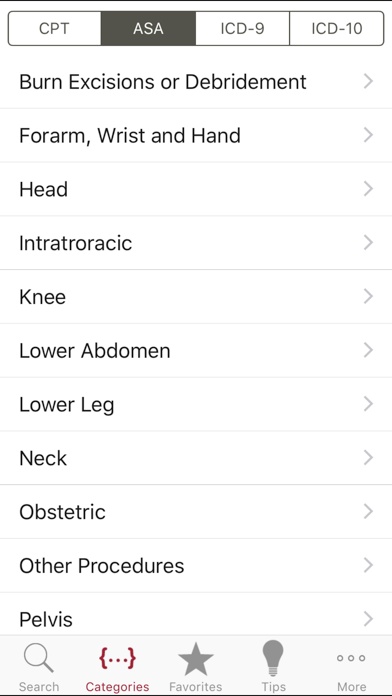
The U.S. listing describes a free download with an optional $79.99 annual CPT/ASA subscription. That is a price for this particular app feature, not a price for outsourcing a practice’s billing. Treating the two as interchangeable would confuse a reference tool with an operating service.
A February 2017 App Store reviewer described relying on saved codes, then objecting when code access required payment after technical trouble. It is one user’s account, not a verdict on the company. But it exposes a familiar product risk: once a utility becomes part of someone’s routine, a change in access can feel like a change in the terms of their working day.
The specialty gets a bigger home
In November 2020, abeo combined with emergency medicine billing specialist DuvaSawko, backed by Varsity Healthcare Partners. The deal was announced in December. abeo CEO Michael O’Boyle became chief executive of the combined business. Management’s explanation centered on sharing infrastructure and expanding what each organization could provide.
“greater scale, diversification, and enhanced sales, service and managerial infrastructure”Michael O’Boyle / December 2020
Gottlieb joined the platform in April 2021, adding further emergency and hospital medicine experience. On August 19, the three businesses announced Ventra Health. The strategic direction had widened: carry specialty knowledge into a company serving several hospital-based physician disciplines. Today, abeo’s old website leads to Ventra, whose client access page still carries Abeo360 and AbeoLink.
Start with the two lists
The useful lesson is modest enough to copy. Compare completed work with billed work. Give discrepancies an owner. Evaluate software beside the staff who will use it, and ask what happens after a claim leaves the screen. These are operating questions a practice can bring to any vendor, including a successor to abeo.
The approach depends on records that can be reconciled and people who resolve the exceptions. Outsourcing does not remove those requirements. Nor does anesthesia expertise establish a fit for every medical specialty. abeo’s story is interesting precisely because its original problem was narrow: make the business machinery understand the work happening in the operating room.