A groomsman who lives out of town presents a surprisingly awkward engineering problem. Someone has to measure him. Someone else has to trust the numbers. Eventually, a suit arrives, and the wedding offers little patience for experimental sleeve lengths. Country Vogue Boutique had precisely this difficulty. Its remote customers brought measurements from other businesses, and the garments too often needed replacing.
- Two guided smartphone photos become a body model and 80+ measurements.
- Businesses buy the software for apparel production, remote fitting and health or fitness tracking.
- The useful lesson: sell a measurement where a bad measurement already costs money.
3DLOOK’s Mobile Tailor supplied a different starting point: send a scanning link, collect the photos, receive standardized measurements. In a company-published case study, Country Vogue reported its replacement rate falling from 30% to 5%. A wedding suit is a modest place to look for an insight about artificial intelligence. It is also a very good place to find a customer.
The invention was ready. The buyer wasn’t.
3DLOOK began in 2016. Co-founder Vadim Rogovskiy later described funding its first year with his savings while the team tested whether a smartphone camera could measure a human body. The capability emerged. Demand proved less obliging: early entertainment and fitness applications failed to catch on, according to the founders’ interview with Just Entrepreneurs. Market research drew the company toward apparel, followed by another three years of work on product-market fit.
That distinction explains much of what followed. An avatar is interesting. A costly remake is urgent. The founding team brought together Rogovskiy, Ivan Makeev, Alex Arapov and Whitney Cathcart. Today, the leadership page names Katerina Galich as CEO, with Makeev leading science and Cathcart commercial work. Rogovskiy is a board member.

Recognition and capital arrived along the way: the LVMH Innovation Award in 2019, then a $6.5 million Series A in March 2021 led by Almaz Capital. A $3.5 million extension brought that round to $10 million by year-end. The company had found a fashion audience, but the underlying asset remained body data.
When the tape measure has to travel
Mobile Tailor launched in June 2020, when contactless measurement had an obvious appeal. The product lets a business send a link or embed a widget, then view measurements in a dashboard and export results. It can operate without a backend integration. For a small tailor, that matters: a new measuring method need not become a software-development project.
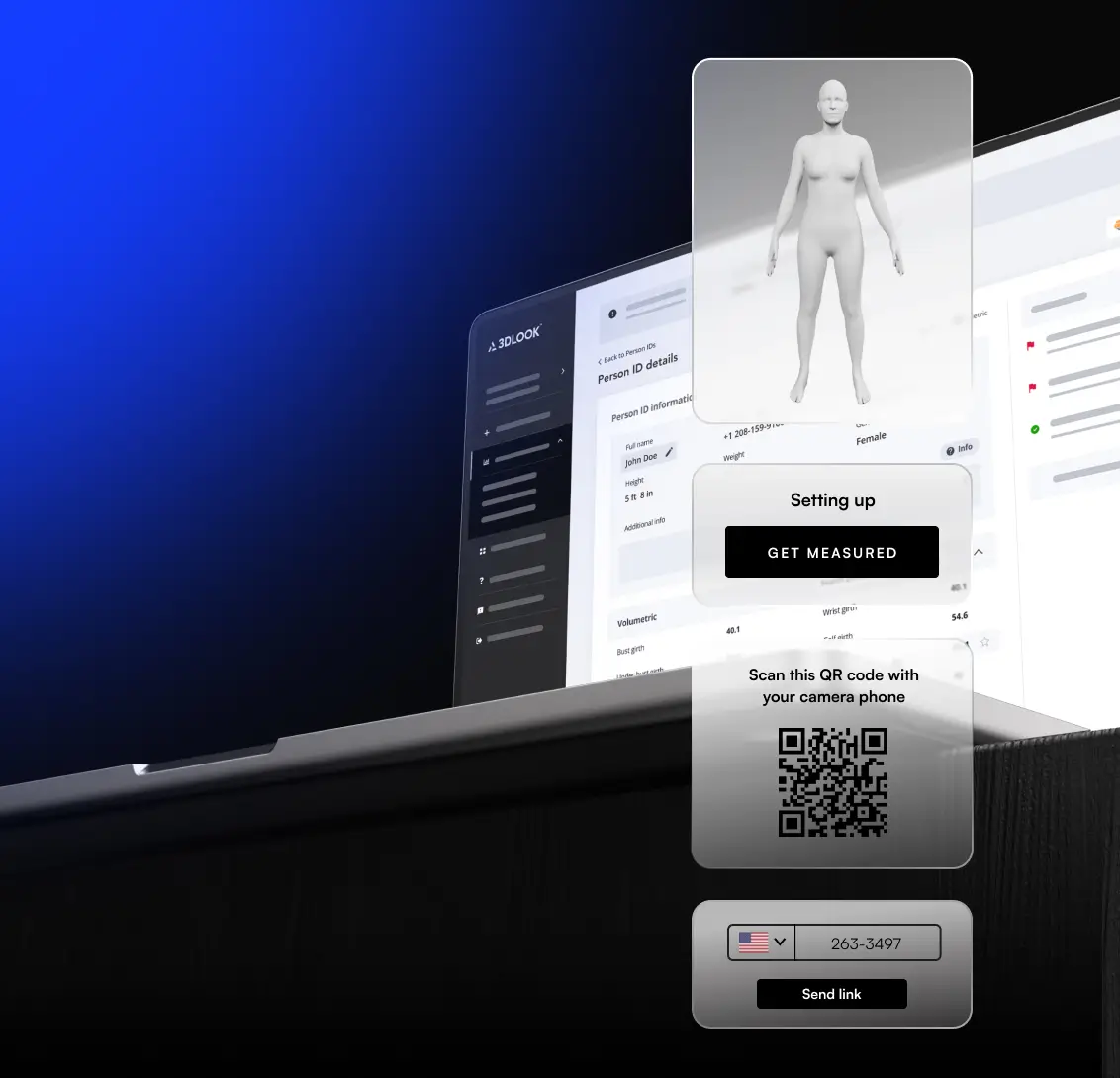
Baynes & Baker, a New York made-to-measure suit business, reported that 90% of its business came from beyond its local area after adopting the product. Its published case study also reported alteration costs down 50% and remake costs down 90%. These are customer accounts published by the supplier, rather than controlled experiments. Still, they identify the expenses the product is supposed to attack.
25 percentage points lower. A historical customer report, not a forecast for every shop.
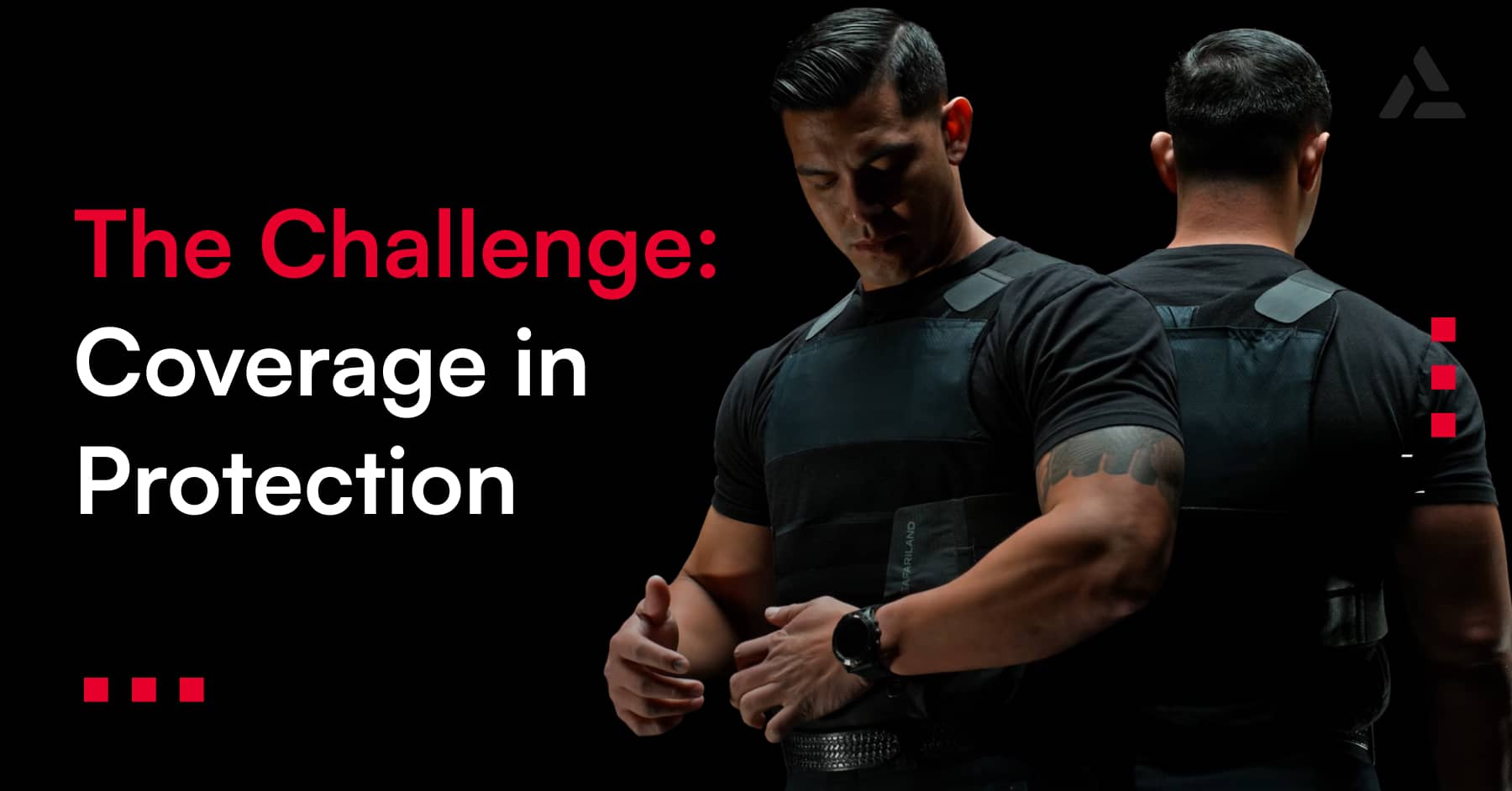
Safariland supplies a sterner example. Its XpertFit system uses 3DLOOK technology for body-armor fitting. The March 2024 case study described representatives previously driving as much as five hours for appointments, and more than 3,800 armor sets delivered through the production solution with an exceptionally low return rate. Fit here has consequences beyond a flattering silhouette.
“XpertFit has validated our expectations of delivering the right fit for each wearer.”
Joseph Smith / Safariland, VP, Product & Technology Integration
The phone does less magic than you think
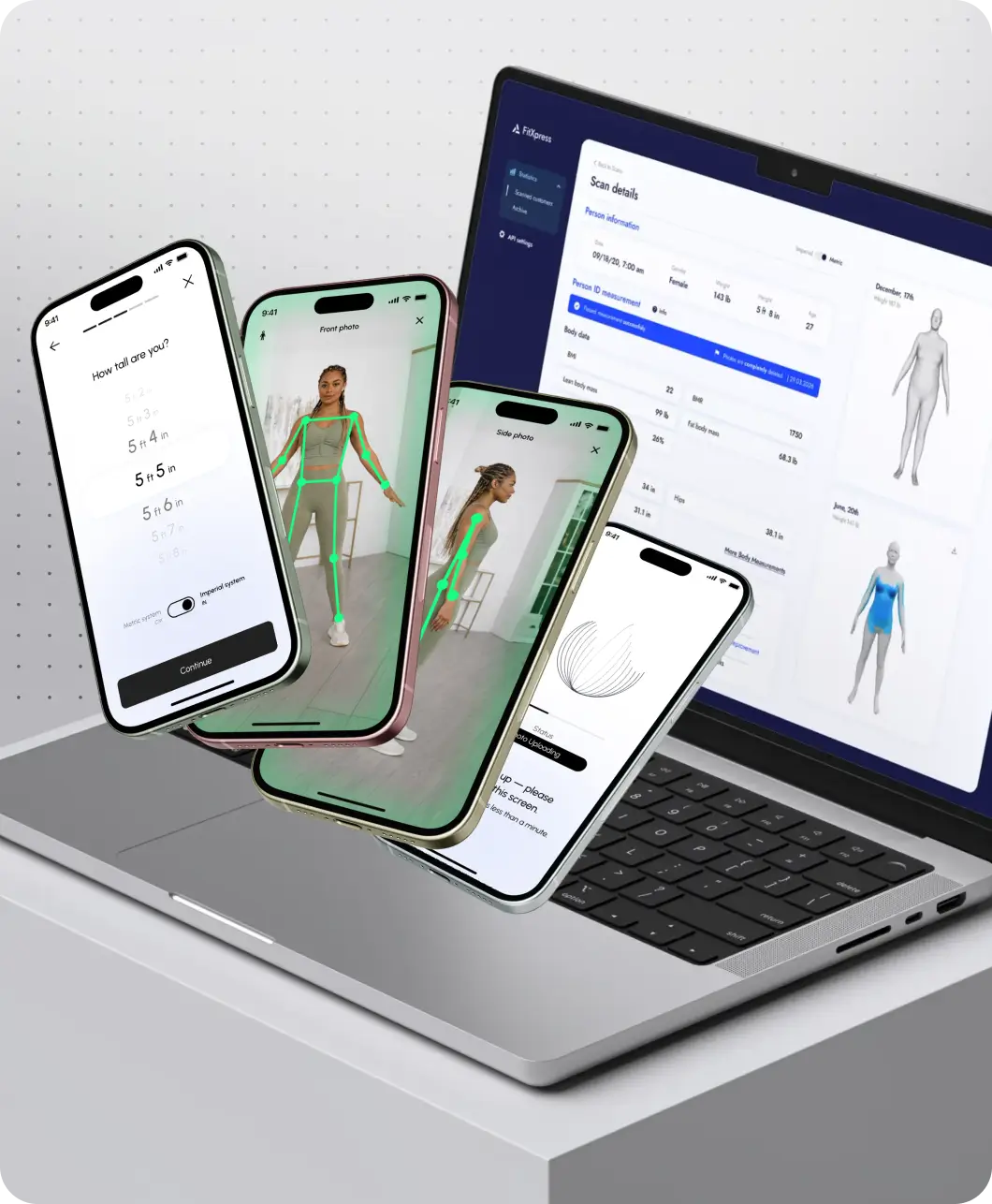
Two photographs do not directly reveal every circumference. 3DLOOK describes a pipeline of body segmentation, landmark detection and statistical modeling that reconstructs a body from the front and side views. It operates its own ScanMe lab to develop body data and models. Dedicated scanning hardware exists behind the research; customers use the phone they already possess.
The guidance is part of the product. Existing camera-roll photos are not accepted; pose checks and phone-angle control help standardize capture. Close-fitting clothing is recommended. A convincing output still depends on usable input. Measurements also leave work for the garment maker: pattern choices, fabric behavior and preferred ease do not disappear when a waist measurement becomes digital.
The competitive neighborhood includes Bodygram’s photo-based measurements and True Fit’s retail sizing intelligence. 3DLOOK’s distinction is its combination of guided capture, reconstructed bodies and structured outputs for business operations. YourFit, launched in 2021, paired virtual try-on with size recommendations. Its current main lineup emphasizes Mobile Tailor and FitXpress.
A return to fitness, with a different customer
FitXpress launched in April 2024. It supplies measurements, estimated body composition and progress visualizations through an API and web or mobile SDKs. The buyer is a platform embedding those capabilities into its service. In Brazil, Tera Science described using FitXpress to reach healthcare professionals without requiring new bioimpedance equipment. Its forecast of a hundredfold increase in scans remains a forecast.
The limits deserve equal billing. 3DLOOK’s September 2026 documentation describes FitXpress outputs as informational, with no diagnosis or treatment recommendations. It states that the product has no FDA clearance, authorization or approval. Its accuracy documentation also says measurement claims have not undergone third-party clinical validation. A body-composition estimate needs interpretation; a polished avatar does not supply clinical authority.
Put the measurement to work
Public monthly pricing starts at $499 for Mobile Tailor’s 100-scan Basic allowance and $1,000 for FitXpress’s 500-scan Starter allowance. FitXpress requires integration. The subscription is therefore only part of the buyer’s calculation, alongside implementation, actual scan usage and the cost of the task it replaces.
The practical thing to copy is the choice of starting problem. Find the fitting appointment that requires travel, the garment that needs remaking, or the remote check-in that lacks consistent measurements. Test the new capture against that workflow. 3DLOOK’s early difficulty suggests a rather unfashionable truth: even an ingenious camera needs a customer who knows what to do after the photograph.