At 25, Doug Morse-Schindler bought a sailboat and spent two years rebuilding it. A sailboat is a stern editor. It has no patience for jargon, and it will not be impressed by the confidence of its owner. The rigging works or it does not. The engine starts or one acquires an intimate education in currents. Once the boat was ready, Morse-Schindler and his old high-school friend Justin Holland sailed through the Caribbean for a year.
This was not, at first glance, preparation for a career in employee benefits. It was excellent preparation for partnership. The two had met in a video class in the Tampa area, where Holland was the frequently relocated son of a military family and Morse-Schindler was a Clearwater native. Years later they would build companies together, including HealthJoy, whose business is helping people find a sensible route through the elaborate weather system of American benefits.
Morse-Schindler had been rehearsing for entrepreneurship well before the voyage. As a boy and student, he found a business for every summer: detailing cars, detailing boats, reselling textbooks in college. At Vanderbilt University he studied Spanish. Then, with the intention of eventually building companies, he went somewhere that could teach him how they fit together: the mergers and acquisitions group at Raymond James.
“I always knew I wanted to build companies, but decided to go into finance first.”Doug Morse-Schindler
Learning to read the machinery
Investment banking gave him a close view of the machinery. He advised public and private clients on more than 50 buy-side and sell-side transactions. The job taught him to read a business through its operations, incentives and numbers - a useful discipline for an entrepreneur, whose sunny declaration of a new market eventually meets the less sunny question of how anyone will pay for it.
After finance, he became a founding member of OpenInstall, running operations and finance. Holland was also a founder. The San Francisco ad-tech company was sold to European security-software business AVG Technologies in 2012, and Morse-Schindler went on to serve as a senior director at AVG. The two friends had now shared a classroom, an ocean passage and an exit. They also had the enviable founder’s problem of deciding which mess to enter next.
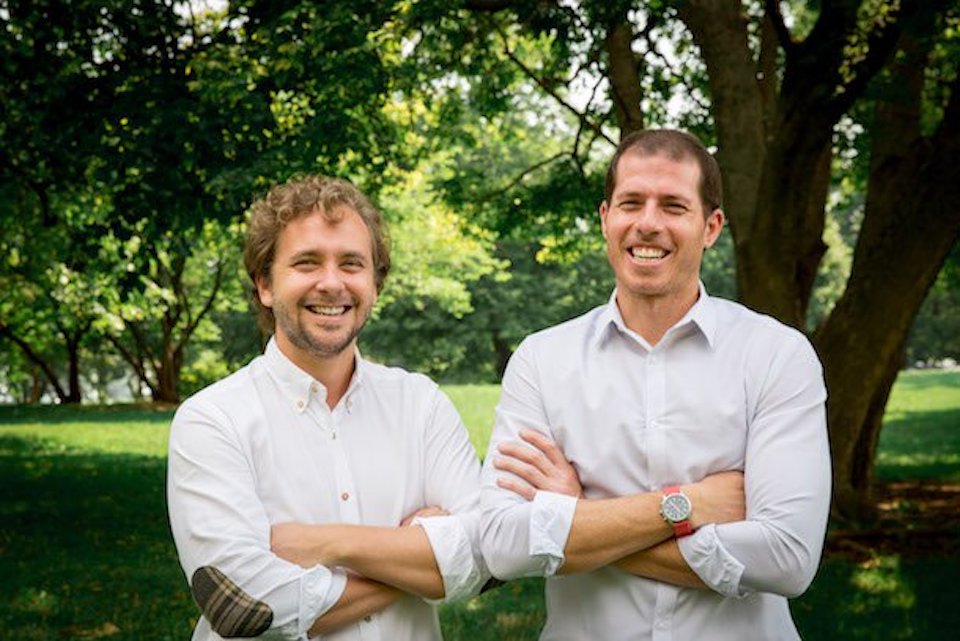
The answer arrived through a problem Holland encountered while trying to arrange an MRI under an individual insurance plan. Prices were opaque, the plan was difficult to navigate and a capable internet user could not easily tell what to do. In mid-2013, the pair began discussing whether consumer technology could guide people toward higher-quality, lower-cost care. By 2014, HealthJoy was born.
Its first market was the individual insurance world created around the Affordable Care Act. The product helped people understand unfamiliar plans, use virtual care and reckon with details such as networks and deductibles. Working with early partner GoHealth, the team watched members confront plans with deductibles as high as $6,000. This was where HealthJoy developed what Morse-Schindler calls its member-centric DNA: begin with the person trying to make a decision, not with the elegance of the platform.
The year the map ended
Then the market changed. By 2016, the founders could see that the opportunity they had learned was closing. HealthJoy needed to move from individual plans to employer-sponsored benefits. Morse-Schindler has called that year the darkest period for both founders. A pivot is a crisp arrow in a slide deck; in practice, it meant relearning the customer, reworking the product and convincing the team that the turmoil was both correct and unavoidable.
The questions were basic because they had to be. What is a broker? What matters to one? How should HealthJoy serve an HR team? The company had learned hand-to-hand distribution in one market and now needed a new vocabulary. It also needed a new route to the people who would use the product.
“Distribution is everything.”Doug Morse-Schindler
That line sounds almost comically plain beside the usual technology dialect of disruption and scale. It is also the key to Morse-Schindler’s role. A benefits app can be beautifully made, but it does not wander into an employer on its own. Brokers advise companies. HR teams assemble programs. Employees possess benefits they may not understand or remember. Each handoff can weaken a good idea. The operator’s work is to keep the idea useful all the way to the person making a choice.
HealthJoy’s first employer customer proved the point. The sale took six months, many discussions and, as Morse-Schindler remembers it, a great deal of hearing no. The customer was a brokerage agency in Minneapolis. He built a personal relationship, earned trust and persuaded the firm to take a chance on a category that was still taking shape.
The launch date was January 1, 2017. The preceding week was not an exhibition of corporate serenity. The team used every remaining second of 2016 to go live. Yet after the first customer, the next ten arrived faster. The first yes had done more than produce revenue. It had taught the company how its market thought.
The apprenticeship on the road
Later in 2017, HealthJoy hired its first salesperson, Dave Mallen, who arrived with experience and a broker network. Morse-Schindler joined him on the road. Meeting by meeting, he learned how brokers evaluated partners, what they valued and which firms might fit. He describes it as an aha moment. The education became the basis for the company’s next several years of growth.
The physical evidence was back at headquarters. HealthJoy had begun in a downtown Chicago house, with the founders living where they worked. By the time Chicago Ventures provided financing and the team prepared to expand, desks occupied every floor. Around 2017, they finally moved to a nearby office. Growth first appeared not as a chart but as a furniture problem.
Funding followed. HealthJoy raised a $12.5 million Series B in 2019, when the company reported about 200,000 users and rapid year-over-year growth. A $30 million Series C came in 2020. In 2022, Valspring Capital led a $60 million Series D that brought reported total funding above $108 million. Morse-Schindler received the Teladoc Health Forum Transformational Leadership Award in 2023. By its tenth anniversary, HealthJoy described a business of nearly 450 employees; today it says its platform serves more than 1,800 companies and over 1.25 million members.
Through the expansion, his public language stayed close to the mechanics: capacity planning, seasonality, broker confidence and the quality of the member experience. Those are not decorative founder concerns. They are the gears that decide whether a January launch works, whether an adviser recommends the product again and whether growth survives its own calendar.
The scale is conspicuous. His interpretation of it is more interesting. In HealthJoy’s anniversary conversation, Morse-Schindler returned to missing data, personalization and the stubborn need to engage a member at the right time. There is no single database containing everything the company would like to know. Technology can organize signals and make recommendations, but the final measure is whether a person receives guidance they can use.
A founder who prefers the connective tissue
Morse-Schindler’s career is full of apparent detours that turn out to share a method. The Spanish degree concerns fluency. M&A concerns the anatomy of an enterprise. The sailboat concerns interdependent systems and earned confidence. Operations concerns what happens after the attractive promise. Distribution concerns all of them at once.
Even his old summer businesses make sense in retrospect. Car detailing and textbook resale are not grand visions; they are immediate exchanges with visible customers. Someone has a problem. The operator notices, builds a process and delivers. The polish may improve, the capitalization may acquire another zero, but the commercial grammar remains remarkably stable.
HealthJoy’s promise is simplicity: one place through which employees can navigate benefits that otherwise live in separate systems, cards and phone numbers. Producing that simplicity requires an appetite for complicated relationships underneath it. The company must connect employers, consultants, providers, digital tools, human concierges and members without allowing the seams to become the member’s burden.
That is why the first six-month sale matters more than a victory-lap anecdote. It reveals Morse-Schindler’s operating thesis in miniature. Trust takes time. Channels have their own logic. Products must be translated into the concerns of the people who carry them forward. Once the route works, the dominoes can fall. Until then, there is only patient work.
The rebuilt sailboat is difficult to resist as a metaphor, so one should resist it only a little. A founder buys a complicated vessel, takes it apart, learns the dependencies and eventually trusts it beyond sight of land. Years later, the market changes under his company and the map is no longer serviceable. The next move is not magic. It is the old habit: inspect the machinery, keep the partnership intact and draw a route that can survive contact with the water.