A sleeve is an unglamorous thing to build a technology company around. It reserves a passage through concrete for a pipe or another service. Put it in the wrong place and the mistake may sit quietly until a later crew arrives, carrying equipment that expects the opening to be somewhere else. By then, the building has moved on. The correction has acquired an entourage.
- SiteAware compares installed work with plans, then flags deviations.
- Its customers include contractors and developers such as ANDRES and Hines.
- The opportunity is to correct an error before concrete, finishes or subsequent work make it harder.
This is the problem SiteAware has chosen: the interval between doing something wrong and discovering it. Construction has drawings, models, photographs and experienced people. What it can still lack is an answer, early enough to matter, to a wonderfully impolite question: does the thing we actually built match the thing we agreed to build?
The drone lost top billing
The business began in 2015 as Dronomy, founded by Ori Aphek and Guy Raz. Its early identity belonged to drones. In October 2017, it adopted SiteAware, a name that put the site ahead of the aircraft. The rebranding announcement described digital replicas and actionable tasks shared through the cloud. The ambition was already drifting from collecting pictures toward improving execution.
Globes later described a further change of direction: the company had entered construction through drone technology, then concentrated on verification using machine learning and artificial intelligence. Zeev Braude joined as a founder in 2018. Read together, these accounts suggest a useful business lesson. The capture device attracted attention; the customer needed help deciding what the captured reality meant.
There is no need to invent a dramatic failed prototype to make that shift interesting. The documented change is enough. A drone can produce a handsome record of a mistake. A verification system should produce a chance to fix it.
Give every element an address
SiteAware calls its approach Digital Construction Verification, or DCV. Build-to-Plan connects installed work to the documents specifying it. Plans are tagged, site conditions are captured, and comparisons identify deviations. Project tolerances matter: the point is to judge against the requirements of that job, rather than an abstract notion of straightness.
The resulting observation has a trade, an element, an issue type, a measured deviation and a plan reference. That is a rather different object from a photograph in somebody’s camera roll. It tells a team what deserves attention and gives the discussion a specific component to orbit. The observation page also lets users review scans and follow corrections.
The company markets applications across concrete structure, the building envelope and interiors. A facade can be checked layer by layer; an interior can be examined before walls close. In each case, the commercial proposition rests on the same clock. Evidence becomes more valuable when the relevant work is still reachable.
A photograph cannot sign off a wall
July 2026 support documentation makes a helpful distinction. SiteAware’s 360 Documentation provides visual records, virtual walkthroughs and material for turnover. Interior Verification adds analysis against field-use documents, including BIM-versus-reality comparisons and heatmaps. Buyers should pay attention to that separation. Recording a space and checking its installation are different deliverables, even when both begin with a camera.
The machinery behind a trustworthy comparison is decidedly physical. SiteAware’s control-point guidance requires at least five measured reference points per pour area and recommends six to eight. Distribution and measurement accuracy affect scan quality. Its alignment-scan procedure checks site survey alignment against the project surveyor’s measurements. The earth, inconveniently, remains round even when a drawing is flat.
Those details supply the conditions for the idea to work. Teams need usable documents, appropriate tolerances, accurate capture and time to respond. Once work is concealed, an earlier photograph may remain useful evidence, but a missed opportunity to intervene stays missed. Software also needs someone to own the correction. An alert has never moved a sleeve by itself.
The customers buy fewer surprises
SiteAware sells into the world of general contractors, developers, owners and trade partners. Its customers page names Hines, ANDRES Construction Services and Modern Constructors. Webcor’s featured project, 960 West 7th in Los Angeles, is described as a 57-story, 785-unit development for Brookfield Properties. These are places where coordination is a daily occupation.
“We can do more work with the same amount of people.”John Andres, Director of Technology, ANDRES Construction Services
The testimonial is revealing because it concerns organizational capacity rather than artificial intelligence. A superintendent needs a manageable list of issues; a trade needs a precise correction; an executive wants patterns across projects. SiteAware’s analytics extend the installation record into measures of mitigation, progress and first-time accuracy. The small element becomes a unit of management.
It occupies an overlapping market. Buildots also compares site reality with models and tracks construction progress. SiteAware’s pitch foregrounds installed-element quality and intervention during construction. Its announced Procore and Autodesk BIM 360 integrations, both from 2017, show another important choice: place findings inside the workflows construction teams already use.
The economics of catching it early
SiteAware’s model combines enterprise software with onboarding and capture or verification services. Its sales process starts with a demonstration and project requirements. A buyer’s sensible calculation is specific: compare the proposed expense with correction labor, access costs and schedule disruption on that project. A universal savings percentage would obscure the differences between buildings.
The public financing numbers are clearer. A $10 million Series A in October 2020 was followed by a $15 million Series B in January 2022, led by Vertex Ventures Israel. The latter announcement said revenue tripled during 2021. That is a historical company claim, rather than evidence of today’s revenue.
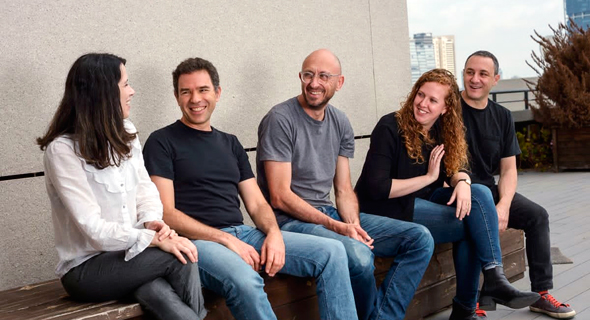
In 2019, SiteAware announced its facade inspection of Salesforce Tower. Today its management page lists Maayan Shekel as CEO and Braude as President and CRO. The company’s April 2026 writing returns to dense data-center construction, where a small installation deviation can interfere with later systems. The setting changes; the awkward little opening keeps its importance.
The practice worth copying is simple enough to survive without a startup attached: define what correct means, check before concealment, assign the fix and record its closure. SiteAware offers a way to make that routine systematic. Concrete will keep its own schedule. The useful question is whether the information arrives first.
Follow the work
Website · LinkedIn · X · Facebook
Customer video stories · How verification works · Company blog · The Series B announcement in CTech